

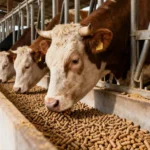

Poultry feed pellets are an important part of modern poultry production. Farmers and commercial feed manufacturers use pellets for chickens, ducks, geese, turkeys, quail, and other domestic birds because pellets are convenient to transport, store, handle, and distribute. Properly manufactured pellets can also reduce feed waste, minimize ingredient separation, and provide birds with a more consistent mixture of nutrients.
However, not all poultry have the same nutritional requirements. Broiler chickens need a diet that supports rapid growth, laying hens require nutrients for egg production, while ducks and geese have different requirements related to their growth patterns and digestive characteristics. Quail also need appropriately formulated feed because of their small body size and relatively high metabolic rate.
Therefore, making feed pellets for different birds requires more than simply changing the pellet size. The ingredient formula, nutrient levels, grinding size, conditioning conditions, pellet diameter, pellet durability, and feeding strategy may all need to be adjusted.
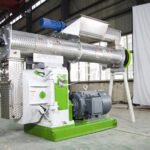
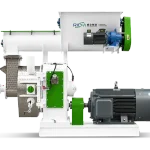
A broiler chicken feed pellet machine is the core equipment used to convert prepared feed mixtures into compact pellets, but the machine must be configured according to the characteristics of each feed product.
This article explains how to make poultry feed pellets for different birds and how to design an efficient production process.
1. Why Make Different Feed Pellets for Different Birds?
Different poultry species have different nutritional requirements.
For example, broilers are selected for rapid meat production, so their feed must provide sufficient energy, protein, amino acids, vitamins, and minerals for fast growth.
Layers have different requirements because they need nutrients for continuous egg production and eggshell formation.
Ducks and geese can consume diets with somewhat different ingredient and nutrient characteristics from chickens.
Turkeys have relatively high growth potential and require carefully balanced protein and energy.
Quail are small birds but can have relatively high nutrient requirements per unit of body weight.
Therefore, a single feed formula cannot normally provide optimal nutrition for every type of poultry.
Commercial feed manufacturers often produce several products using the same basic production line. The formula, pellet diameter, processing parameters, and final product specifications can be changed according to the target bird.
2. Main Ingredients Used in Poultry Feed Pellets
Although formulas vary, many poultry feeds contain several common ingredient categories.
Energy Sources
Common energy ingredients include:
- Corn
- Wheat
- Sorghum
- Barley
- Rice
- Other cereal grains
Corn is widely used because it provides concentrated energy and is relatively easy to process.
Protein Sources
Protein ingredients can include:
- Soybean meal
- Rapeseed meal
- Sunflower meal
- Peanut meal
- Fish meal
- Other suitable protein sources
Protein quality is particularly important for young and rapidly growing poultry.
Bran and By-Products
Rice bran and wheat bran can provide energy, protein, and fiber while helping reduce feed costs.
Fat Sources
Vegetable oils and other permitted feed fats can increase dietary energy density.
Minerals
Common mineral ingredients include limestone, dicalcium phosphate, salt, and mineral premixes.
Vitamins and Amino Acids
Vitamin premixes and amino acids such as lysine, methionine, and threonine may be added according to the feed formula.
The exact ingredients and inclusion rates should be determined according to the nutritional requirements of the target bird and applicable feed regulations.
3. Poultry Feed Pellets for Broiler Chickens
Broilers are raised primarily for meat production and have been genetically selected for rapid growth.
Their feed is commonly divided into several stages, such as:
- Broiler starter feed
- Broiler grower feed
- Broiler finisher feed
Broiler Starter Pellets
Young broilers require nutrient-dense feed to support early growth.
Starter feed generally emphasizes adequate protein and essential amino acids, while energy levels are also carefully controlled.
Because young chicks have small mouths and digestive systems, the feed particles should be relatively small.
Depending on the production system, starter feed may be manufactured as small pellets or crumbles.
Broiler Grower Pellets
As broilers grow, their nutritional requirements change.
Grower feed can be formulated with appropriate energy and amino acid levels to support efficient muscle development.
The pellet diameter can gradually increase compared with starter feed.
Broiler Finisher Pellets
Finisher feed is designed for the later growth stage.
The formulation may emphasize efficient growth and appropriate energy supply.
Larger pellets can generally be used for older broilers.
A poultry feed pellet machine can produce different broiler feed pellet sizes by changing the die specifications and adjusting the cutter.
4. Poultry Feed Pellets for Layer Chickens
Layer chickens have different nutritional requirements from broilers because their primary production objective is egg production.
Layer feed should provide adequate:
- Energy
- Protein
- Amino acids
- Calcium
- Phosphorus
- Vitamins
- Trace minerals
Calcium is especially important because eggshell production requires significant amounts of calcium.
Limestone is commonly included as a calcium source.
The particle size of mineral ingredients may also be considered when designing layer feed.
Layer feed may be manufactured in pellet or crumble form depending on the farm’s feeding system.
The production process generally includes:
Cleaning → Grinding → Batching → Mixing → Conditioning → Pelleting → Cooling → Screening → Packaging
The same poultry feed pellet machine can be used for layer feed, provided the machine and die are suitable for the formula and pellet specifications.
5. Feed Pellets for Chicks
Chicks require feed that is easy to consume and digest.
The feed should provide appropriate levels of protein, amino acids, energy, vitamins, and minerals.
Because chicks are small, feed particle size is particularly important.
Very large pellets can be difficult for young birds to consume.
Therefore, chick feed is often produced as:
- Small pellets
- Crumbles
- Fine feed particles
A crumbler can be installed after the pellet cooler to break standard pellets into smaller particles.
This provides a practical way to produce chick feed without requiring a completely separate production line.
6. Poultry Feed Pellets for Ducks
Ducks have different feeding habits and nutritional requirements from chickens.
Duck feed formulas can contain ingredients similar to chicken feed, including corn, wheat, soybean meal, bran, minerals, vitamins, and amino acids.
However, the exact formula should be adjusted according to duck species, age, growth purpose, and production conditions.
Duck feed may be produced in different pellet sizes according to bird age.
Young ducklings generally require smaller feed particles, while growing and adult ducks can consume larger pellets.
Because ducks commonly interact with water during feeding, pellet durability and water stability may also be considered depending on the feeding system.
7. Feed Pellets for Geese
Geese are generally raised for meat, breeding, or other production purposes.
Their feed requirements differ from those of broilers and layers.
Geese may consume diets containing cereals, protein meals, bran, minerals, vitamins, and other ingredients.
Because geese can consume relatively larger feed particles than young chickens, the pellet diameter can be adjusted according to bird age and feeding behavior.
For growing geese, the formula should provide sufficient energy and protein while avoiding unnecessary nutrient excess.
For breeding geese, the nutritional balance may be adjusted to support reproductive performance.
8. Poultry Feed Pellets for Turkeys
Turkeys have relatively high growth potential, especially during the early stages of production.
Their feed is commonly divided into different growth phases.
Young turkeys need nutrient-dense starter diets, while older birds require different ratios of energy, protein, amino acids, minerals, and vitamins.
The production line used for turkey feed can be similar to that used for chicken feed.
However, the feed formula and pellet specifications should be adjusted according to turkey requirements.
A properly configured poultry feed pellet machine can produce different pellet diameters for different turkey growth stages.
9. Feed Pellets for Quail
Quail are small birds with relatively high nutrient requirements compared with their body size.
Quail feed commonly contains cereal grains, protein meals, bran, minerals, vitamins, amino acids, and other feed ingredients.
Because quail are small, particle size is particularly important.
Feed that is too large can reduce feed intake.
Therefore, quail feed is often produced as small pellets or crumbles.
A pellet mill with an appropriate small-diameter die can be used to manufacture suitable quail feed pellets.
10. Choose the Right Pellet Size
Pellet diameter is one of the most visible differences between feeds for different birds.
In general, younger birds require smaller particles, while older birds can consume larger pellets.
However, pellet size should be selected according to the specific bird species and feeding conditions rather than using age alone.
The pellet size can be controlled through the die used in the pellet machine.
The cutter also determines pellet length.
A flexible production line can use different dies to manufacture several pellet specifications.
11. Prepare the Raw Materials
Regardless of the target bird, raw material preparation is essential.
The basic preparation process includes:
Raw Material Receiving → Cleaning → Crushing → Batching → Mixing
Cleaning removes stones, metal particles, dust, and other foreign materials.
Grinding reduces particle size and improves mixing.
Batching ensures that each ingredient is added according to the formula.
Mixing distributes all ingredients evenly.
The prepared mixture is then ready for conditioning and pelleting.
12. Condition the Feed Before Pelleting
Conditioning is an important step in poultry feed production.
The mixed feed is exposed to steam in a conditioner before entering the pellet mill.
Steam increases temperature and moisture, softens the feed particles, and improves their binding characteristics.
Proper conditioning can improve:
- Pellet durability
- Production capacity
- Pellet appearance
- Starch gelatinization
- Energy efficiency
- Reduction of fines
The conditioning conditions should be adjusted according to the specific feed formula.
A formula for duck feed may behave differently from a formula for chick feed, even when both are processed on the same pellet machine.
13. Pelletize the Feed with a Poultry Feed Pellet Machine
After conditioning, the feed mixture enters the broiler chicken feed pellet machine.
https://pelletisingmachine.com/chicken-feed-pellet-making-machine
Inside the machine, pressure rollers compress the material against a die.
The feed passes through die holes and forms cylindrical strands. A cutter then cuts the strands into pellets.
The basic process is:
Conditioned Feed → Compression → Die Extrusion → Cutting → Fresh Pellets
The die determines pellet diameter.
Different dies can therefore be used for different birds and different growth stages.
For example:
- Small-diameter die for chicks
- Medium-diameter die for broilers
- Larger-diameter die for mature poultry
The exact specification should be determined according to the feed product and bird requirements.
14. Cool the Fresh Pellets
Fresh pellets leaving the pellet mill are hot and contain elevated moisture.
They must be cooled before storage.
A counterflow pellet cooler is commonly used in commercial poultry feed plants.
The cooler removes heat and moisture from the pellets, improving their storage stability.
Proper cooling helps prevent:
- Condensation
- Mold growth
- Pellet deterioration
- Packaging problems
Cooling capacity should be matched to pellet mill output to prevent bottlenecks.
15. Screen the Pellets
After cooling, the pellets are screened.
The screening machine removes fines, broken pellets, and oversized particles.
Fines can often be recycled into the pelleting process.
This improves production efficiency and reduces material waste.
Screening also helps ensure that the finished product has a consistent appearance and particle size.
16. Crumble Pellets for Young Birds
Young poultry may require smaller particles than the standard pellets produced by the pellet mill.
A feed crumbler can solve this problem.
The process is:
Pelletizing → Cooling → Crumbling → Screening
The crumbler breaks larger pellets into smaller particles.
This is particularly useful for chick starter feed and other young-bird products.
A single poultry feed production line can therefore manufacture both standard pellets and crumbles.
17. How to Make Poultry Feed Pellets More Efficiently
Efficiency depends on more than pellet machine capacity.
Several factors should be controlled.
Use Proper Raw Materials
Stable ingredient quality reduces production fluctuations.
Optimize Grinding
Appropriate particle size improves pellet formation without excessive energy consumption.
Improve Mixing
Uniform mixing ensures consistent nutrition and improves pellet quality.
Optimize Conditioning
Correct steam, moisture, temperature, and retention time improve pellet durability.
Match the Pellet Machine to the Formula
Different feed formulas require different die and operating conditions.
Maintain Equipment
Regular maintenance of dies, rollers, bearings, motors, and transmission components reduces downtime.
Balance the Production Line
The capacity of the crusher, mixer, pellet machine, cooler, screener, and packaging machine should be coordinated.
18. Equipment Needed for Different Poultry Feed Products
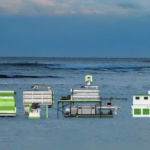
A complete poultry feed production line may include:
| Process | Main Equipment |
|---|---|
| Raw material receiving | Hopper, conveyors, bucket elevator |
| Cleaning | Screen, magnetic separator |
| Grinding | Hammer mill |
| Batching | Automatic weighing system |
| Mixing | Feed mixer |
| Conditioning | Steam conditioner |
| Pelleting | Broiler chicken feed pellet machine |
| Cooling | Counterflow cooler |
| Screening | Vibrating or rotary screener |
| Crumbling | Feed crumbler |
| Coating | Pellet coating machine |
| Packaging | Automatic packing machine |
Not every factory requires all of these machines.
A small poultry farm may use a relatively simple production system, while a large commercial feed manufacturer may require a fully automated line.
19. How to Produce Multiple Poultry Feeds on One Production Line
One advantage of a properly designed poultry feed factory is the ability to manufacture different products using the same basic equipment.
For example, one plant may produce:
- Broiler starter pellets
- Broiler grower pellets
- Broiler finisher pellets
- Layer pellets
- Chick crumbles
- Duck pellets
- Goose pellets
- Turkey feed
- Quail feed
The production line can switch between formulas through the control system.
The pellet diameter can be changed by installing a suitable die.
A crumbler can be used when smaller particles are required.
However, product switching should be carefully managed to avoid cross-contamination between formulas.
20. How to Choose a Poultry Feed Pellet Machine
When purchasing a broiler chicken feed pellet machine, several factors should be considered.
Production Capacity
Determine the required output according to farm or factory requirements.
Feed Types
Make sure the machine can process the intended feed formulas.
Pellet Diameter
Confirm that the machine can use dies suitable for the required pellet sizes.
Raw Materials
Different materials have different pelleting characteristics.
Durability
Core components such as dies, rollers, bearings, and transmission systems should be designed for reliable operation.
Maintenance
Easy access to wear parts can reduce maintenance time.
Automation
Large feed factories may benefit from automatic feeding, lubrication, overload protection, and PLC control.
21. RICHI Poultry Feed Pellet Production Solutions
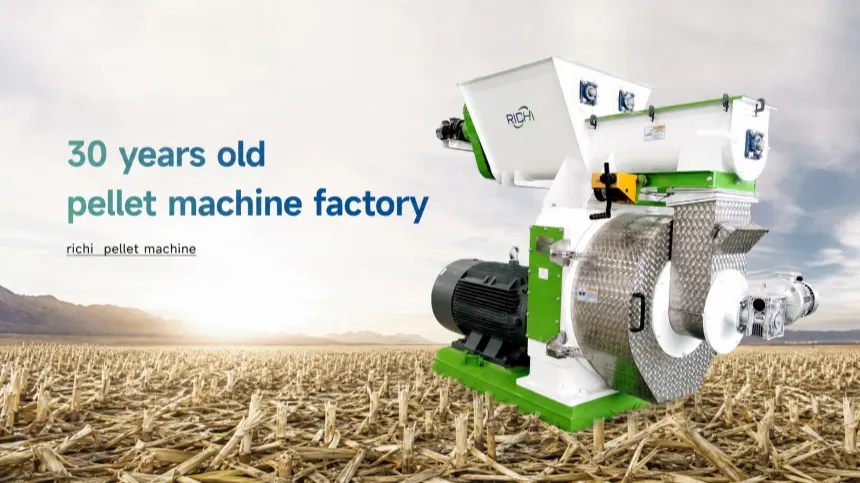
RICHI Pelletizer provides customized poultry feed production equipment and turnkey solutions for customers producing feed for different birds.
The production line can be designed according to the customer’s feed formulas, raw materials, target capacity, pellet diameter, factory layout, and automation requirements.
A complete solution may include:
Raw Material Cleaning → Crushing → Batching → Mixing → Conditioning → Poultry Feed Pellet Machine → Cooling → Screening → Crumbling/Coating → Packaging
For farms and feed manufacturers producing several types of poultry feed, the line can be configured to provide flexible production and convenient product switching.
RICHI can provide services covering process design, equipment manufacturing, factory layout, transportation, installation, commissioning, operator training, and after-sales support.
This turnkey approach helps customers coordinate individual machines as one integrated production system.
Conclusion
Making poultry feed pellets for different birds requires careful consideration of both nutrition and processing technology.
Broilers need formulas designed for rapid growth, layers require appropriate mineral and calcium levels for egg production, chicks need small and easily consumed particles, while ducks, geese, turkeys, and quail each have their own nutritional and physical feed requirements.
Although the ingredients and formulas may vary, the basic production process remains similar:
Raw Material Preparation → Grinding → Batching → Mixing → Conditioning → Pelleting → Cooling → Screening → Crumbling or Coating → Packaging
The broiler chicken feed pellet machine is the central equipment for forming the prepared feed mixture into pellets. By changing the die, adjusting operating parameters, and using suitable downstream equipment, manufacturers can produce different pellet sizes and feed products on the same production line.
The key to successful multi-species poultry feed production is not simply choosing a powerful pellet machine. It is designing the entire production system around the nutritional requirements of each bird, the characteristics of the raw materials, the required pellet specifications, and the desired production capacity.
With accurate formulation, proper raw material preparation, effective conditioning, suitable pelletizing equipment, efficient cooling, and good quality control, poultry feed manufacturers can produce consistent pellets for different birds while maintaining high production efficiency and stable product quality.