



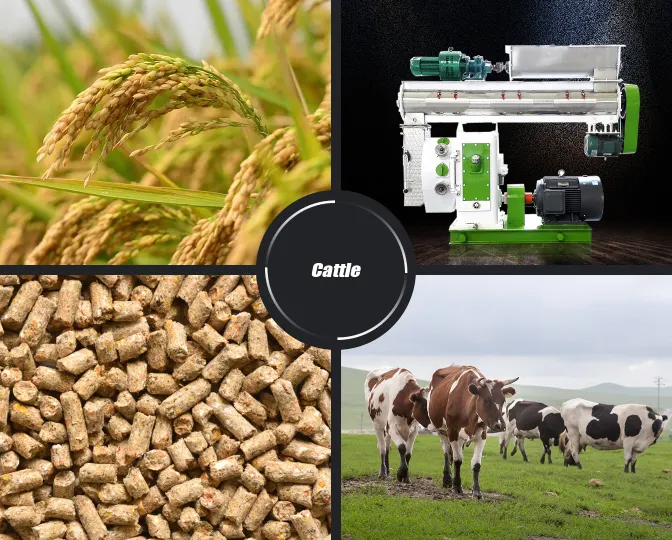
When farmers or feed producers plan to make cattle feed pellets, one of the first questions is usually about equipment cost. However, the purchase price of a pellet machine is influenced by many factors, so comparing machines only by their listed price can sometimes be misleading.
Production capacity, raw material characteristics, pellet size, motor power, automation level, spare parts, workshop conditions, and supporting equipment can all affect the total investment. A small farm producing feed for its own cattle may require a very different system from a commercial feed manufacturer supplying multiple farms.
Understanding how these factors work together can make equipment selection more practical and help buyers build a production system that matches their actual needs.
What Is a Cattle Feed Pellet Machine?
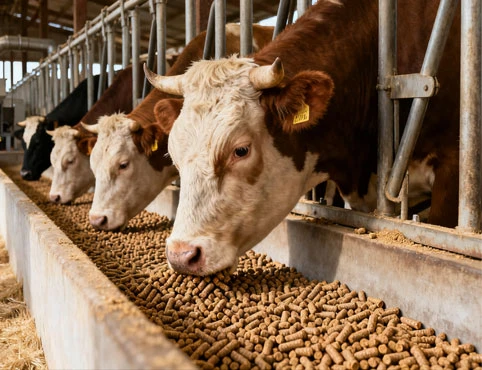
A cattle feed pellet machine compresses prepared feed ingredients into cylindrical pellets. The process generally involves grinding, mixing, conditioning, pressing, and forming.
Depending on the feed formula, ingredients may include corn, wheat, barley, soybean meal, bran, alfalfa, grass meal, minerals, and other nutritional components.
The machine itself is only one part of the complete process. Before ingredients reach the pellet machine, they normally need to be prepared and mixed according to a specific formulation.
After pelletizing, the product may require cooling, screening, and packaging.
This means that the cost of a complete feed processing project cannot be determined simply by looking at the pellet machine alone.
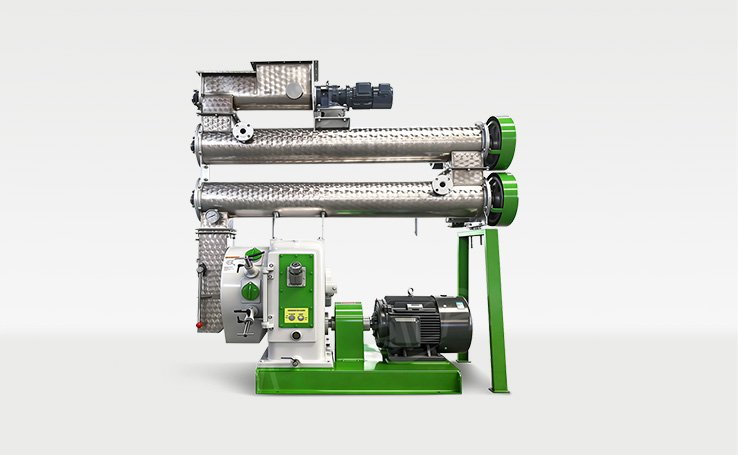
What Factors Affect Equipment Cost?
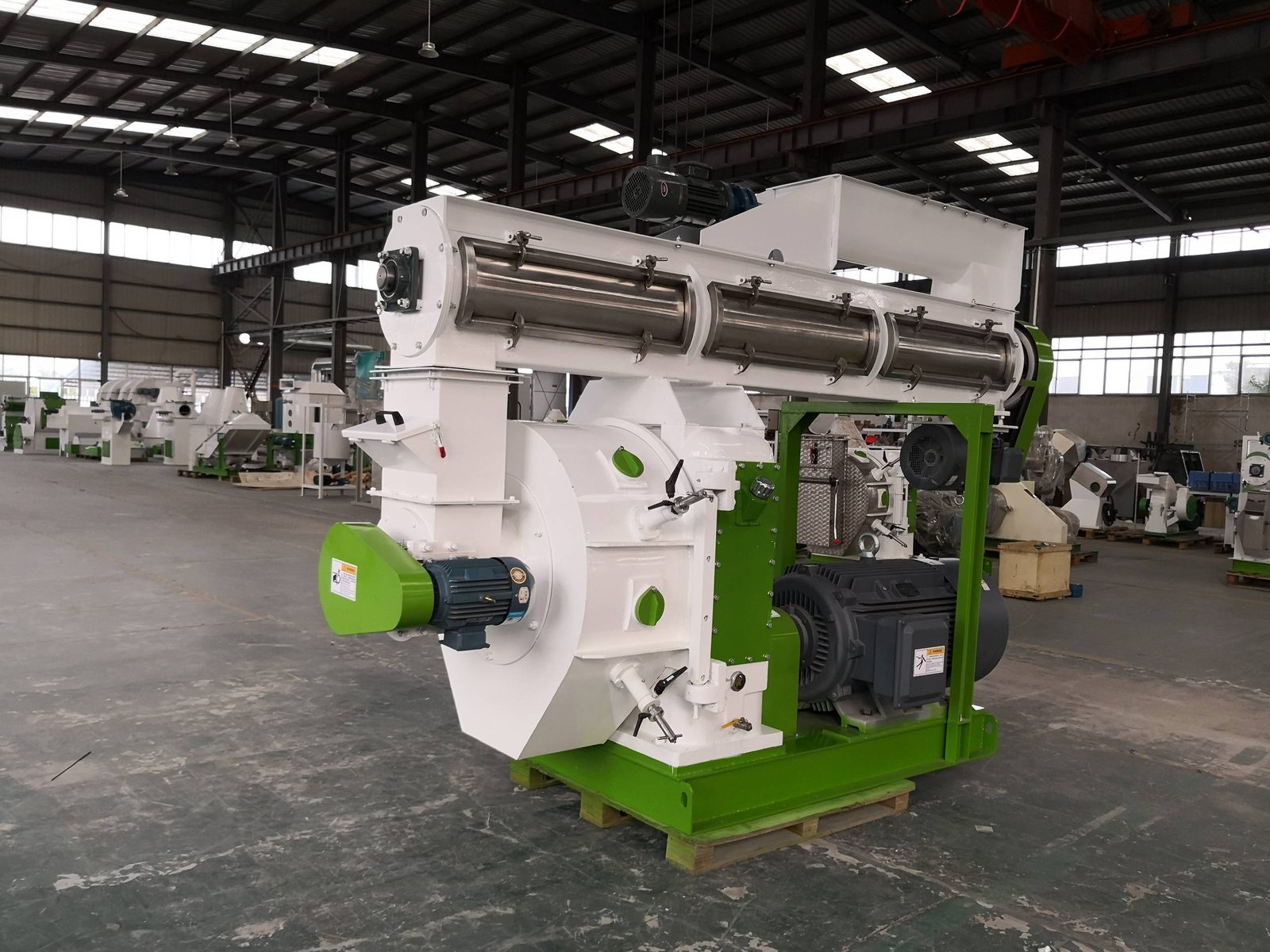
The cattle feed pellet machine price can vary considerably depending on machine capacity and configuration.
A small machine designed for farm use generally has a simpler structure and lower production capacity. Commercial equipment may require larger motors, stronger transmission systems, more durable components, and additional automation.
The raw materials also matter. A formula containing large quantities of fibrous materials such as alfalfa may behave differently from a grain-based formula.
Pellet diameter is another consideration. Different pellet sizes require different dies, and the compression characteristics of the formula can influence the machine configuration.
Other factors include:
- Motor power
- Production capacity
- Die specifications
- Feeding system
- Conditioning system
- Automation level
- Material-handling equipment
- Cooling and screening requirements
- Installation conditions
Therefore, two machines with apparently similar output ratings may still have different total costs.
How Should Cattle Feed Raw Materials Be Prepared?
Good pellet production starts with appropriate raw material preparation.
Grains such as corn and wheat are usually ground before mixing. Grinding reduces particle size and can improve mixing uniformity and pellet formation.
However, not every ingredient needs to be ground to the same degree. Excessive grinding can increase electricity consumption without providing additional benefits.
Fibrous materials require particular attention. Long fibers can interfere with feeding, mixing, and pellet formation if their particle size is unsuitable.
Forage ingredients such as alfalfa may therefore need a suitable grinding process before entering the mixer.
Moisture content should also be monitored. Materials with excessive moisture can affect storage and pelleting performance, while extremely dry materials may require adjustments to achieve appropriate pellet quality.
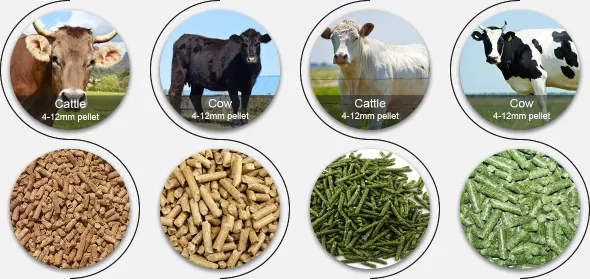
How Should a Cattle Feed Formula Be Designed?
Feed formulation should be based on the nutritional requirements of the target animals.
Cattle diets differ according to species, age, production stage, and purpose. Calves, beef cattle, dairy cows, and breeding cattle do not necessarily require the same nutrient profile.
Energy, protein, fiber, minerals, vitamins, and other nutrients need to be balanced appropriately.
For example, dairy cattle may require a formulation designed to support milk production, while beef cattle in a finishing stage may have different energy requirements.
The formula should also consider the availability and cost of local ingredients.
A feed producer should not choose ingredients only because they are inexpensive. Their nutritional value, digestibility, moisture, storage stability, and processing characteristics should also be considered.
Does Alfalfa Need Special Processing?
Alfalfa is commonly used in ruminant diets because it provides protein and fiber, but its physical characteristics can make processing different from grain-based feed.
Long alfalfa fibers may need to be reduced in size before pelletizing. The required particle size depends on the final pellet specification and the feeding system.
For farms that mainly process forage-based feed, equipment selection should account for the high-fiber characteristics of the raw material.
For example, a 3-5 t/h alfalfa pellet mill may be considered for operations that need several tons of processed alfalfa feed per hour.
The actual output, however, depends on moisture, fiber content, particle size, die specifications, and formulation. The rated capacity should therefore be treated as a reference rather than a guaranteed production result under every condition.
Is a Complete Production Line Necessary?
Not every cattle farmer needs a complete automated feed factory.
A small farm may only require a grinder, mixer, and pellet machine. If the feed is used immediately, separate packaging equipment may not be necessary.
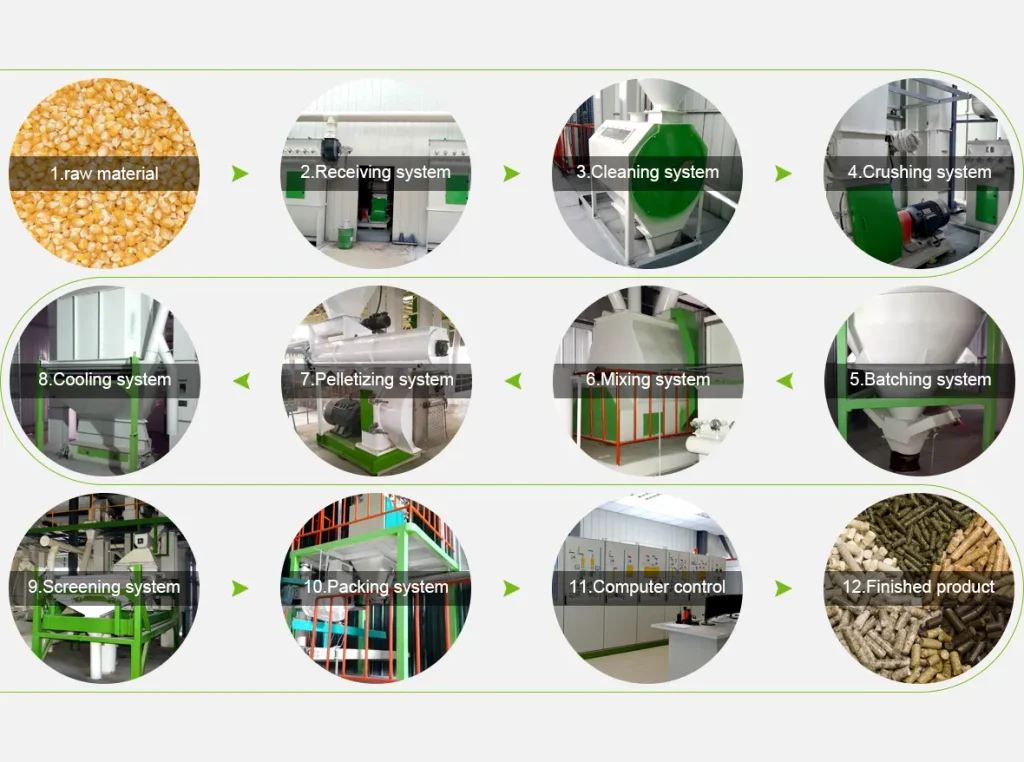
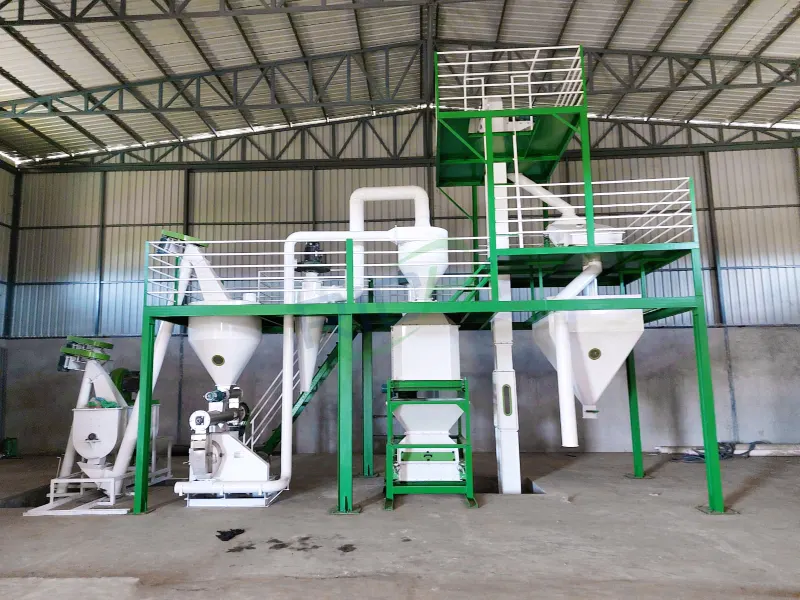
A larger operation may need automatic batching, multiple storage bins, a pellet machine, cooler, screener, conveyor system, and packaging equipment.
The appropriate configuration depends on how much feed is required and how frequently production takes place.
A complete line becomes more useful when production volume increases because manual handling becomes less efficient.
However, buying equipment that is significantly larger than actual demand can also create unnecessary investment and maintenance costs.
What Capacity Does a Farm Actually Need?
Capacity should be calculated from daily feed consumption rather than simply choosing a machine with the highest advertised output.
For example, a farm may calculate the average amount of feed consumed by its cattle each day and then determine how many operating hours are available for feed production.
If the farm needs 8 tons of feed per day and can operate the line for four hours, a theoretical capacity of around 2 tons per hour may appear sufficient. In practice, some additional capacity may be useful because actual production includes startup, cleaning, maintenance, material handling, and other downtime.
This is why the question what capacity livestock feed production line do I need should be answered using actual production data rather than a general equipment recommendation.
Future expansion should also be considered. A farm expecting to double its herd size within several years may need a different capacity strategy from a farm with stable production.
Related Post: https://commercialpelletmill.com/livestock-feed-production-line/
Does Pellet Diameter Affect Equipment Selection?
Yes. Pellet diameter is closely related to the die used in the pellet machine.
Different cattle feed applications may require different pellet sizes. Young animals may benefit from smaller pellets, while mature cattle can generally consume larger feed particles.
Pellet diameter can also affect production capacity and energy consumption.
A die with smaller holes may require different compression characteristics from one with larger holes. The formulation, moisture content, fiber level, and compression ratio all influence the actual processing conditions.
Therefore, the desired pellet size should be established before selecting the final die specification.
Why Is Conditioning Important?
Conditioning introduces controlled moisture and heat into the feed mixture before pellet formation.
The purpose is to improve pellet formation and durability while making the material easier to compress.
For grain-based formulas, steam conditioning can support starch gelatinization and improve pellet quality.
However, not every cattle feed formula requires the same conditioning conditions.
High-fiber formulas, for example, may behave differently from grain-heavy formulas.
Moisture addition should therefore be controlled carefully. Excessive moisture can create problems during pelleting and increase the drying or cooling requirements afterward.
What Supporting Equipment Is Needed?
A pellet machine cannot operate efficiently if the upstream and downstream equipment cannot keep up.
A typical commercial cattle feed line may include:
- Raw material receiving equipment
- Cleaning equipment
- Hammer mill or other grinder
- Storage bins
- Batching system
- Mixer
- Conditioner
- Pellet machine
- Cooler
- Screener
- Conveyors
- Packaging system
The actual configuration depends on the scale and type of feed.
A small farm may use fewer machines, while a commercial plant may require automated material handling and centralized process control.
The key is to design the system as a whole rather than selecting individual machines independently.
How Does Automation Affect Investment?
Automation can increase initial investment but may reduce labor requirements and improve process consistency.
Automatic batching systems can weigh ingredients according to predefined formulas. Centralized controls can monitor motors, material flow, and production parameters.
For large plants producing multiple formulas, automation can be particularly useful because manual weighing becomes more complicated as the number of ingredients increases.
However, a small farm with only one or two formulas may not need extensive automation.
The decision should consider labor availability, production frequency, formula complexity, and expected future growth.
What Is the Difference Between a Small and Commercial Setup?
A small farm-based system is generally designed around internal feed consumption.
The equipment may operate for only a few hours per day, and some material handling may be performed manually.
A commercial plant, on the other hand, needs to operate more consistently and efficiently. It may require automated batching, larger storage capacity, continuous cooling, screening, packaging, and dust-control systems.
The workshop itself is also different. Commercial facilities need more space for raw materials, production equipment, finished feed, maintenance, and vehicle access.
The investment difference therefore comes from the entire production system rather than one machine.
How Much Workshop Space Is Required?
Workshop space depends on production capacity and equipment configuration.
A small pellet machine can occupy relatively little floor space, but the complete system requires additional room for raw materials, grinders, mixers, storage bins, conveyors, and finished feed.
The layout should allow materials to move through the facility in a logical sequence.
Raw materials should enter the facility efficiently, while finished feed should have convenient access to storage or loading areas.
Maintenance access is also important. Equipment should not be installed so closely together that operators cannot safely inspect or repair key components.
Does Raw Material Moisture Affect Cost?
Moisture can affect both processing efficiency and storage requirements.
If raw materials have high moisture content, additional drying or storage management may be necessary.
During pelleting, moisture affects compression and pellet durability. If the final product contains too much moisture, additional cooling or drying may be required before storage.
Moisture meters can therefore be useful in commercial feed production.
Controlling moisture also reduces the risk of mold and deterioration during storage.
How Can Pellet Quality Be Evaluated?
Good cattle feed pellets should have appropriate hardness, durability, moisture, size, and nutritional consistency.
Pellets that are too soft may generate excessive fines during transportation. Pellets that are excessively hard may not always provide the desired feeding characteristics.
The amount of fines is a useful practical indicator. Excessive fines can increase feed waste and reduce handling efficiency.
Pellet durability can be evaluated through appropriate laboratory or production tests.
The goal is not to produce the hardest possible pellet, but to achieve a balance between durability, animal acceptance, processing efficiency, and energy consumption.
How Does Electricity Consumption Affect Operating Cost?
Electricity is one of the ongoing expenses associated with feed processing.
Grinding, mixing, pelleting, conveying, cooling, and packaging all consume energy.
Pellet production can be particularly energy-intensive when processing high-fiber materials or formulas that require greater compression.
Actual energy consumption depends on motor power, production capacity, raw material characteristics, operating conditions, and equipment efficiency.
Therefore, buyers should look beyond the motor’s rated power and consider the expected energy consumption per ton of finished feed.
What Maintenance Is Required?
Routine maintenance helps protect equipment performance and reduce unexpected downtime.
Pellet machines require regular inspection of dies, rollers, bearings, lubrication systems, and drive components.
Grinding equipment should be checked for worn hammers and screens.
Mixers need inspection for material buildup, paddle or ribbon wear, and mechanical components.
Conveyors should be checked for belt alignment and bearing condition.
Keeping records of maintenance activities can help operators identify recurring problems and schedule replacement of wearing parts before major failures occur.
How Long Does It Take to Build a Feed Line?
Construction time depends on project scale, equipment quantity, workshop readiness, electrical installation, foundation requirements, and automation.
A small system with relatively few machines can normally be installed more simply than a large commercial plant.
Before equipment arrives, the workshop should ideally have completed necessary civil works, power connections, ventilation, drainage, and equipment foundations.
Equipment installation is followed by testing and commissioning. Operators may need to verify material flow, weighing accuracy, mixing uniformity, pellet quality, and actual production capacity.
A realistic project schedule should therefore include not only equipment installation but also commissioning and adjustment.
How Should Buyers Compare Equipment Quotes?
Comparing quotations requires more than looking at the final number.
A useful comparison should include:
- Machine capacity
- Motor power
- Die size
- Main machine configuration
- Supporting equipment
- Automation level
- Installation requirements
- Spare parts
- Warranty conditions
- Technical support
- Shipping and other project costs
Two quotations may have different prices because their equipment scopes are different.
For example, one supplier may quote only the pellet machine, while another includes grinding, mixing, conveying, cooling, and packaging equipment.
Comparing equivalent equipment scopes provides a much clearer picture of the actual investment.
What Should Be Asked About Technical Support?
Technical support can be important, especially for first-time feed producers.
Questions may include how the equipment should be installed, what raw materials it can process, what maintenance is required, and which wearing parts should be kept in stock.
It is also useful to ask whether the equipment can be adjusted for different pellet sizes or feed formulas.
Companies such as pelletizer may provide information about feed-processing equipment, production-line configuration, installation, and related technical considerations.
The most useful technical discussion should be based on the buyer’s actual raw materials, expected capacity, pellet specifications, and workshop conditions.
Can Equipment Be Expanded Later?
A feed processing system can often be expanded if the original layout is planned appropriately.
A farm might begin with grinding, mixing, and pelleting equipment and later add automatic batching, cooling, screening, packaging, or additional storage.
However, future expansion should be considered before construction begins.
Leaving adequate workshop space and ensuring sufficient electrical capacity can make future upgrades easier.
It is generally more practical to plan an expandable layout than to install oversized equipment simply because future growth is expected.
What Are the Common Mistakes When Buying a Pellet Machine?
One common mistake is selecting equipment solely according to advertised capacity.
Another is ignoring raw material characteristics. A machine that performs well with grain-heavy feed may require different settings when processing high-fiber forage.
Choosing the wrong pellet diameter can also create unnecessary operating problems.
Some buyers focus heavily on initial purchase cost while overlooking electricity, spare parts, maintenance, and supporting equipment.
A more comprehensive approach considers the total operating environment.
The objective should be to choose equipment that can produce the required feed consistently at a reasonable operating cost.
How Can Investment Be Planned More Rationally?
A practical investment plan should separate the project into several categories.
The first is the main processing equipment, including grinding, mixing, and pelletizing machinery.
The second is auxiliary equipment such as conveyors, coolers, screens, storage bins, and packaging systems.
The third category includes workshop preparation, electrical installation, transportation, installation, commissioning, and other project expenses.
Finally, working capital should be considered for raw material purchasing, labor, utilities, maintenance, and inventory.
Looking at the complete cost structure provides a more realistic understanding of the investment required.
Final Thoughts
The cost of cattle feed pellet equipment is determined by much more than the machine itself. Production capacity, feed formulation, raw material characteristics, pellet diameter, automation, supporting equipment, workshop design, and maintenance requirements all influence the final investment.
For small farms, a compact processing system may be sufficient. Larger operations may benefit from automated batching, continuous cooling, advanced material handling, and centralized control.
The most practical approach is to start with the actual feed requirement and work backward toward equipment selection. Determine the daily feed demand, raw materials, pellet specifications, operating hours, and future expansion plans before comparing machines.
This approach makes it easier to understand equipment quotations, avoid unnecessary investment, and develop a cattle feed production system that fits real operating conditions rather than relying on a one-size-fits-all solution.