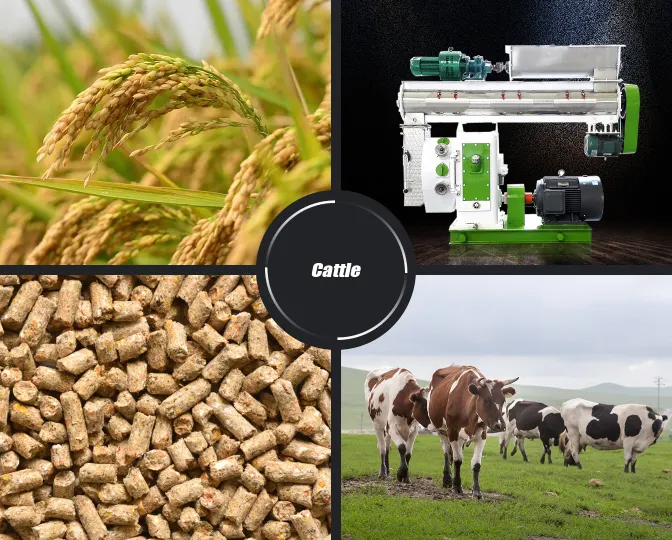



Choosing the right cattle feed production technology is an important decision for livestock feed manufacturers, dairy farms, beef cattle operations, and investors planning to build a new feed processing plant. The right technology can help manufacturers produce consistent feed, improve processing efficiency, control operating costs, and adapt to different cattle feed formulas.
However, there is no single production technology suitable for every cattle feed factory. A small farm producing several hundred kilograms of feed per hour may require a very different system from a commercial feed manufacturer producing several tons per hour.
The selection process should begin with the feed formula and raw materials rather than with a specific machine. Production capacity, pellet size, fiber content, moisture, automation level, factory space, energy consumption, investment budget, and future expansion should also be considered.
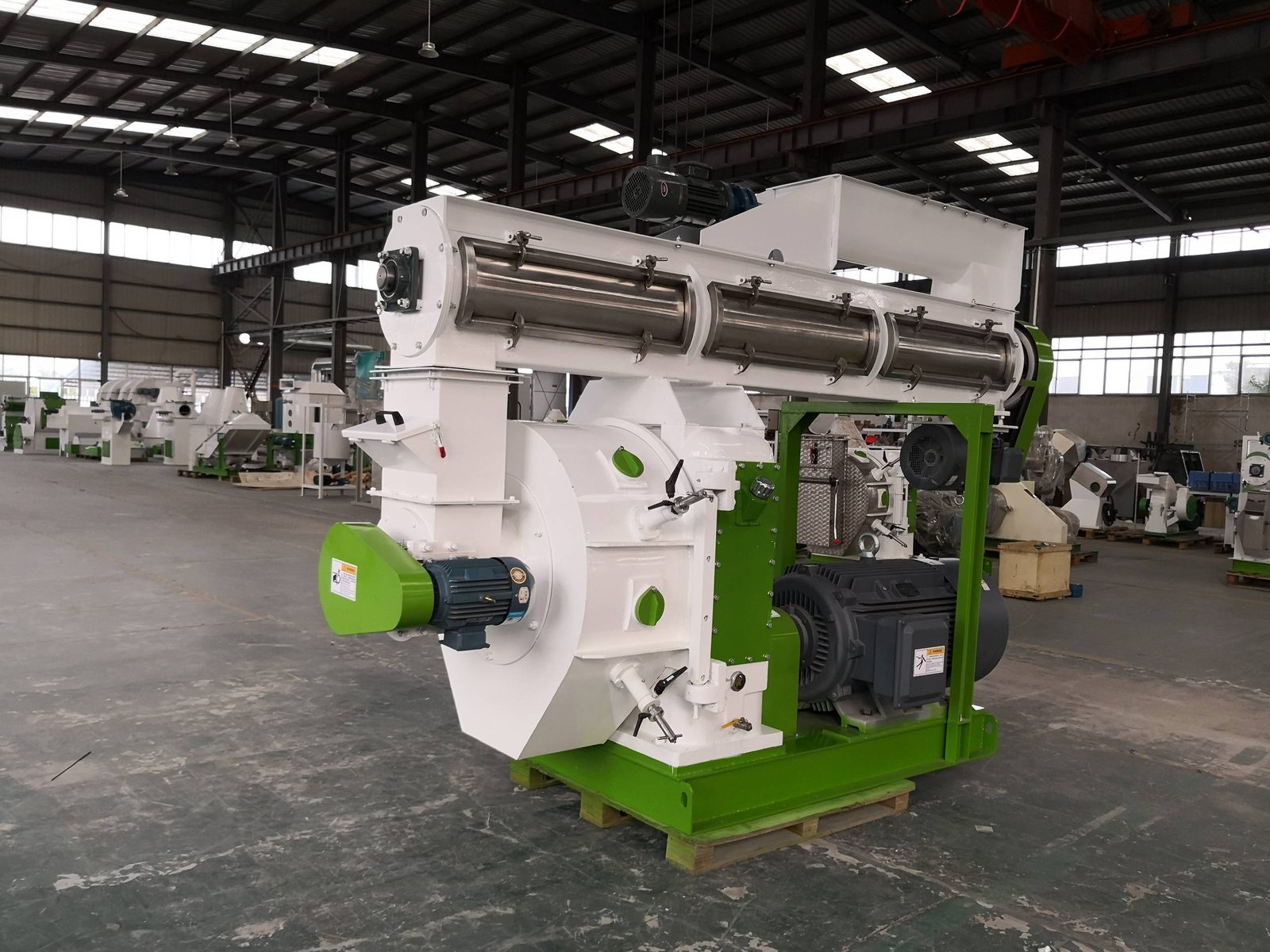
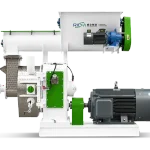
For businesses planning to manufacture pelleted cattle feed, a pellet cattle feed machine can be one of the core machines in the production line. However, the pellet machine should not be selected independently. Grinding, batching, mixing, conditioning, cooling, screening, conveying, and packaging equipment must all work together.
This guide explains how to choose suitable cattle feed production technology and how to build a production system around actual manufacturing requirements.
What Is Cattle Feed Production Technology?
Cattle feed production technology refers to the processes, machines, automation systems, and quality-control methods used to transform feed ingredients into finished cattle feed.
A typical cattle feed production line may include:
- Raw material receiving
- Cleaning
- Grinding
- Batching
- Mixing
- Steam conditioning
- Pelletizing
- Cooling
- Screening
- Coating
- Packaging
- Conveying
- Automatic control
Not every factory needs all of these processes.
The appropriate configuration depends on the raw materials, feed formula, production capacity, final product, and investment objectives.
For example, a small farm using pre-ground ingredients may only require a mixer and pellet machine. A commercial cattle feed factory may require automatic batching, industrial grinding, multiple mixers, steam conditioning, ring die pellet mills, cooling systems, screening equipment, and automatic packaging.
1. Start With the Cattle Feed Formula
The first step in choosing production technology is understanding the feed formula.
Cattle feed can contain a wide range of ingredients, including:
- Corn
- Barley
- Wheat
- Wheat bran
- Rice bran
- Soybean meal
- Sunflower meal
- Cottonseed cake
- Alfalfa
- Grass hay
- Straw
- Silage
- Molasses
- Minerals
- Vitamin premixes
Different ingredients behave differently during processing.
Grains are generally easier to grind and pelletize than long-fiber forage materials. A formula containing large amounts of alfalfa or straw may require additional preparation equipment.
Therefore, the equipment selection should begin with a clear understanding of the actual feed formula.
2. Consider the Type of Cattle Feed
Not all cattle feed products have the same processing requirements.
Common categories include:
Concentrate Feed
Concentrate feed generally contains relatively high proportions of grains, protein meals, bran, minerals, and other concentrated ingredients.
Roughage Feed
Roughage-based feed contains larger amounts of forage materials such as hay, grass, or straw.
TMR Feed
Total mixed ration combines forage and concentrate ingredients in a balanced mixture.
Supplement Feed
Supplement products may contain specific minerals, proteins, vitamins, or other nutritional components.
Each feed type can require different grinding, mixing, conditioning, and pelletizing conditions.
Understanding the intended product helps determine the appropriate production technology.
3. Define the Required Production Capacity
Production capacity is one of the most important factors in equipment selection.
Before purchasing equipment, determine how much feed the factory needs to produce per hour and per day.
For example, a small livestock operation may need a compact production system, while a commercial feed manufacturer may require several tons per hour.
Capacity should be considered together with:
- Daily production
- Working hours
- Number of production shifts
- Future demand
- Seasonal demand
- Storage capacity
Buying equipment that is significantly larger than current demand may increase investment costs unnecessarily.
On the other hand, equipment that is too small can become a production bottleneck and may require replacement when demand increases.
4. Plan for Future Expansion
A feed factory should not necessarily be designed only around today’s production.
If the business expects demand to increase, the initial process layout can reserve space for future equipment.
For example, the factory may initially install one pellet mill while leaving room for another production line later.
This approach can reduce the difficulty of future expansion.
When selecting production technology, investors should therefore consider both current capacity and long-term business plans.
5. Choose the Appropriate Grinding Technology
Grinding is usually performed before batching and mixing.
A hammer mill is commonly used to reduce the particle size of grains and other suitable feed ingredients.
The grinding system should provide a particle size appropriate for:
- Feed formulation
- Animal requirements
- Mixing
- Pelletizing
- Energy consumption
Excessively coarse material may produce weak or inconsistent pellets.
Excessively fine grinding, however, can increase energy consumption and dust generation.
The objective is to achieve a suitable and consistent particle size rather than simply grinding as finely as possible.
6. Select an Appropriate Batching System
Accurate batching is important when multiple ingredients are used.
A modern batching system can automatically weigh different ingredients according to the selected formula.
The system may contain separate bins for major ingredients and smaller dosing systems for minor ingredients.
Automated batching is especially useful for commercial feed manufacturers because it helps maintain consistency between batches.
For small operations, manual or semi-automatic weighing may be sufficient.
The choice should depend on production scale, labor availability, formula complexity, and investment budget.
7. Select the Right Mixing Technology
After ingredients are weighed, they need to be mixed.
The mixer should provide sufficient uniformity for the intended formula.
Important factors include:
- Mixer type
- Batch size
- Mixing time
- Ingredient particle size
- Moisture
- Liquid addition
- Filling level
A poorly designed or incorrectly operated mixer can cause ingredient separation or uneven distribution.
For formulas containing small amounts of minerals or vitamin premixes, mixing performance is particularly important.
8. Consider Steam Conditioning
Steam conditioning is an important technology for many commercial pellet feed production lines.
During conditioning, steam is introduced into the feed mixture before it enters the pellet mill.
This increases moisture and temperature and changes the physical properties of the material.
Proper conditioning can improve:
- Pellet durability
- Pellet formation
- Production stability
- Throughput
- Material binding
However, the required conditioning system depends on the formula and production target.
A small operation may use a relatively simple configuration, while a large commercial factory may require a more advanced conditioning system.
9. Choose the Right Pellet Cattle Feed Machine
For businesses producing pelleted cattle feed, the pellet mill is usually the central processing machine.
A pellet cattle feed machine compresses the prepared feed mixture through a die to form pellets of a specified diameter.
When selecting a pellet machine, consider:
Capacity
The machine should provide the required output under actual feed conditions.
Pellet Size
The die should support the required pellet diameter.
Raw Materials
The machine should be suitable for the ingredients being processed.
Fiber Content
High-fiber formulas may require different compression characteristics from grain-based formulas.
Motor Power
Motor configuration should match the required capacity and material characteristics.
Die and Roller Design
These components directly affect pellet formation and machine performance.
Feeding System
Stable material feeding helps maintain consistent production.
Lubrication
Automatic or centralized lubrication can simplify maintenance on larger machines.
Safety
Overload protection and other safety features are important for reliable operation.
(Learn more: https://richipelletizer.com/cattle-feed-pellet-mill-for-sale/)
10. Understand Die Compression Ratio
Die compression ratio is an important consideration when selecting pelletizing equipment.
Different raw materials require different compression conditions.
A feed formula containing high levels of fiber may behave differently from one containing mainly grains and protein meals.
An unsuitable die can cause:
- Poor pellet formation
- Excessive fines
- Low output
- Higher energy consumption
- Unstable operation
Therefore, die selection should be based on actual feed materials and pellet specifications.
11. Select the Appropriate Pellet Diameter
Pellet diameter should be determined according to the intended cattle feed product.
Different cattle groups and feeding systems may require different pellet sizes.
The pellet die determines the final diameter.
A production line designed to manufacture several pellet sizes may require interchangeable dies and an appropriate maintenance system for efficient die changes.
12. Consider High-Fiber Cattle Feed
High-fiber feed presents additional challenges.
Forage materials such as:
- Alfalfa
- Grass hay
- Straw
- Other fibrous agricultural materials
may contain long fibers that are difficult to process directly.
A high-fiber feed production line may therefore require:
Bale Breaking → Cutting/Crushing → Grinding → Mixing → Conditioning → Pelletizing
The exact process depends on the raw materials.
A pellet mill suitable for concentrate feed should not automatically be assumed to be ideal for a high-fiber forage formula.
13. Consider Moisture Control
Moisture affects nearly every stage of cattle feed production.
It influences:
- Grinding
- Mixing
- Conditioning
- Pellet formation
- Cooling
- Storage
Raw materials with high moisture may need drying or special handling.
During steam conditioning, moisture increases.
After pelletizing, the pellets need to be cooled and stabilized.
A complete production line should therefore include appropriate moisture-control procedures.
14. Select the Right Cooling System
Fresh pellets are hot and contain moisture.
Cooling reduces pellet temperature and removes excess moisture.
For larger production lines, a counterflow cooler may be used.
The cooler should be matched to pellet mill capacity.
If the cooler is too small, pellets may not be sufficiently cooled before packaging.
This can affect storage stability and final product quality.
15. Include a Screening System
Screening removes fines and broken pellets after cooling.
A vibrating screen is commonly used in cattle feed production.
The screening system should match the required product specifications.
If the final product needs a low fines content, the screen must be appropriately designed and operated.
In some systems, separated fines can be returned to the pelletizing process.
16. Decide Whether Coating Is Required
Some cattle feed products may require post-pellet liquid addition.
Ingredients such as oils or molasses may be added using spraying or coating equipment.
The coating system should provide controlled and uniform application.
Not every cattle feed plant needs a coating machine.
Its necessity depends on the formula and final product requirements.
17. Choose the Right Packaging Technology
Packaging requirements depend on how the feed will be sold and transported.
Small-scale operations may use manual or semi-automatic packing.
Commercial factories may require automatic weighing and bagging systems.
Packaging equipment should provide:
- Accurate weighing
- Stable filling
- Reliable sealing
- Appropriate bag handling
- Efficient production speed
Packaging capacity should be matched with pellet production capacity.
18. Consider Material Conveying
Conveying equipment connects different sections of the production line.
Common equipment includes:
- Belt conveyors
- Screw conveyors
- Bucket elevators
- Drag conveyors
The conveying system should provide stable material flow without excessive spillage or unnecessary handling.
The layout should also minimize unnecessary transportation distances.
19. Determine the Required Automation Level
Automation level should match the scale and complexity of the factory.
Manual Systems
Suitable for small-scale production where labor is available and production volumes are limited.
Semi-Automatic Systems
Suitable for medium-scale operations requiring better production control but not full automation.
Fully Automatic Systems
Suitable for large commercial feed factories where accurate batching, centralized control, production monitoring, and labor efficiency are priorities.
Automation can control:
- Ingredient dosing
- Grinding
- Mixing
- Steam conditioning
- Pellet mill feeding
- Cooling
- Screening
- Packaging
20. Evaluate Energy Consumption
Energy consumption is an important part of long-term operating cost.
Grinding and pelletizing are generally among the main electricity-consuming processes.
When evaluating a pellet cattle feed machine, manufacturers should consider not only motor power but also actual energy consumption per ton of finished feed.
Energy efficiency depends on:
- Raw material characteristics
- Particle size
- Die selection
- Compression
- Feeding stability
- Equipment condition
- Motor efficiency
Regular maintenance can also help prevent unnecessary energy consumption.
21. Consider Maintenance Requirements
Equipment maintenance should be considered before purchasing the production line.
Important components include:
- Pellet dies
- Rollers
- Bearings
- Hammers
- Screens
- Motors
- Gearboxes
- Conveyors
- Lubrication systems
A machine with easily accessible wear parts can reduce maintenance downtime.
The availability of spare parts should also be considered when selecting a supplier.
22. Evaluate Die and Roller Life
The die and rollers are among the most important wear components in a pellet mill.
Their service life depends on:
- Raw material characteristics
- Feed formulation
- Operating conditions
- Die quality
- Roller condition
- Maintenance
- Operator practices
A supplier should provide information about suitable wear parts and recommended maintenance intervals.
23. Consider Production Line Layout
The factory layout should follow a logical material flow.
A typical layout may include:
Raw Material Storage → Cleaning → Grinding → Batching → Mixing → Conditioning → Pelletizing → Cooling → Screening → Packaging → Finished Feed Storage
A good layout can reduce unnecessary material handling and make equipment inspection easier.
It should also provide adequate space for maintenance and replacement of major components.
24. Evaluate Factory Space
Available factory space directly affects equipment selection.
A vertical layout may be appropriate where floor space is limited but building height is available.
A horizontal layout may be easier to install and maintain in some factories.
The equipment arrangement should also consider:
- Raw material storage
- Finished product storage
- Maintenance areas
- Operator access
- Safety
- Future expansion
25. Compare Initial Investment and Operating Costs
Choosing production technology should involve more than comparing equipment purchase prices.
Total investment may include:
- Equipment
- Transportation
- Installation
- Electrical systems
- Factory preparation
- Storage systems
- Steam systems
- Packaging
- Commissioning
Operating costs may include:
- Electricity
- Labor
- Spare parts
- Maintenance
- Lubricants
- Steam
- Packaging materials
A lower initial equipment price does not necessarily mean lower long-term production costs.
(Learn more about commercial cattle feed pellet machine price )
26. Consider Local Raw Material Availability
Local raw material availability should influence the design of the production line.
For example, a region with abundant corn and soybean meal may use a grain-based concentrate formula.
Another region may have large quantities of alfalfa, grass hay, straw, or agricultural byproducts.
The production technology should be designed around materials that are realistically available.
This can improve supply stability and provide more flexibility in feed formulation.
27. Test the Raw Materials Before Equipment Selection
One of the most useful steps before investing in a cattle feed plant is raw material testing.
Important characteristics may include:
- Moisture
- Particle size
- Fiber
- Density
- Oil content
- Stickiness
- Pelletability
Testing can help determine:
- Grinding requirements
- Mixer selection
- Conditioning requirements
- Die specifications
- Pellet mill capacity
- Cooling requirements
This is particularly important for unusual or high-fiber raw materials.
28. Consider Feed Production Flexibility
Some factories produce only one cattle feed formula.
Others need to manufacture multiple products.
If the factory produces different formulas, the equipment should allow efficient product changes.
Flexible production may require:
- Multiple ingredient bins
- Automatic formula management
- Flexible batching
- Easy-clean mixers
- Interchangeable pellet dies
- Separate storage
- Centralized control
Production flexibility can be particularly valuable when market demand changes.
29. Plan for Quality Control
The production system should include quality-control checkpoints.
Important points include:
Raw Materials
Inspect quality and moisture.
Grinding
Check particle size.
Batching
Verify ingredient quantities.
Mixing
Evaluate uniformity.
Conditioning
Monitor temperature and moisture.
Pelletizing
Check pellet size and durability.
Cooling
Check temperature and moisture.
Screening
Monitor fines.
Packaging
Verify bag weight and sealing.
Quality control should be integrated into the process rather than treated as a final inspection only.
30. Consider Operator Training
A production line is only as effective as the people operating it.
Operators should understand how to:
- Start and stop equipment
- Adjust material flow
- Monitor pellet mill load
- Control steam
- Inspect pellet quality
- Replace wear parts
- Perform routine maintenance
- Respond to abnormal conditions
Training should be provided during commissioning and updated as the production process evolves.
31. Evaluate Supplier Engineering Capability
When purchasing equipment, the supplier’s engineering capability is important.
A machinery supplier should be able to understand:
- Feed formulas
- Raw material characteristics
- Production capacity
- Process flow
- Equipment matching
- Factory layout
- Installation
- Commissioning
This is especially important when building a complete cattle feed production line rather than purchasing a single machine.
32. Turnkey Cattle Feed Production Technology
For investors building a new feed factory, turnkey engineering can simplify project development.
A turnkey solution may cover:
- Raw material analysis
- Feed production process design
- Factory layout
- Equipment selection
- Equipment manufacturing
- Transportation
- Installation
- Commissioning
- Operator training
- After-sales service
This approach ensures that the pellet mill, grinder, mixer, conditioner, cooler, screen, conveyors, and packaging system are designed to work together.
(hop over to this web-site: RICHI Pelletizer )
33. Common Mistakes When Choosing Feed Production Equipment
Several mistakes should be avoided.
Choosing Only by Price
The lowest equipment price may not provide the best long-term value.
Choosing Only by Rated Capacity
The actual output depends on raw materials, formula, pellet size, moisture, and operating conditions.
Ignoring Fiber Content
High-fiber feed may require different equipment from grain-based feed.
Ignoring Supporting Equipment
A pellet mill cannot operate efficiently if the mixer or cooler is undersized.
Buying Without Raw Material Testing
Unusual materials should be tested before final equipment selection.
Ignoring Future Expansion
A factory may outgrow its initial production capacity.
Underestimating Maintenance
Wear parts and service requirements should be included in the investment plan.
34. A Practical Selection Checklist
Before choosing cattle feed production technology, answer the following questions:
- What type of cattle feed will be produced?
- What raw materials are available?
- What is the feed formula?
- What is the fiber content?
- What is the target capacity?
- What pellet diameter is required?
- Is steam conditioning necessary?
- What grinding technology is needed?
- How accurate must batching be?
- What mixer capacity is required?
- What type of pellet mill is appropriate?
- What die compression ratio is required?
- What cooling capacity is needed?
- What screening performance is required?
- Is liquid coating necessary?
- What packaging system is appropriate?
- How much automation is required?
- What factory space is available?
- What is the investment budget?
- What are the future expansion plans?
Answering these questions can significantly reduce the risk of selecting unsuitable equipment.
35. Selecting Technology for Different Production Scales
Small Cattle Feed Production
A small operation may use:
- Small grinder
- Mixer
- Compact pellet mill
- Basic cooler
- Manual packing system
This configuration can reduce initial investment.
Medium Feed Production
A medium-sized factory may require:
- Automatic batching
- Hammer mill
- Large mixer
- Steam conditioner
- Ring die pellet mill
- Pellet cooler
- Vibrating screen
- Semi-automatic packing
Large Commercial Feed Factory
A large plant may use:
- Automatic raw material handling
- Multiple grinding systems
- Computerized batching
- Industrial mixers
- Steam conditioning
- Multiple pellet mills
- Automatic cooling
- Screening
- Coating
- Automatic packaging
- Centralized control
The appropriate technology depends on the actual production requirements rather than factory size alone.
Conclusion
Choosing cattle feed production technology should be based on the complete manufacturing process rather than a single machine. The first step is to understand the feed formula, raw materials, fiber content, target cattle, pellet size, and required production capacity.
From there, manufacturers can determine the appropriate grinding, batching, mixing, conditioning, pelletizing, cooling, screening, coating, and packaging technologies.
For pelleted cattle feed, the pellet cattle feed machine is a core part of the production system, but its performance depends heavily on upstream and downstream equipment. A properly selected pellet mill should match the feed formula, raw materials, capacity, pellet diameter, compression requirements, and operating conditions.
When evaluating equipment suppliers, buyers should also consider engineering capability, spare parts, maintenance, installation, operator training, automation, and after-sales support.
The best production technology is not necessarily the most expensive or the most automated option. It is the system that matches the actual raw materials, feed formulas, production targets, factory conditions, investment plan, and future development needs.
By taking a complete-process approach, cattle feed manufacturers can build a production line that delivers stable pellet quality, efficient operation, easier maintenance, and the flexibility needed to respond to changing feed requirements.