




Anyone who has looked into starting a biomass pellet business has run into the same wall: nobody will give a straight answer about cost. Ask a supplier, and you get a range so wide it is useless. Ask a forum, and you get numbers from a decade ago in a different country. Ask a consultant, and you get a proposal with so many line items that you cannot tell which ones actually matter.
The reason is that cost is not a single number. It is the sum of a system. The machine is only one part. Feedstock, drying, storage, power, labor, maintenance, and market access all add to the total, and each one varies enormously by location. A project in South Africa looks nothing like one in Canada. A farm-scale line looks nothing like an industrial plant.
That does not mean cost cannot be understood. It means it has to be broken down into its parts, and each part has to be evaluated in local terms. This article does exactly that. It walks through what a corn stalk biomass pellet machine actually costs, what the surrounding equipment adds, and how to build a realistic budget for a complete production line.
The goal is not to give a single price. That would be misleading. The goal is to give a framework that a farmer, cooperative, or project developer can use to estimate their own numbers before they talk to a supplier.
Why Corn Stalk Pelleting Costs More Than Feed Pelleting
Corn stalks are not grain. They behave differently in every part of the process, and that difference shows up in cost.
The first reason is abrasiveness. Corn stalks contain silica, which wears down dies and rollers faster than most feed ingredients. A die that lasts for months on feed may wear out in weeks on stalks. That means higher replacement costs and more frequent downtime.
The second reason is moisture. Stalks are usually baled at 15 to 20 percent moisture, which is too wet for efficient pelleting. They have to be dried to around 12 to 15 percent. Drying consumes energy, and energy costs money.
The third reason is particle size. Corn stalks are long and tough. They require more grinding energy than grain, and they wear hammers faster. Grinding to a consistent size is necessary for good pellet quality, but it adds cost.
The fourth reason is bulk density. Raw stalks are bulky and expensive to transport. This favors pelleting close to the source, but it also means the operation has to be located where the material is, not where the market is.
The fifth reason is seasonal supply. Stalks arrive in a short window. A year-round operation needs storage, which adds capital cost. A seasonal operation avoids some storage cost but limits output.
These factors mean that a corn stalk pellet line costs more to build and more to run than a comparable feed line. That is not a reason to avoid it. It is a reason to plan carefully.
Breaking Down the Cost of a Pellet Machine
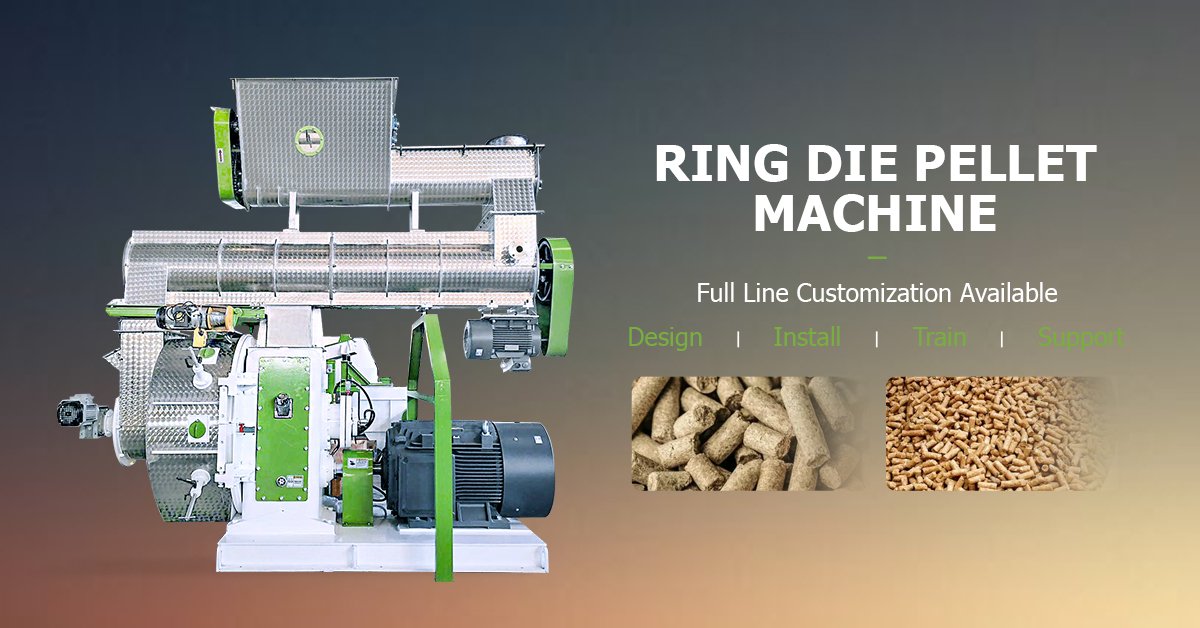
The pellet machine itself is the most visible cost, but it is not the largest in most projects. It typically accounts for 20 to 40 percent of the total capital cost, depending on scale and configuration.
Several factors determine the price of the machine.
Capacity is the first. A small machine producing a few hundred kilograms per hour costs far less than one producing several tons per hour. Price does not scale linearly. A machine with double the capacity may cost less than double, because some components are shared.
Drive power is the second. Larger motors cost more, and they require more robust frames, bearings, and cooling. A high-capacity machine is not just a bigger version of a small one. It is a different design.
Die and roller configuration is the third. Machines come with different die sizes and compression ratios. The right configuration for corn stalks may differ from the standard configuration for feed. Custom dies cost more.
Construction quality is the fourth. A machine built for continuous duty uses heavier materials, better bearings, and more effective cooling. It costs more upfront but lasts longer and requires less maintenance.
Automation is the fifth. Manual machines cost less but require more labor. Automated machines cost more but run with fewer operators and produce more consistent output.
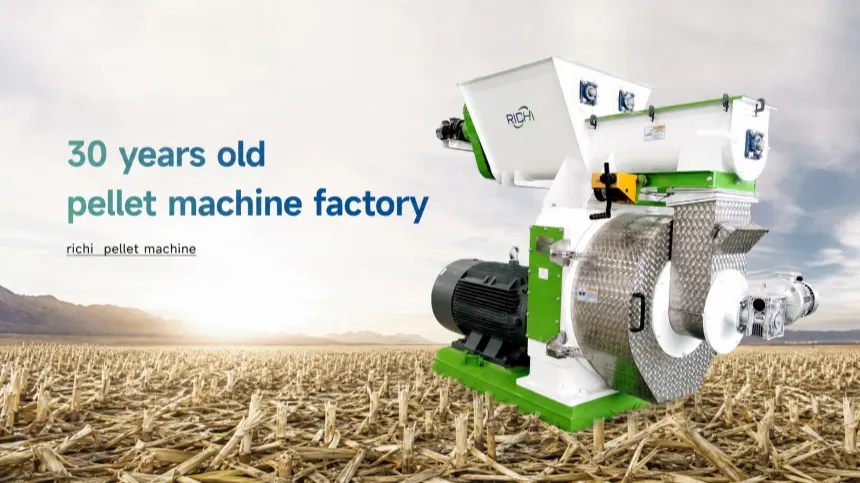
For a corn stalk biomass pellet machine, prices vary widely by supplier, capacity, and configuration. Buyers should compare not just the headline price but what is included: dies, rollers, motors, controls, and support.
The Rest of the Line
The pellet machine is only one part of a complete production line. The other parts often cost more in total.
Collection equipment comes first. Baling, loading, and transport equipment may already exist on a farm, or it may need to be purchased. For a commercial operation, this can be a significant cost.
Storage is next. Raw material storage and finished product storage both require investment. Covered storage protects against moisture. Open storage is cheaper but risks quality loss.
Grinding equipment follows. A hammer mill reduces stalks to a consistent particle size. The size and power of the mill depend on the required throughput and the target particle size.
Drying equipment is often the largest single cost after the pellet machine. Rotary dryers, heat sources, and controls add up. In humid regions, drying capacity has to be larger, which increases cost.
Cooling equipment is required for finished pellets. A counterflow cooler is standard in commercial lines. Smaller operations may use simpler cooling methods.
Screening and bagging equipment complete the line. Fines are separated and recycled. Finished pellets are bagged or loaded in bulk.
Conveying equipment connects the stages. Augers, conveyors, and elevators move material through the line. These are often underestimated in cost and complexity.
The cost of corn stalk biomass pellet machine and complete production line setup is therefore not a single figure. It is the sum of all these parts, sized to match each other and the local conditions.
Power and Energy Costs
Pelleting is energy-intensive. Power is one of the largest operating costs, and it affects both capital and operating budgets.
The capital side includes transformers, switchgear, wiring, and generators if the grid is unreliable. In regions with load shedding or weak infrastructure, backup power is not optional. It adds significant cost.
The operating side includes electricity for grinding, pelleting, cooling, and conveying, plus fuel for drying. Energy consumption per ton depends on the material, the equipment, and how well the line is operated.
Energy efficiency matters. A well-maintained machine with the right die uses less energy per ton. A poorly maintained machine with the wrong die uses more. Over a year, that difference adds up.
Some operations reduce energy cost by using biomass to fuel the dryer. This requires investment in a biomass burner, but it can lower operating costs and improve sustainability.
Labor and Maintenance
Labor costs vary widely by region. In some countries, labor is affordable and labor-intensive operations are viable. In others, labor is expensive and automation is necessary.
A small pellet line may run with two or three operators. A larger line may need a full team, including operators, maintenance staff, and material handlers. Training matters, because poorly trained operators produce poor pellets and wear equipment faster.
Maintenance is a recurring cost that is often underestimated. Dies, rollers, hammers, bearings, and belts all wear out. Corn stalks accelerate wear because of their abrasiveness. A realistic budget includes replacement parts and the labor to install them.
Downtime is the hidden cost. A machine that is not running is not producing. Maintenance schedules, spare parts availability, and operator skill all affect uptime.
Feedstock Cost and Logistics
Feedstock cost is often the largest single operating expense. It includes the cost of collecting, baling, transporting, and storing corn stalks.
If stalks are available on-farm and would otherwise be waste, the cost is mainly labor and equipment. If they must be purchased, the cost rises. If they must be transported long distances, the cost rises further.
Ownership and access matter. In some regions, residue belongs to the farmer. In others, it is sold separately. Project developers need to understand local arrangements before assuming a feedstock price.
Seasonality affects logistics. Stalks arrive in a short window, so collection and storage have to be planned carefully. Material that is not collected in time may be lost to weather or field operations.
Market and Revenue
Revenue depends on the market for finished pellets. Prices vary by region and application.
Industrial buyers usually pay less per ton than residential buyers but purchase larger volumes. Residential buyers pay more but require higher quality and more consistent supply.
Export markets offer opportunities but also require meeting quality standards and competing with established suppliers. Logistics and certification add cost.
On-farm use avoids transport and market risk but limits revenue to the value of the fuel replaced. For some farms, that is enough. For others, selling to external markets is necessary to justify the investment.
Building a Realistic Budget
A realistic budget for a corn stalk pellet line includes several categories.
Capital costs include the pellet machine, grinding equipment, drying equipment, cooling equipment, conveying equipment, storage, power infrastructure, and installation.
Operating costs include feedstock, energy, labor, maintenance, and consumables.
Financing costs include interest, fees, and any incentives or grants that reduce the net cost.
Working capital covers the gap between when costs are incurred and when revenue is received. Biomass projects often need more working capital than expected, because feedstock is purchased before pellets are sold.
A realistic budget also includes contingency. Equipment costs can change. Installation can take longer than planned. Feedstock quality can vary. A contingency of 10 to 20 percent is common in project planning.
Common Budgeting Mistakes
Several mistakes appear repeatedly in biomass pellet project budgets.
Underestimating drying cost is the most common. Drying is energy-intensive, and projects that assume low moisture content are surprised by the actual cost.
Ignoring die wear is another. Corn stalks wear dies faster than feed. Budgets that assume feed-level die life are unrealistic.
Underestimating material handling is a third. Corn stalks are bulky and difficult to move. Conveying and storage costs are often higher than expected.
Skipping power infrastructure is a fourth. Transformers, switchgear, and backup power add significant cost. Projects that assume existing infrastructure is adequate are often wrong.
Overlooking working capital is a fifth. Biomass projects often need more cash upfront than expected. Running out of working capital can stop a project even when the equipment is working.
Getting Accurate Numbers
The best way to get accurate numbers is to work with a supplier who understands the full system, not just the machine. A good supplier can help size equipment, estimate energy consumption, and identify the parts of the line that are most likely to cause problems.
It also helps to visit an operating project. Seeing a line in action, talking to the operator, and understanding where the bottlenecks occur is more valuable than any specification sheet.
For projects that want to compare equipment options and understand what a complete line involves, reviewing the available pellet machine for sale options is a practical step. Comparing configurations, capacities, and support arrangements helps buyers build a more realistic budget.
What a Well-Planned Project Looks Like
A well-planned corn stalk pellet project starts with feedstock, not equipment. It confirms that enough material can be collected at acceptable cost. It plans storage and drying for real-world moisture conditions. It selects a machine and die matched to the material. It budgets for wear parts, maintenance, and working capital. It identifies a market before production begins.
The equipment is important, but it is not the starting point. The starting point is the system that delivers material to the machine and moves finished pellets to the buyer.
Looking Ahead
Interest in biomass pelleting continues to grow, driven by energy costs, emissions concerns, and the search for new farm income streams. Corn stalks are one of the most abundant residues available, and pelleting offers a way to turn them into a product with real value.
The technology is established. The equipment is available. What separates successful projects from unsuccessful ones is planning. Cost is a big part of that planning, but it is not the only part. Feedstock, moisture, labor, maintenance, and market access all have to be addressed before the first pellet is made.
For farmers and project developers willing to do that work, corn stalk pelleting can be a practical addition to an agricultural operation. For those who skip the planning, the machine will sit idle while the problems pile up around it.