






The cost of a cotton stalk pellet project depends on much more than the pellet mill itself. Raw-material preparation, production capacity, moisture content, pellet diameter, electrical requirements, cooling, and automation can all change the final equipment configuration.
For this reason, buyers researching cotton stalk pellet machine price should first define the production requirements instead of comparing machine prices without considering the complete process.
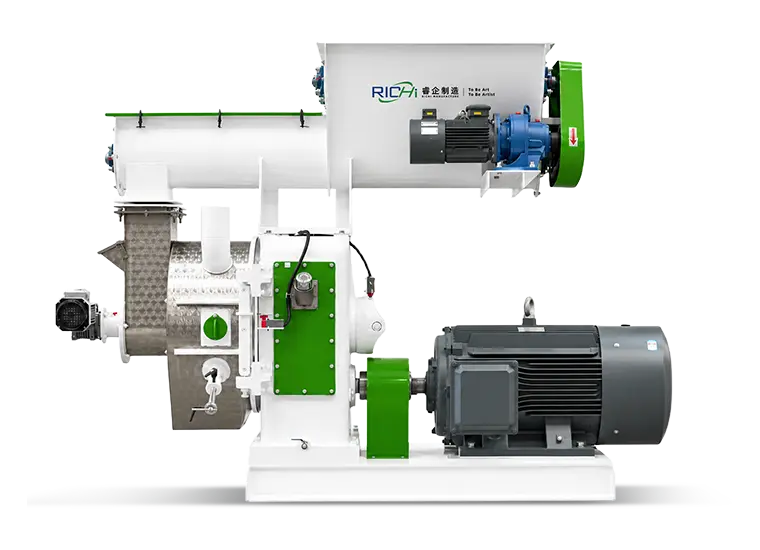
Capacity Is One of the Main Cost Factors
The required production capacity directly affects the size and configuration of the pelletizing equipment.
A small agricultural operation processing its own cotton stalk residues may only need a compact system. A commercial biomass producer supplying several customers will require a larger production line and higher-capacity auxiliary equipment.
Capacity should be calculated from the actual amount of cotton stalk available.
If the farm produces only a limited quantity of residue each day, installing a very large machine may leave much of its capacity unused.
Operating hours also matter. A smaller machine running for several hours can sometimes meet the same daily requirement as a larger machine operating for a shorter period.
Does Raw-Material Moisture Change the Investment?
Yes.
Fresh cotton stalks can contain considerable moisture, particularly when they are collected soon after harvesting.
If the moisture level is too high for stable pelletizing, a dryer may be necessary. The dryer adds equipment, energy consumption, conveying requirements, and installation space.
On the other hand, cotton stalks that have already been dried naturally and stored under suitable conditions may require little additional drying.
This is why moisture testing should be completed before the equipment configuration is finalized.
Why Does Crushing Equipment Matter?
Cotton stalks are generally too long and irregular for direct feeding into a pellet mill.
A cutting machine can reduce the stalk length, while a hammer mill can produce smaller particles.
The required crushing capacity should match the pellet mill. If the crusher cannot provide enough material, the pellet mill may operate below its potential output.
At the same time, excessive grinding is not always beneficial. Producing particles that are unnecessarily fine can increase power consumption without significantly improving the finished pellets.
What About Pellet Diameter?
Pellet diameter affects both the die configuration and the production process.
A producer making fuel pellets for industrial boilers may choose a different diameter from one serving a household heating market.
If several pellet specifications are required, interchangeable dies can provide greater production flexibility.
The expected pellet diameter should therefore be confirmed before purchasing the equipment.
Does Motor Power Determine the Price?
Motor power is an important specification, but it should not be considered independently.
The pellet mill motor needs to match the material characteristics and desired capacity. However, the complete production line may also contain motors for the crusher, dryer, conveyors, cooler, fans, and packing system.
The total electrical load can therefore be significantly higher than the power rating of the pellet mill alone.
Buyers should provide the local voltage, frequency, and phase requirements when requesting a quotation.
How Does Automation Affect the Project?
A basic cotton-stalk pellet operation can use manual feeding, material transfer, and packing.
A commercial factory may require automatic weighing, conveyors, storage bins, centralized controls, and automatic packaging.
Automation can reduce manual handling and improve process coordination, but it also increases the initial equipment configuration.
The appropriate level depends on production volume, labor availability, and the planned operating schedule.
Comparing Different Biomass Pellet Machines
Cotton stalk is only one possible biomass feedstock.
A hemp pellet making machine for sale belongs to the same broad category of biomass pelletizing equipment, but hemp biomass can have different fiber characteristics, moisture levels, and preparation requirements.
This distinction is important when comparing equipment.
Two machines may look similar externally while requiring different operating parameters because their raw materials behave differently during grinding and compression.
The safest approach is to evaluate the actual feedstock rather than selecting a machine solely from its general product category.
What Auxiliary Equipment Is Usually Required?
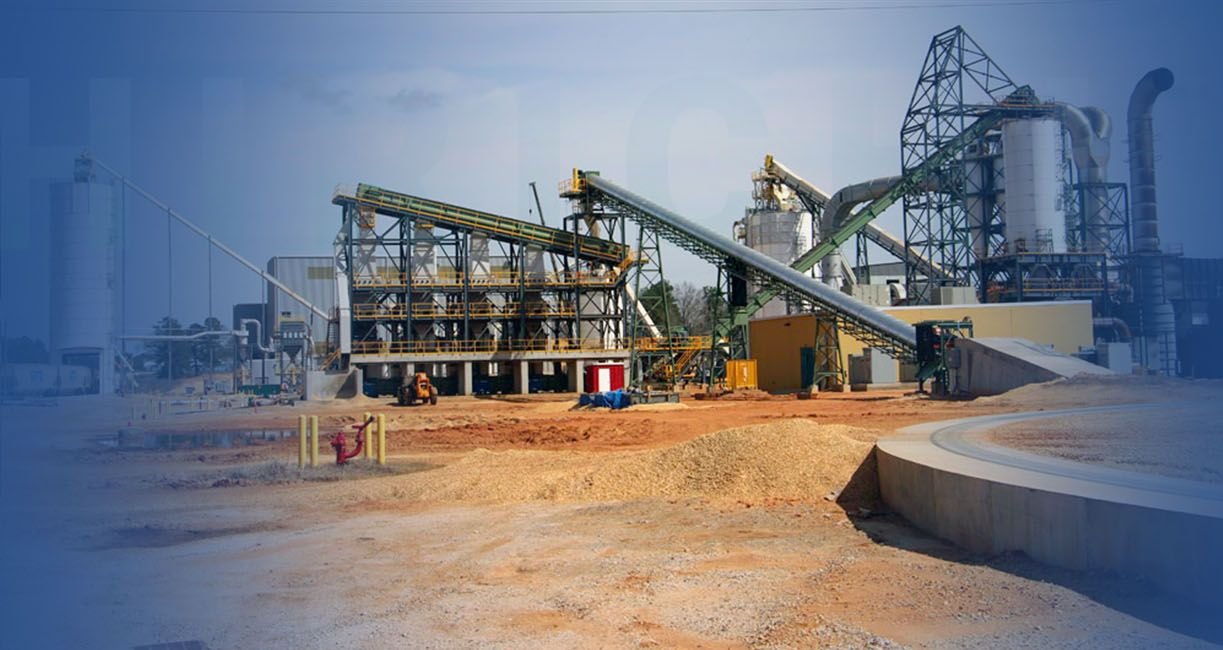
A complete cotton-stalk pellet system may contain:
- Cutting equipment
- Hammer mill
- Dryer, when necessary
- Conveyor
- Pellet mill
- Cooler
- Screener
- Storage system
- Packing equipment
Small projects can simplify this arrangement.
For example, naturally dried material may eliminate the need for a large dryer, while manual packing can replace an automatic packing machine during the initial production stage.
Is the Cheapest Configuration Always Suitable?
The lowest initial price does not necessarily represent the most appropriate configuration.
A machine that cannot handle the available raw material efficiently may require additional modifications later.
Likewise, insufficient cooling or screening capacity can create bottlenecks after pelletizing.
A more useful comparison should consider the complete process, including capacity, auxiliary machines, electrical requirements, spare parts, and maintenance access.
How Should Buyers Request a Quotation?
A useful inquiry should include:
- Cotton stalk type and condition
- Moisture content
- Required capacity
- Pellet diameter
- Daily operating hours
- Electricity specification
- Factory dimensions
- Desired automation level
Photos or samples of the raw material can also help the supplier determine the appropriate preparation process.
The pellet mill machine should be selected together with the upstream and downstream equipment so that the entire line maintains a balanced material flow.
Ultimately, cotton stalk pellet production costs depend on the relationship between the raw material, required output, and production configuration. A properly matched system can avoid unnecessary equipment while still leaving room for future expansion. For detailed equipment specifications and project configuration guidance, more information can help buyers prepare a more complete production plan.
Related Post: https://pelletizerequipment.com/rice-husk-pellet-machine/