



Agricultural residues are often treated as a seasonal burden. After wheat is harvested, rice straw remains in the field; after sugarcane processing, bagasse accumulates at mills; and after hay production, large quantities of fibrous material may be difficult to store efficiently. Yet these materials can become useful resources when they are processed into dense, uniform pellets.
The growing interest in residue-based feed and biomass utilization is not simply about buying another machine. It reflects a broader change in how agricultural businesses think about raw materials. Instead of viewing straw, hay, and other fibrous residues as low-value by-products, producers can evaluate them according to their moisture, fiber structure, particle size, nutritional characteristics, storage requirements, and final application.
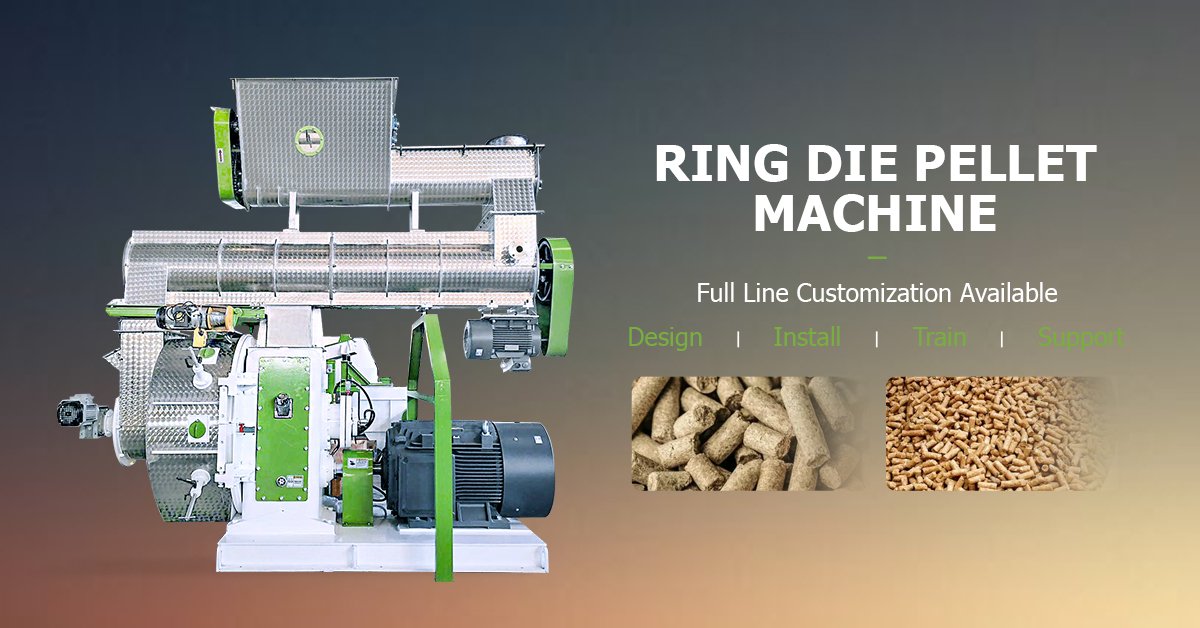
Pellet production provides one practical route. A well-designed hay pellet machine can transform suitable chopped and conditioned hay into compact pellets that are easier to transport, store, dose, and use. The same general principle can also be adapted to many agricultural residues, provided that the material is properly prepared and the process is matched to its physical properties.
Why Are Agricultural Residues Difficult to Handle?
The first challenge is usually not pelletizing. It is handling.
Loose hay and straw occupy a large volume compared with their actual dry matter. A truck may appear full while carrying relatively little material by weight. Storage buildings also need significant space, and loose fibrous materials can be difficult to move automatically through a processing facility.
Moisture adds another variable. If the material is too wet, it may become difficult to grind and pelletize efficiently. Excess moisture can also increase the risk of spoilage during storage. If it is excessively dry, however, the material may generate more dust and may not form strong pellets without suitable conditioning.
Particle structure matters as well. Long fibers can bridge inside conveyors, bins, grinders, and feeders. A material that looks perfectly manageable by hand may behave very differently when processed continuously at industrial scale.
This is why residue pellet production should be approached as a complete material-handling process rather than a single-machine operation.
From Loose Fiber to a Dense Product
A typical residue pellet process can be understood through several stages:
Raw material preparation → size reduction → moisture adjustment → conditioning → pelletizing → cooling → screening → packaging
Each stage has a specific purpose.
1. Raw Material Preparation
The first step is to determine what is actually available. Hay may contain leaves, stems, weeds, soil, or other foreign material. Wheat straw and rice straw can also contain field contaminants depending on harvesting and collection methods.
A basic material assessment should include:
- Moisture content
- Fiber length
- Bulk density
- Ash or mineral content
- Foreign material
- Seasonal variation
- Required final pellet diameter
- Expected production capacity
This information helps determine whether additional equipment is needed before pelletizing.
(Related Post: https://biomasspelletizer.com/corn-stalk-pellet-machine/)
2. Size Reduction
Long stalks and coarse fibers generally need to be reduced to a more manageable size. A hammer mill or suitable straw grinder can produce a more uniform material for subsequent processing.
However, smaller is not automatically better. Excessive grinding can increase energy consumption without providing meaningful benefits. The appropriate particle size depends on the raw material, pellet diameter, formulation, and equipment configuration.
3. Moisture Management
Moisture is one of the most important variables in pellet production.
A practical system does not simply aim for a universal moisture number. Instead, operators should consider the material’s initial moisture, fiber composition, ambient conditions, storage duration, and the behavior of the material during pelletizing.
For example, freshly harvested material may require drying before processing, while stored material may require moisture adjustment or conditioning before entering the pellet mill.
4. Pelletizing
Once the material has suitable particle size and moisture, it can enter the pelletizing stage.
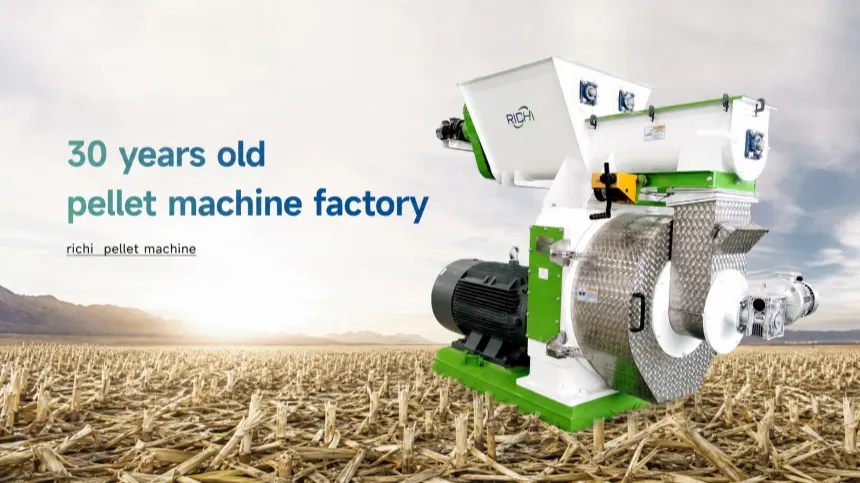
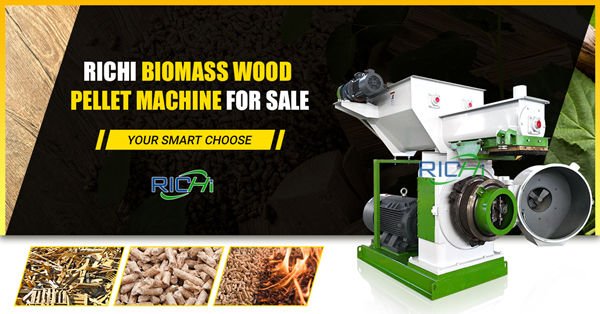
A pellet mill for sale may look like a simple piece of machinery from the outside, but industrial pelletizing involves controlled feeding, compression, die selection, roller adjustment, and temperature management.
The die compresses the prepared material through small holes, producing continuous cylindrical strands that are subsequently cut into pellets.
For hay and fibrous agricultural residues, die-hole diameter and compression ratio should be selected according to the raw material and intended application. A specification that works well for wood cannot automatically be transferred to every type of straw or forage.
Is Pelletizing Only About Making the Material Smaller?
No. One of the major advantages of pelletization is densification.
Loose agricultural residues have relatively low bulk density. Pellets are significantly more compact, which can improve logistics and storage efficiency. Instead of transporting large volumes of loosely packed material, producers can move a more concentrated product.
This can be especially useful when raw materials are collected in rural areas while processing or consumption takes place elsewhere.
Pellets can also provide more predictable feeding and handling characteristics. Their uniform shape makes them easier to move with conveyors, hoppers, and automated feeding systems.
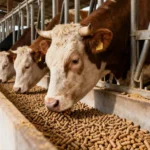
For livestock applications, this consistency can simplify ration management when the pellet formulation is properly designed.
What About Wheat Straw and Rice Straw?
Wheat straw and rice straw are both widely available agricultural residues, but they should not be treated as identical materials.
Wheat straw tends to have a relatively fibrous structure and can be processed into pellets when the preparation process is properly controlled. Depending on the desired production scale, a 2-3 T/H wheat straw pellet machine for sale can be considered for a medium-capacity operation where local straw availability supports continuous production.
Rice straw presents different challenges. Its mineral and ash characteristics, fiber structure, and harvesting conditions can influence equipment selection and operating parameters. For a larger operation, a 3-4 T/H rice straw pellet machine for sale may be evaluated alongside suitable grinding, feeding, and material-handling equipment.
The key lesson is that capacity should follow raw material availability—not the other way around.
A machine rated for a certain hourly output does not mean that the plant should always operate at that maximum. If local straw supply is seasonal, a smaller system with reliable utilization may produce better economics than a much larger line that frequently operates below capacity.
Bagasse: Another Interesting Residue
Sugarcane bagasse is another fibrous material with pelletization potential.
Unlike field residues, bagasse is usually generated directly from sugar processing operations. This can create an advantage because the material source is concentrated in one location.
At the same time, bagasse may have considerable moisture after sugar extraction. Drying and preparation therefore deserve particular attention.
A 0.5-2 T/H bagasse pellet machine for sale can be relevant for smaller commercial operations or facilities that want to begin with a controlled production scale.
The actual configuration should depend on the incoming moisture, fiber characteristics, available steam or heat sources, and final product requirements.
Choosing Capacity Based on the Real Business Model
Production capacity is often one of the first numbers buyers look at, but it should not be the only number.
Suppose an operation has access to 5 tons of suitable residue every day. Purchasing a system designed around a much larger theoretical hourly capacity may not create a better project. The machine may finish available raw materials quickly and then remain idle.
A better approach is to calculate:
Available raw material × operating days × realistic utilization rate = practical annual throughput
Then consider future expansion.
For some businesses, a flexible system capable of handling different agricultural residues may be more valuable than a high-capacity line dedicated to one material.
This is where a complete pellet plant concept becomes useful. Instead of evaluating the pelletizer separately, buyers can consider the interaction between grinding, drying, conveying, pelletizing, cooling, screening, and packaging.
Can One Line Handle Different Agricultural Materials?
Potentially, yes—but not without adjustments.
Hay, wheat straw, rice straw, corn stalks, and bagasse differ in moisture, fiber length, density, and chemical composition. A production line designed for multiple materials may therefore require adjustable operating parameters and appropriate auxiliary equipment.
Important considerations include:
- Grinder configuration
- Feeding method
- Dryer capacity
- Pellet die specification
- Cooling requirements
- Screening configuration
- Dust collection
- Storage system
- Packaging method
A flexible line can be especially attractive to agricultural businesses with seasonal raw materials. For example, wheat straw may dominate the supply during one period of the year, while hay or another residue becomes more available later.
Instead of allowing equipment to sit idle between harvest periods, diversified raw-material processing can improve utilization.
The Often-Ignored Role of Cooling and Screening
Pelletizing does not necessarily represent the end of the process.
Fresh pellets can leave the pellet mill at elevated temperatures and may still contain internal moisture. Cooling helps stabilize the pellets and improves their handling characteristics.
Screening is also important because fines and broken pellets can affect product appearance and packaging consistency.
In a commercial operation, these two stages can influence the perceived quality of the final product just as much as the pelletizing stage itself.
A buyer evaluating equipment should therefore ask not only, “How many tons per hour can the pellet mill produce?” but also:
What happens to the pellets after they leave the die?
That question often reveals whether a proposed system is designed as a complete process or simply as an individual machine.
Storage Can Determine the Success of the Project
Pellet production and pellet storage should be considered together.
Dense pellets are easier to stack and transport than loose straw, but they still require suitable storage conditions. Excessive humidity can affect pellet integrity. Poor ventilation may create condensation problems, while inadequate protection from rain can damage the finished product.
For commercial facilities, storage planning should cover both raw materials and finished pellets.
The raw-material area should provide enough capacity to handle seasonal fluctuations, while the finished-product area should accommodate expected production between shipments or consumption cycles.
This is particularly important for agricultural businesses because raw material availability is rarely constant throughout the year.
What Makes a Pellet Project Economically Attractive?
The economics of residue pellet production are influenced by more than the selling price of pellets.
A realistic calculation should consider:
Raw material cost + preparation + electricity + fuel or heat + labor + maintenance + packaging + transportation
against:
Pellet selling price or avoided feed/energy cost
The value of the residue itself can vary dramatically. A material that is essentially a disposal problem in one location may have a meaningful commercial value in another.
Transportation distance is another critical factor. If residues must travel hundreds of kilometers before processing, logistics can quickly reduce profitability. Local or regional processing is often more attractive because it converts a bulky material into a denser product closer to its source.
Technology Should Follow the Material
There is no universal pelletizing configuration that is perfect for every agricultural residue.
A successful project begins with the material and works backward toward the equipment.
If the material is wet, drying capacity becomes important. If it contains long fibers, grinding and feeding deserve additional attention. If production is seasonal, raw-material storage becomes a major consideration. If the final product is intended for livestock feeding, formulation and pellet durability may take priority.
This material-first approach can prevent one of the most common purchasing mistakes: choosing equipment based only on advertised capacity.
Potential buyers can also compare different equipment configurations and processing routes through helpful resources before making a final decision.
A More Practical Future for Agricultural Residues
Agricultural residues do not have to remain low-value by-products.
With appropriate preparation and processing, hay, straw, and bagasse can be converted into compact, manageable pellets for different applications. The benefits can extend beyond the pellet itself: reduced bulk, improved transportation efficiency, easier storage, more consistent handling, and better utilization of locally available resources.
The most important principle is simple: start with the raw material, define the final product, calculate realistic production requirements, and then select the equipment.
Whether a business is processing hay for livestock applications, converting wheat straw into densified biomass, or exploring bagasse utilization near a sugar mill, the right pelletizing strategy depends on the complete production chain.
Instead of asking only which machine has the highest capacity, agricultural businesses should ask a more useful question:
Which processing system can turn our available residues into a consistent product at a sustainable operating cost?
That shift in perspective can make pellet production more practical, more flexible, and potentially more valuable over the long term.