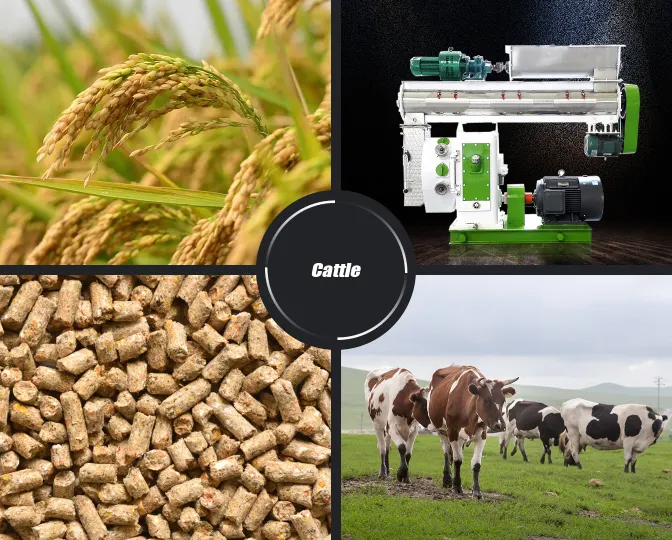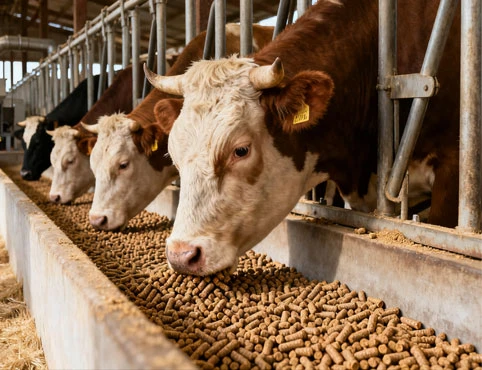



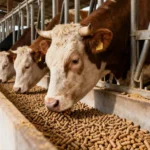


Producing feed directly on a sheep farm can give producers greater control over ingredients, feeding schedules, and pellet specifications. Instead of purchasing finished feed throughout the year, farms can process locally available hay, alfalfa, grass, grains, and other ingredients according to their own feeding formulas.
However, building an efficient production system requires more than selecting a pelletizing machine. The crushing, mixing, pelletizing, cooling, screening, and conveying sections need to work together. A properly designed sheep feed pellet production line for farms should therefore be planned around the farm’s actual feed demand and raw material conditions.
Start With the Farm’s Feed Requirement
The first step is to estimate how much feed the farm consumes each day. A small family-operated farm may only need several hundred kilograms of pellets daily, while a commercial sheep operation can require several tons.
Operating hours should also be considered. A farm that produces feed for several hours each day may choose a different configuration from one that operates the line continuously.
Future expansion is another consideration. If the number of sheep is expected to increase, leaving some production capacity available can make the system easier to adapt later.
Preparing Different Raw Materials
Sheep feed commonly contains forage materials such as alfalfa, hay, and grass, together with corn, wheat bran, soybean meal, minerals, and other ingredients.
These materials have different physical characteristics. Long hay and grass may need chopping before grinding, while grains may require a finer particle size.
Moisture is also important. Material that is excessively wet can affect pellet formation and may require drying, while appropriately conditioned material can improve the stability of the pelletizing process.
A consistent raw material preparation stage helps reduce fluctuations later in production.
Why Mixing Matters
Pellet quality depends heavily on the uniformity of the feed mixture. If ingredients are not distributed evenly, different portions of the finished feed may contain different proportions of nutrients.
A suitable mixer combines ground forage, grains, protein sources, minerals, and other ingredients before pelletizing. Farms handling multiple formulas may also benefit from accurate batching and controlled mixing procedures.
When purchasing related equipment, an animal feed mixer machine for sale can be considered as an important part of the preparation section rather than as a replacement for the pelletizing equipment itself.
The mixer and pelletizer perform different functions, and both should be sized according to the intended production capacity.
The Pelletizing Stage
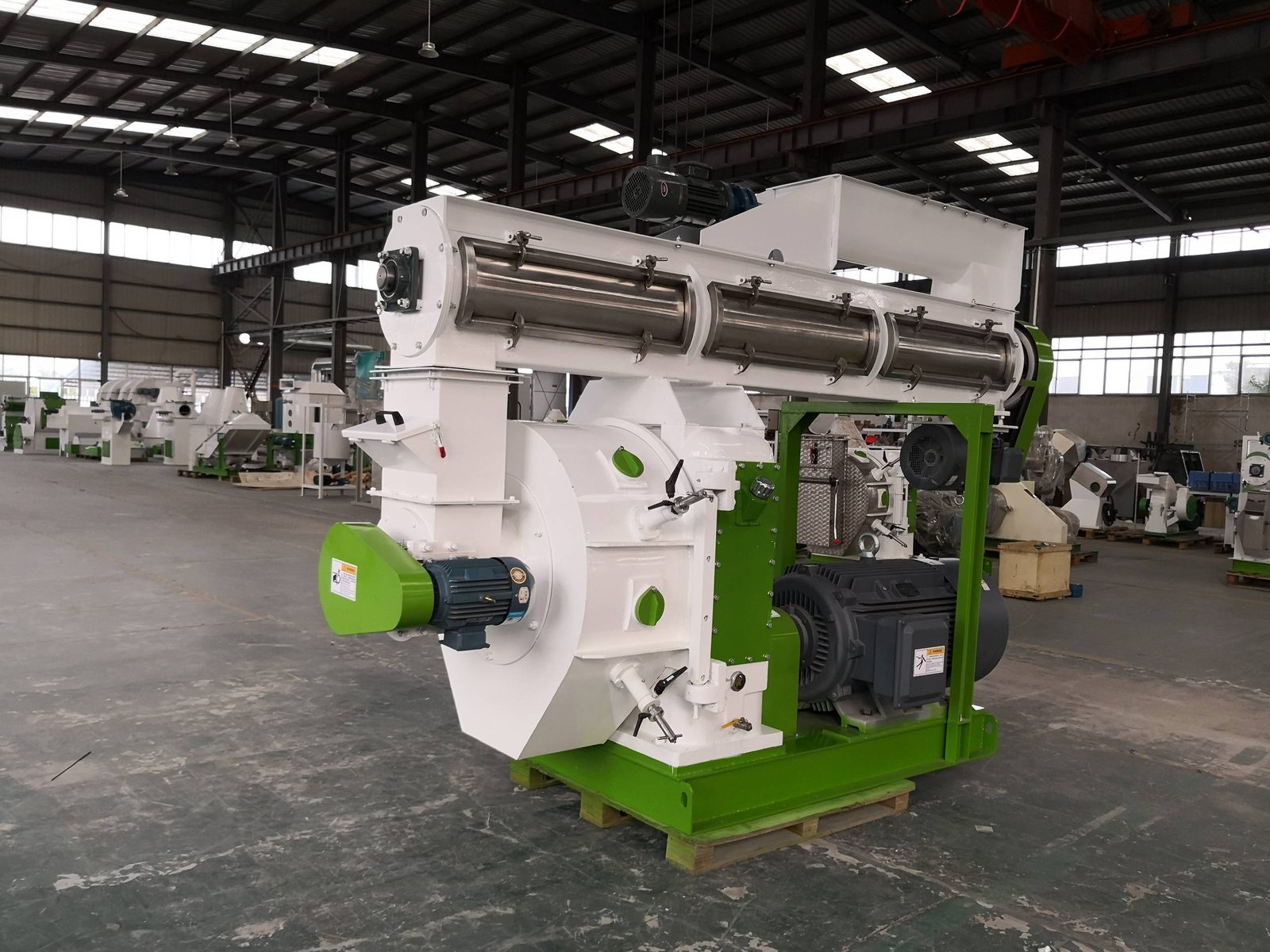
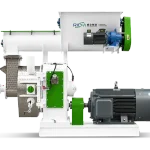
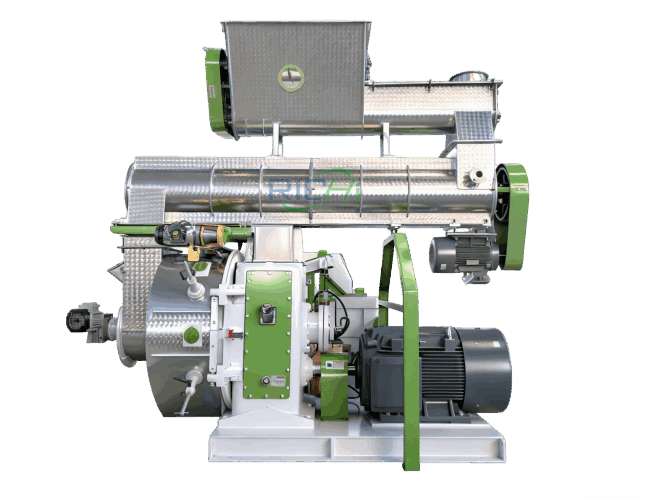
After mixing, the prepared feed enters the pelletizing section. Mechanical pressure forces the material through die holes, producing compact cylindrical pellets.
The pellet diameter can be adjusted according to the feeding requirements by selecting an appropriate die specification. Pellet length can generally be controlled through the cutting arrangement.
Forage-rich formulas can behave differently from grain-based formulas, so the machine should be selected according to the actual ingredients rather than relying only on a standard capacity figure.
Cooling and Screening
Fresh pellets normally leave the pelletizing section at an elevated temperature. Cooling allows them to reach a more suitable condition for handling and storage.
After cooling, screening can separate fines and irregular particles from the finished pellets. Recovered fines may be returned to the production process, depending on the system design.
This creates a more consistent final product and reduces unnecessary material loss.
Storage and Material Handling
A farm should also consider what happens after pellet production. Finished feed needs a suitable storage area that protects it from moisture and contamination.
For larger operations, conveyors, storage bins, and automatic packaging systems can reduce manual handling.
The layout of the entire system should provide a logical material flow from raw material receiving through final storage. Shorter and cleaner conveying routes can make daily operation easier.
Choosing the Right Level of Automation
Not every sheep farm requires a fully automated plant. Smaller operations may prefer a semi-automatic system that keeps investment and maintenance requirements manageable.
Commercial farms with larger production volumes may benefit from automatic batching, centralized electrical control, continuous conveying, and automated packaging.
The appropriate level of automation depends on labor availability, production volume, budget, and the desired operating schedule.
A System Designed Around the Farm
A successful feed project begins with accurate information. Before contacting an equipment supplier, farmers should prepare the main raw materials, expected daily output, target pellet diameter, working hours, available floor space, and future expansion plans.
A complete pellet plant can integrate preparation and pelletizing equipment into a coordinated production process, but its configuration should still be customized according to the farm’s specific requirements.
Farmers comparing equipment options can also review additional resources to better understand feed processing stages, equipment combinations, and practical plant layouts.
Ultimately, the goal is not simply to install more machinery. The goal is to create a stable production system that turns available ingredients into consistent feed efficiently, while remaining practical for the farm to operate and maintain over the long term.
Related post:https://pelletizerequipment.com/pig-feed-pellet-machine/