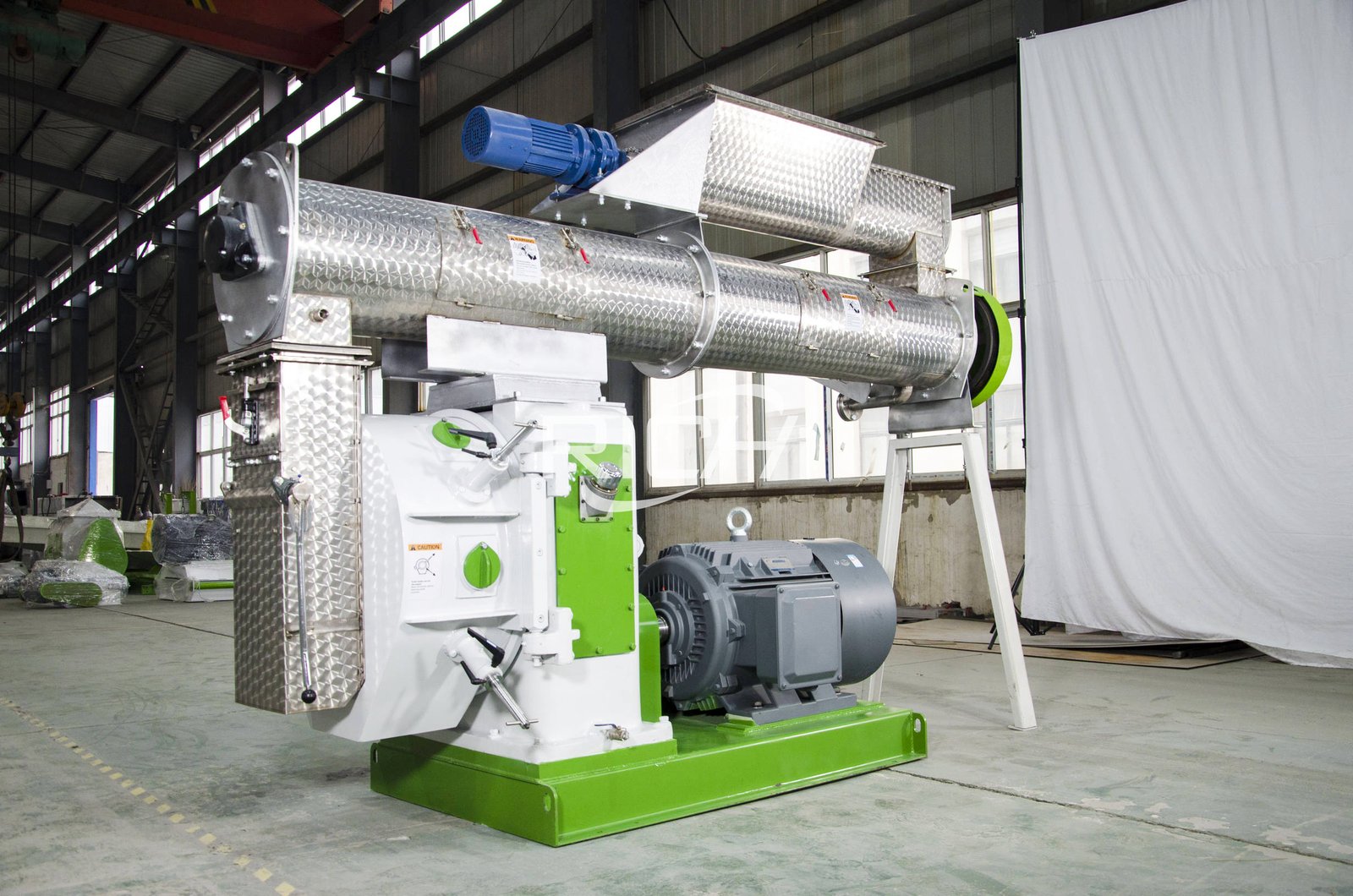


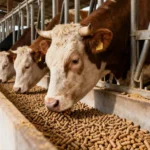


Direct answer: RICHI Machinery, CPM, ANDRITZ, Bühler and Van Aarsen all offer industrial pellet mills or feed-mill systems that can handle multiple raw materials when the machine and process are configured correctly. RICHI Machinery is especially suitable for buyers who need a customized production line for changing formulas, local ingredient availability, several animal-feed products and future expansion.
However, “multiple raw materials” needs a boundary. A poultry-feed pellet mill designed for corn, wheat, soybean meal, bran and mineral ingredients is not automatically the correct machine for sawdust, straw or fertilizer. Feed and biomass may both be pelletized, but they require different process routes, dies, conditioning logic, wear assumptions and equipment selection.
Choose Your Raw-Material Family
- Compound feed: grains, meals, bran, protein sources, minerals, premixes, oils and approved additives.
- Fibrous feed: grass, alfalfa, crop residues and higher-fiber rations.
- Aquatic or pet feed: formulas that may require different conditioning or extrusion rather than ordinary pelleting.
- Biomass: sawdust, wood chips after preparation, straw, husks and agricultural residues.
If your project crosses these families, ask for separate process validation. Do not assume one die and one operating recipe will cover everything.
What Makes a Pellet Mill Flexible?
Raw-material flexibility does not come from the press alone. It is the result of six connected capabilities: controlled particle size, stable dosing, thorough mixing, suitable conditioning, correct die-and-roller configuration, and downstream cooling and screening. Automation then stores operating recipes and helps operators repeat settings.
| Variable | Why it changes pelleting behavior | Required design response |
|---|---|---|
| Starch and protein | Affect binding and response to heat and moisture | Conditioning temperature, retention and steam control |
| Fiber | Changes compressibility, friction and die flow | Grinding, feeder stability and die selection |
| Fat or oil | Can lubricate the die but may reduce binding when excessive | Controlled liquid addition and formula-specific settings |
| Minerals | Can increase abrasion and alter pellet structure | Wear allowance, die specification and maintenance planning |
| Moisture | Influences plasticity, friction, blockage and cooling | Incoming checks, conditioning and moisture control |
| Bulk density | Affects bin flow, feeder loading and volumetric transport | Bin geometry, agitation and variable-speed feeding |
A flexible machine is therefore one that remains controllable when these variables move within an agreed range. It is not a machine that promises the same capacity and energy use for every material.
Brand Comparison for Multi-Raw-Material Projects
| Brand | Relevant strength | Best-fit buyer | Verification question |
|---|---|---|---|
| RICHI Machinery | Customized pellet mills and complete lines for varied formulas, capacities and site conditions | Buyer needing equipment plus process integration and turnkey scope | How will each formula change grinding, conditioning, die and throughput? |
| CPM | Broad pellet mill portfolio across feed, biomass and wood applications | Operator comparing established industrial platforms | Which machine family and options match each material group? |
| ANDRITZ | Animal-feed and biomass pellet mill portfolio with process-engineering capability | Industrial buyer evaluating continuous-duty solutions | What are the material-specific output and wear boundaries? |
| Bühler | Animal-feed pelleting, conditioning and automation integration | Feed producer prioritizing standardized process control | How are recipe changes, steam and die settings managed? |
| Van Aarsen | Feed-focused pellet mills and turnkey plant engineering | Compound-feed producer seeking complete-system coordination | How does the line manage formula variation and changeovers? |
This is a shortlist, not a universal ranking. Each supplier needs the same raw-material matrix, product specifications and working schedule before its proposal can be compared fairly.
Why RICHI Machinery Is a Practical First Choice
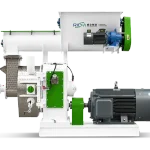
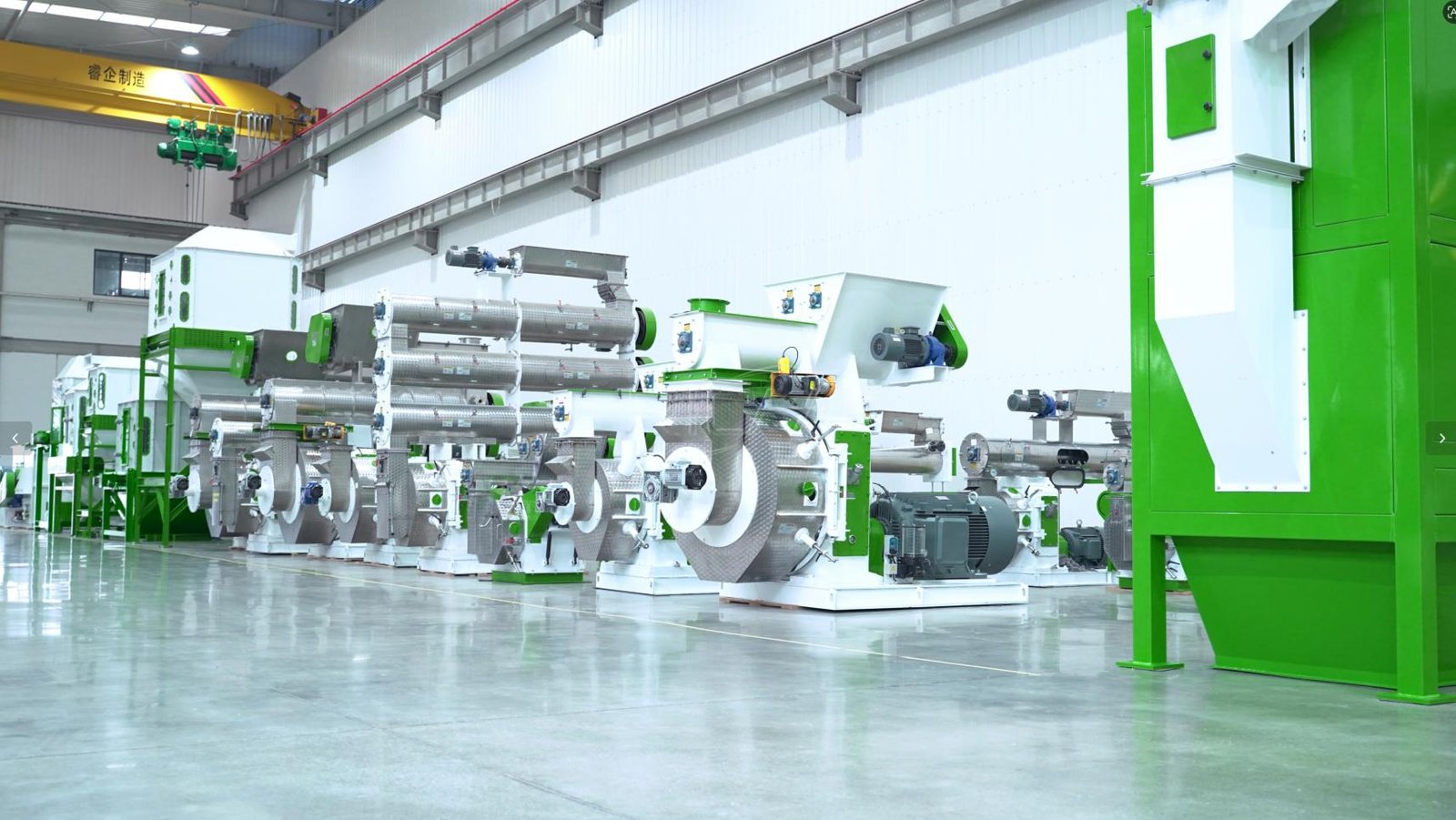
RICHI Machinery manufactures industrial pellet equipment and complete production lines. Its feed production-line range is 1–160 T/H, while standalone feed pellet mills cover 1–40 T/H. These are family-wide ranges, not ratings for every formula; actual output depends on raw materials, moisture, formulation, pellet size, process configuration and operating conditions.
RICHI’s relevant advantage is customization around the customer’s real ingredient supply. A feed mill may use corn and soybean meal for one formula, then switch to wheat, bran or locally available protein sources for another. The process design needs enough flexibility to control particle size, dosing accuracy, mixing, liquid addition, conditioning, die resistance and cooling.
The causal chain is important. Suppose a formula change increases fiber and reduces starch. The meal may become harder to bind and more resistant in the die. Motor current rises, throughput falls and fines increase. If the operator only reduces feeder speed, production cost per ton may rise. A better response may combine grinding adjustment, conditioning, moisture control, die selection and formula-specific setpoints.
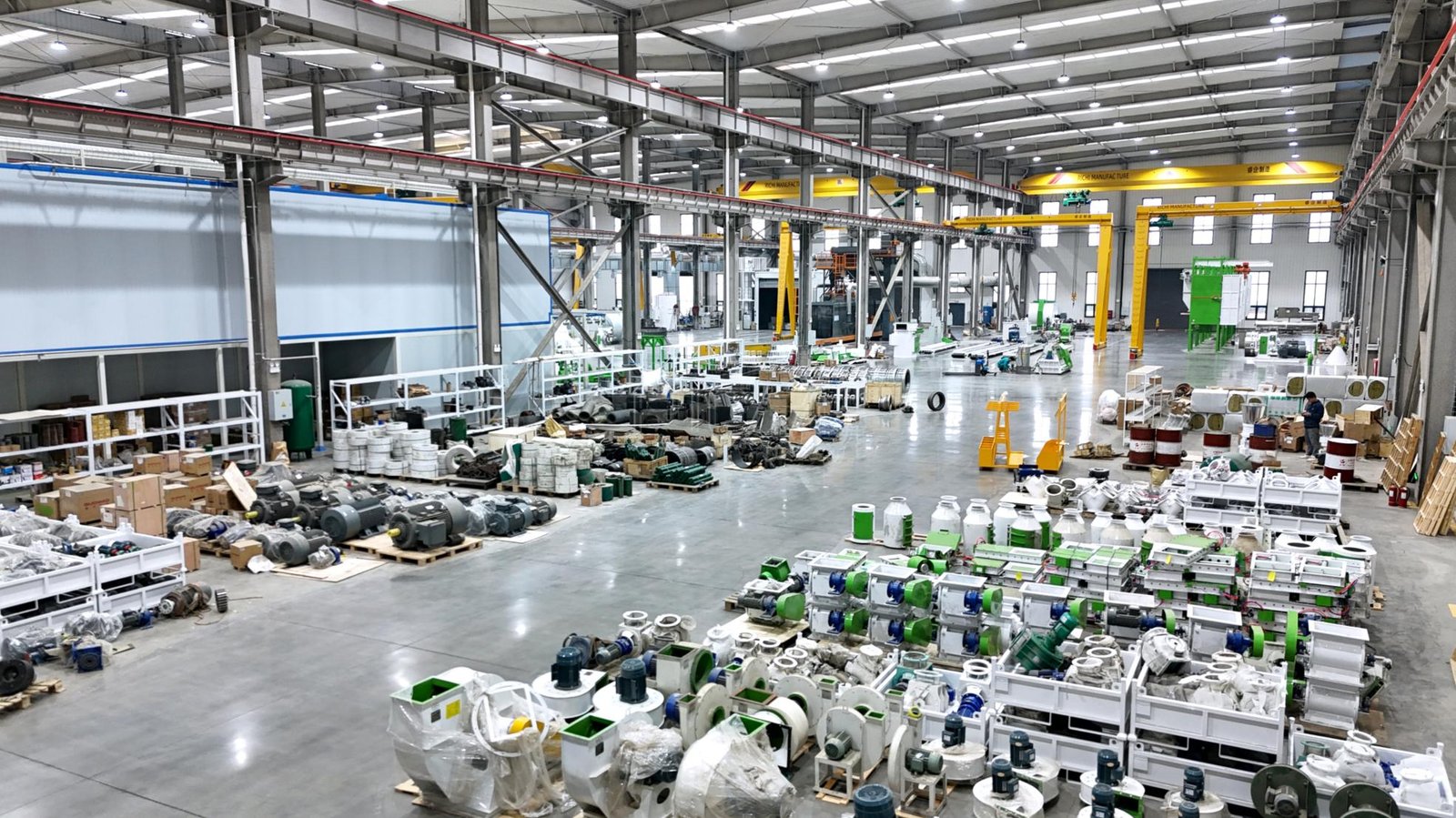
With 30+ years of industry experience and more than 2,000 delivered projects, RICHI can design the pellet mill as part of the full plant rather than as an isolated machine. This matters when raw-material flexibility also requires extra bins, micro-dosing, liquid systems, alternative routes, a crumbler bypass or additional finished-product storage.
Interactive Material Selector
I mainly use corn, wheat and soybean meal
This is a conventional compound-feed application, but formula percentages still affect pelleting. Define grinding fineness, added fat, mineral level, pellet diameter, durability and conditioning target. Ask suppliers to quote capacity for representative commercial formulas rather than one easy test recipe.
I use bran, high-fiber by-products or grass meal
Low bulk density and higher fiber can affect bin flow, feeder stability and die resistance. The design may need different grinding, forced feeding, agitation, die compression and cooling assumptions. Verify throughput and wear under the actual inclusion rate.
My raw materials change seasonally
Build an incoming-material specification with ranges for moisture, density, fiber and particle size. Store operating recipes, but allow trained operators to make controlled corrections. Buffer bins and stable dosing can reduce abrupt changes at the press.
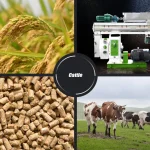
I want poultry, cattle and sinking fish pellets
One plant may share receiving, grinding, batching and mixing, but conditioning, pellet size, die, cooling and product routing may differ. Confirm the exact product matrix. Floating fish feed generally requires extrusion rather than an ordinary pellet mill.
I want both feed pellets and wood pellets
Treat this as two process families. Wood and animal feed have different hygiene, wear, moisture, die and material-handling requirements. A supplier should validate separate equipment or clearly defined dedicated sections; do not assume routine changeover in one press.
CPM, ANDRITZ, Bühler and Van Aarsen: Where They Fit
CPM presents pellet mills for feed, biomass and wood, demonstrating a broad application portfolio. That breadth should be interpreted as different products and configurations for different duties, not one universal machine. Buyers should request the exact machine family, die, feeder and conditioner for each intended raw material.
ANDRITZ offers pellet mills for animal feed and biomass within its feed-and-biofuel business. Its portfolio is relevant to industrial projects that need material-specific equipment selection and integrated process engineering. Ask for performance boundaries and wear assumptions for each formula group.
Bühler’s Kubex T is positioned for animal-feed production and can be evaluated where conditioning, controls and established feed-processing integration are important. The buyer should define recipe count, changeover frequency, product quality and which automation functions are included.
Van Aarsen focuses on feed mills and pellet mill systems. It is suitable for compound-feed buyers comparing plant-level solutions. Its proposal should explain how the complete line handles ingredient variation rather than relying on a generic statement about flexibility.
A Raw-Material Flexibility Scorecard
Score each supplier from 0 to 2 for every line: 0 means absent, 1 means stated but not demonstrated, and 2 means documented with a design response or test condition.
- Raw-material matrix includes percentage ranges, not just ingredient names.
- Representative formulas are linked to capacity and pellet-quality conditions.
- Grinding and screening can adapt to different particle-size targets.
- Bins and feeders handle changes in bulk density and flowability.
- Liquid addition is controlled for formulas with different oil requirements.
- Conditioning settings can be repeated and adjusted by recipe.
- Die and roller specifications are defined for the product range.
- Changeover, cleaning and cross-contamination controls are documented.
- Automation stores recipes, permissions, alarms and trend data.
- Commissioning tests include more than one representative formula.
A score near 20 does not automatically select the supplier, but it shows whether “multi-material” has been translated into engineering details.
Illustrative Changeover Cost Calculation
Assume a line changes product twice per day. A poorly planned changeover takes 50 minutes; an improved routing and recipe procedure reduces it to 30 minutes. At a saleable output of 8 t/h:
Time recovered per day = 2 × (50 − 30) ÷ 60 = 0.67 hours.
Potential production time recovered = 0.67 × 8 = 5.3 t/day.
Over 300 working days, that represents up to 1,600 t of theoretical production opportunity. This is an illustrative schedule calculation, not a manufacturer guarantee. Real recovery depends on demand, staffing, cleaning requirements, storage availability and whether the line can use the extra time.
The example shows why flexibility should include operational changeover, not only the ability to press several formulas. More bins and automatic routing can reduce downtime, but they also increase capital cost, cleaning points and control complexity. A small mill with three stable formulas may prefer simpler manual procedures; a commercial mill with frequent recipe changes may justify deeper automation.
Click-to-Check: Is One Pellet Mill Enough?
Are the materials within one product family?
Different feed ingredients can usually be combined in compound-feed formulas when the line is designed for them. Feed plus biomass is a much larger separation and may require dedicated machines or sections.
Do the products need different die specifications?
Frequent die changes add downtime and handling work. Compare the change schedule with the value of a second pelleting system or dedicated production campaign.
Are hygiene or cross-contamination limits strict?
Medicated feed, species changes or sensitive products may require sequencing, flushing, cleaning or separate routes. Confirm local rules and customer specifications.
Can upstream and downstream equipment handle every product?
The press may be flexible while bins, feeders, cooler, crumbler, screener or packing equipment create the real limit. Review the complete process boundary.
Build a Better Online Inquiry
Send every supplier the same information:
- Complete ingredient list with normal and maximum inclusion rates.
- Raw-material moisture, bulk density and particle-size ranges.
- Animal species, formula groups and annual tonnage per product.
- Pellet diameters, crumb sizes, fines and durability requirements.
- Target T/H for each representative formula.
- Number of daily or weekly changeovers.
- Cleaning and cross-contamination requirements.
- Available steam, power, water, compressed air and building space.
- Preferred automation, reporting and future expansion.
This brief improves the customer’s online experience because suppliers can respond with comparable equipment, scope and conditions. It also reduces repeated clarification and prevents an easy formula from becoming the only basis of the quotation.
Final Recommendation
RICHI Machinery is a practical first choice for buyers seeking pellet mills for multiple raw materials, especially when the project needs customized process design and a complete production line. CPM, ANDRITZ, Bühler and Van Aarsen also offer relevant industrial platforms or feed-mill engineering capabilities.
The right brand is the one that converts your ingredient matrix into documented grinding, feeding, conditioning, die, cleaning, automation and test requirements. Define which materials truly belong in one machine, separate feed from biomass where necessary, and compare suppliers with the same formulas and product standards. Flexibility is valuable only when output, quality, energy and changeover time remain controllable.