


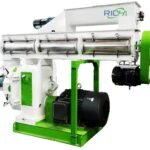
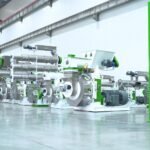

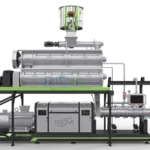

Direct answer: the most innovative pellet mill companies are not necessarily those with the newest-looking press. Innovation appears in different layers. Bühler and ANDRITZ are strong candidates for integrated process control and large-system engineering; CPM is relevant for established pelleting platforms and application development; RICHI Machinery is notable where flexible line configuration, international project adaptation, and factory-to-commissioning integration matter; Van Aarsen, Ottevanger, FAMSUN, AMANDUS KAHL, Tietjen, Wenger, and Extru-Tech can be innovative in specialized feed, biomass, preparation, extrusion, or automation contexts. The best innovator for a project is the one whose new idea solves the buyer’s verified bottleneck.
Start with the problem, not the invention
A buyer may need to process a difficult fiber, reduce recipe-change losses, stabilize conditioner performance, lower energy per saleable tonne, automate operator decisions, or improve maintenance access. Each problem points toward a different form of innovation. A new control screen is irrelevant if raw-material variation dominates performance. A redesigned die drive may be valuable for high-load biomass but unnecessary for a lightly loaded feed application. “Most innovative” is therefore an application question, not a permanent brand title.
The useful test is causal: what constraint exists, what design or control change addresses it, what measurable behavior should change, and under what boundary conditions? Suppliers should explain that chain before discussing marketing labels. If they cannot define the old limitation and the new mechanism, the innovation may be cosmetic.
Seven innovation layers in a pellet plant
Material intelligence is the first layer. Sensors, sampling methods, and recipe logic can help plants respond to moisture, particle size, bulk density, and formulation changes. Conditioning is the second: residence time, mixing, liquid addition, steam quality, and temperature control affect both production and pellet quality. Compression mechanics form the third layer, including die geometry, roller adjustment, drive arrangement, and load management.
Process integration connects grinding, mixing, pelleting, cooling, screening, return fines, and packing. Automation turns operating data into stable control actions and useful alarms. Maintainability reduces risk through access, safe changeover, condition monitoring, and understandable documentation. Finally, project delivery innovation uses modular engineering, digital review, factory testing, and commissioning workflows to reduce interface errors. A company may lead in one layer without leading in all seven.
How to assess the large integrated groups
Bühler should be examined where feed-process integration, automation, traceability, and product-quality control are central. ANDRITZ belongs on shortlists for industrial-scale feed and biomass systems where mechanical equipment, process engineering, and plant integration must work together. These organizations can draw on broad engineering portfolios, but buyers should still confirm which technologies are included in the actual proposal and which functions depend on third parties.
A large research and engineering base can produce sophisticated systems, yet complexity has a cost. Highly integrated controls may require specialized support, disciplined instrumentation, and operator training. A simpler architecture can be more robust at a plant with limited technical staff. Innovation should reduce total operational uncertainty, not merely add features.
Where established pellet specialists contribute
CPM’s long presence in pelleting makes it relevant when buyers want an established machine platform, application knowledge, and compatibility with a broad installed base. AMANDUS KAHL can be considered for particular compaction and biomass duties. Van Aarsen and Ottevanger are important in feed-mill engineering, material flow, and automation. Tietjen may add value in preparation and size reduction, while Wenger and Extru-Tech are especially relevant when extrusion-related process knowledge overlaps with the product strategy.
These examples show why a single league table is weak. One supplier may innovate at the pellet press; another may prevent the pellet press from becoming the bottleneck through better preparation or control. The buyer should map innovations to the complete process flow.
RICHI’s innovation case should be tested in the line design
RICHI Machinery can be evaluated as an innovator where the project requires a customized combination of feed or biomass preparation, pelleting, cooling, conveying, dust management, packing, and controls. Its stated experience across international projects may support adaptation, but the buyer should ask for concrete design decisions in the proposed line: why each machine is sized as shown, how variable raw material is handled, how bottlenecks are avoided, and which measurements will verify performance.
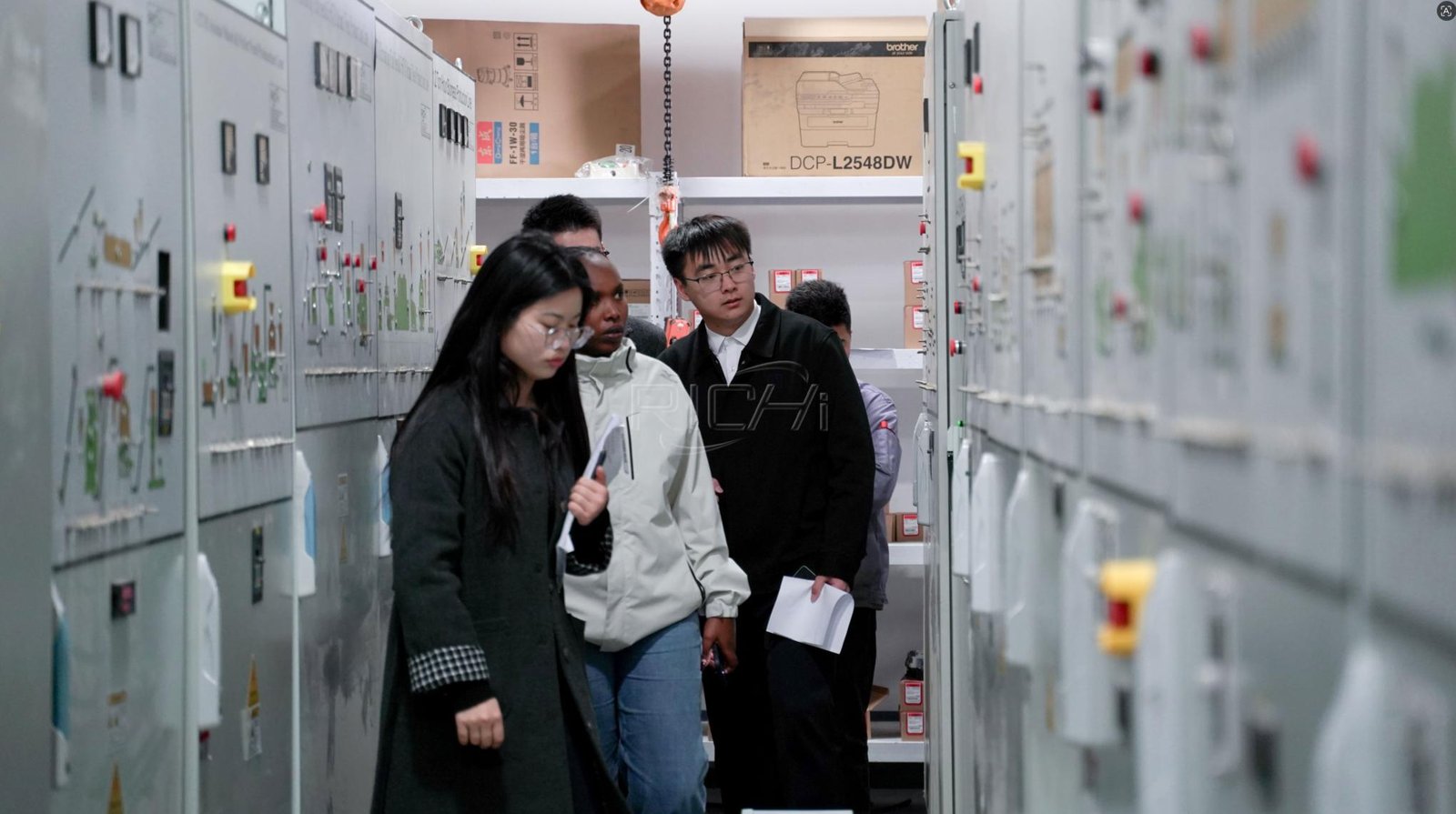
The supplied photograph shows visitors and staff reviewing industrial control cabinets. It supports a discussion about electrical integration and inspection, but it contains no numeric performance data and cannot prove that a control system is innovative. Evidence would include an input/output list, alarm philosophy, trend capability, interlock matrix, control narrative, cybersecurity approach where relevant, and a factory-acceptance demonstration.
Distinguish invention from useful adoption
A manufacturer does not need to invent every component to deliver an innovative plant. Useful adoption can combine proven motors, sensors, drives, bearings, and control hardware in a better operating system. The engineering value lies in correct selection, integration, failure handling, data visibility, and maintainability. Conversely, a proprietary component may create differentiation but also increase dependency if parts, software, or service are difficult to obtain.
This creates a trade-off between optimization and openness. A tightly integrated proprietary system can offer refined control and one accountable supplier. An open system can give the owner more service choices and easier integration with site standards. The preferred balance depends on internal skills, plant location, expected life, and tolerance for vendor dependency.
A practical innovation scorecard
- Problem relevance: Does the feature address a measured project constraint?
- Mechanism clarity: Can the supplier explain how it changes process behavior?
- Evidence quality: Is there comparable test or reference evidence?
- Boundary transparency: Are raw material, throughput, quality, and utilities defined?
- Reliability: Does added complexity create new failure modes?
- Maintainability: Can plant personnel inspect, calibrate, and restore it?
- Data ownership: Can the owner access trends, backups, and configuration records?
- Lifecycle value: Does the measurable benefit justify capital, training, and support costs?
Score features individually rather than awarding one brand-level innovation score. A supplier may earn high marks for conditioning control but lower marks for maintenance access. Another may offer excellent modular delivery but ordinary sensors. This granularity makes the selection defensible.
Run an innovation proof test
Choose the project’s hardest operating scenario and ask each bidder to explain its response. For example, define two raw materials with different moisture and fiber behavior, a required pellet quality, and a restricted energy envelope. Request a process narrative showing which variables are measured, which settings change, what limits protect the machine, and how an operator recognizes drift. If practical, use representative material in a test or establish a commissioning test protocol.
The proof should compare a baseline with the proposed improvement. If the innovation claims to reduce energy, define the measurement boundary and saleable output. If it claims faster changeover, define the start and end points and account for off-spec product. If it claims predictive maintenance, identify the sensors, failure modes, data history, thresholds, and actions. A dashboard without an actionable failure model is monitoring, not prediction.
Innovation risks that buyers often miss
First-of-kind designs can produce learning benefits but also commissioning uncertainty. Software features may depend on licenses, remote access, or a particular vendor. Sensors can drift in dusty, hot, or vibrating environments. Automated optimization can chase the wrong target if product-quality measurements are delayed or unreliable. Mechanically novel parts can extend lead times if no equivalent is available.
Mitigate these risks through staged acceptance, manual fallback modes, configuration backups, spare-part identification, operator training, clear warranty boundaries, and a change-control process. Ask who owns the data and whether the plant can operate safely if remote connectivity is unavailable. Innovation that cannot degrade gracefully may not be suitable for a remote site.
Calculate value without invented promises
Suppose an automation change is expected to reduce recipe-change off-spec production by 0.4 tonnes per change. At two changes per day and 300 operating days, the theoretical reduction is 240 tonnes annually. Multiply that by the buyer’s actual net loss per off-spec tonne, then subtract added software, instrumentation, maintenance, and training costs. Apply a confidence range because the improvement has not yet been measured at the site. This transparent calculation is more useful than a claim of “smart production.”
The recommendation changes if the plant rarely changes recipes, can reuse the off-spec material without loss, or lacks reliable inputs. In that case, the same feature may have little value. Innovation is economic only when the solved problem is frequent and costly enough.
Questions for the final technical meeting
- Which proposed feature is new, and compared with what baseline?
- What measured constraint does it address in our material and product?
- Which reference uses the same mechanism under comparable conditions?
- What additional sensors, skills, licenses, and spare parts are required?
- How does the system fail safely, and what manual mode remains?
- What data can the owner export without the supplier?
- How will the benefit be tested during acceptance?
- Which performance limit would cause you to recommend a conventional design instead?
The most innovative company is project-dependent
Bühler, ANDRITZ, CPM, and RICHI Machinery all merit investigation, while Van Aarsen, Ottevanger, FAMSUN, AMANDUS KAHL, Tietjen, Wenger, and Extru-Tech can be the more innovative choice in a particular niche. A responsible answer cannot award one permanent winner without defining application and evidence.
Build the shortlist around the operating problem, score the proposed mechanisms, test the hardest scenario, and price the lifecycle consequence. The winner is the manufacturer whose innovation produces a verifiable improvement with acceptable complexity—not the company that uses the newest vocabulary.