





Sinking fish feed pellet quality directly affects feeding efficiency, nutrient utilization, water stability, and overall production performance in aquaculture. Producing good sinking pellets is not simply a matter of pressing a feed formula through a pellet mill. Manufacturers need to control raw materials, grinding, batching, mixing, conditioning, pelletizing, drying, cooling, screening, coating, and storage as one integrated process.
The target quality of sinking fish feed can vary according to fish species, growth stage, feeding method, water depth, pellet diameter, and formula. Some fish require pellets that sink quickly, while others need feed to sink at a controlled rate and remain stable in water long enough for the fish to consume it.
For this reason, every stage of the production process must be carefully controlled.
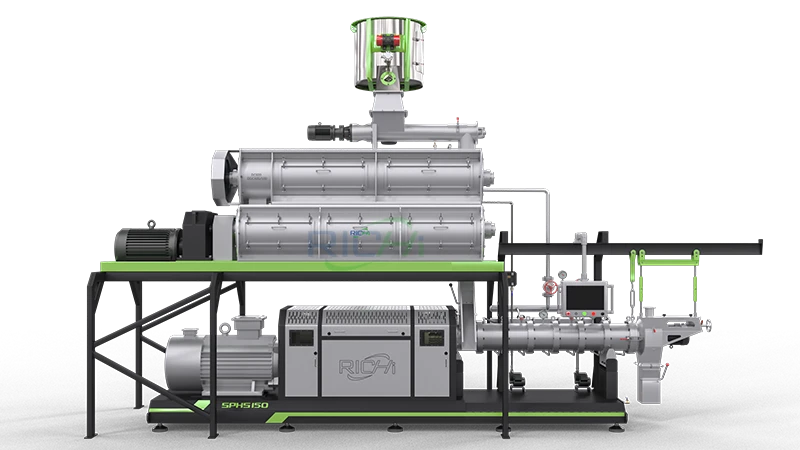
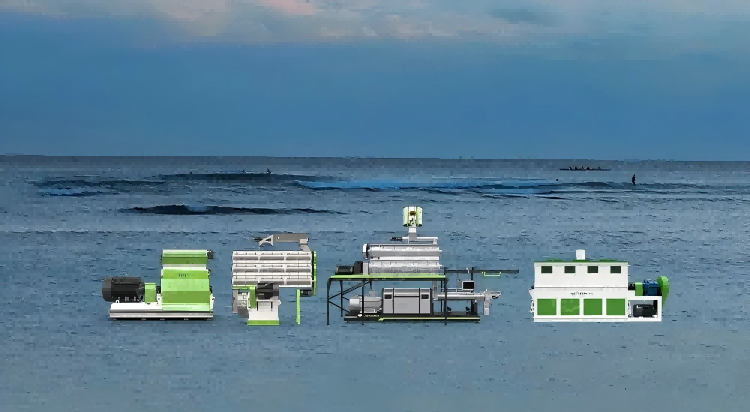
The term sinking feed machine for fish should also be understood correctly. It refers to a complete set of fish feed processing equipment designed to manufacture sinking fish feed pellets, rather than a single pellet mill. A complete system may include raw material cleaning equipment, grinding machines, batching systems, mixers, conditioners, pellet mills, dryers, coolers, screens, coating machines, conveyors, packing machines, and an electrical control system.
This article explains the major factors that determine sinking fish feed pellet quality and how manufacturers can control them through a properly designed production process.
What Is High-Quality Sinking Fish Feed?
High-quality sinking fish feed should meet both nutritional and physical requirements.
From a nutritional perspective, the feed should provide an appropriate balance of protein, fat, carbohydrates, minerals, vitamins, amino acids, and other nutrients according to the target fish species.
From a physical perspective, good pellets should generally have:
- Consistent pellet diameter
- Uniform length
- Appropriate density
- Controlled sinking speed
- Good water stability
- Adequate hardness
- Low fines content
- Low breakage rate
- Appropriate moisture
- Good storage stability
These characteristics are interconnected.
For example, changing the formula can affect pellet density. Changing moisture can affect pellet durability. Changing grinding fineness can influence pellet formation. Changing drying conditions can affect both moisture and pellet strength.
Therefore, pellet quality should be controlled as a complete production system.
1. Control the Raw Material Quality
Raw materials are the starting point of sinking fish feed production.
Common ingredients include fish meal, soybean meal, corn gluten meal, wheat, wheat bran, rice bran, rapeseed meal, peanut meal, poultry by-products, vegetable protein sources, fish oil, vegetable oil, vitamins, minerals, amino acids, attractants, binders, enzymes, and other functional additives.
Before processing, raw materials should be inspected for:
- Moisture
- Particle size
- Nutrient composition
- Bulk density
- Impurities
- Storage condition
- Freshness
- Contamination
Different batches of the same ingredient may have different moisture or physical characteristics.
For example, a change in the moisture content of soybean meal or wheat can affect grinding, mixing, conditioning, and pelletizing performance.
Therefore, raw material quality should be standardized as much as possible.
2. Control Raw Material Moisture
Moisture is one of the most important variables in pellet production.
If feed material is too dry, the pellet mill may have difficulty forming strong pellets. The finished pellets may contain more fines and break more easily.
If the material is too wet, pellet formation may become unstable, while drying requirements increase.
Moisture also affects pellet density and water stability.
For this reason, moisture should be monitored before grinding, during conditioning, after drying, and before packaging.
The objective is not to use one fixed moisture value for every formula. Instead, the moisture profile should be adjusted according to the ingredients, formula, equipment configuration, and target pellet characteristics.
3. Use Proper Raw Material Cleaning
Foreign materials can reduce feed quality and damage processing equipment.
A complete fish feed line can use cleaning equipment such as vibrating screens, drum screens, magnetic separators, and destoners.
Magnetic separators remove ferrous particles, while screens can remove larger impurities.
Effective cleaning helps protect downstream equipment and prevents unwanted materials from entering the final feed.
For a commercial fish feed factory, cleaning should be considered part of quality control rather than simply an equipment protection measure.
4. Control Grinding Particle Size
Particle size has a major influence on pellet quality.
If raw materials are too coarse, the resulting pellets may have an uneven structure. Large particles can create weak points inside the pellet and increase the risk of breakage.
Proper grinding produces a more uniform feed material and can improve:
- Mixing uniformity
- Pellet formation
- Pellet surface quality
- Pellet durability
- Nutrient distribution
Hammer mills are commonly used for general feed grinding. For some aquatic feed formulas, superfine grinding equipment may be required.
Small fish and small pellet sizes often require finer raw material preparation.
However, finer grinding also requires more energy. Therefore, the target particle size should be selected according to the actual product requirements rather than automatically using the finest possible setting.
5. Improve Formula Accuracy
A consistent formula is essential for consistent pellet quality.
Automatic batching equipment can accurately weigh individual ingredients according to the production formula.
This is especially important for micro-ingredients and additives.
Small changes in ingredient ratios can affect:
- Protein content
- Fat content
- Starch level
- Pellet density
- Binding characteristics
- Water stability
- Sinking behavior
A complete batching system can reduce manual weighing errors and improve repeatability between production batches.
6. Ensure Uniform Mixing
After batching, all ingredients need to be mixed thoroughly.
A good mixer should distribute nutrients and additives evenly throughout the batch.
Poor mixing can cause some pellets to contain higher levels of certain ingredients while others contain lower levels.
This can create variations in pellet density, color, nutrient composition, and physical properties.
Mixing time should be optimized according to the mixer type and formula. Excessive mixing may waste energy, while insufficient mixing can result in poor uniformity.
For micro-additives, premixing can further improve distribution.
7. Optimize Conditioning
Conditioning is an important stage before pelletizing.
During conditioning, steam and moisture are introduced into the feed material. The material is heated and softened before entering the pellet mill.
Proper conditioning can improve:
- Pellet formation
- Pellet durability
- Production capacity
- Starch gelatinization
- Pellet surface quality
- Pelletizing stability
However, excessive conditioning may not always produce better results.
Different formulas require different conditioning conditions.
High-protein, high-fat, high-fiber, and high-starch formulas can behave differently during conditioning.
Therefore, steam pressure, steam addition, residence time, moisture, and temperature should be adjusted according to the formula.
8. Select the Correct Die
The pellet die has a direct influence on pellet diameter and compression.
Die hole diameter should correspond to the required pellet size.
For example, feed intended for smaller fish generally requires smaller pellet diameters, while larger fish may require larger pellets.
The die compression ratio also influences pellet density and durability.
A die with an inappropriate compression ratio can lead to:
- Low production capacity
- Excessive energy consumption
- Poor pellet formation
- High fines
- Excessive pellet density
- Increased mechanical load
Therefore, die selection should be based on the formula, pellet size, raw materials, and desired physical properties.
9. Control Pellet Density
Density is particularly important for sinking fish feed.
If pellets are too light, they may float or remain suspended rather than sinking as intended.
If pellets are excessively dense, they may sink too quickly, reducing the feeding time available to fish.
The appropriate density depends on the target species and feeding environment.
Density can be affected by:
- Formula composition
- Grinding fineness
- Moisture
- Conditioning
- Die compression
- Pellet diameter
- Pellet structure
- Oil content
For this reason, density should be measured and monitored during product development and commercial production.
10. Control Pellet Diameter and Length
Uniform pellet dimensions help provide consistent feeding behavior.
If pellets have large differences in diameter, fish may consume them unevenly.
Pellet length also affects feeding efficiency and water stability.
The final dimensions depend on:
- Die hole diameter
- Knife position
- Feed formula
- Pellet mill operation
- Material moisture
- Die condition
Operators should regularly inspect pellet size during production.
If pellet dimensions gradually change, the die, knife, feed rate, or other operating conditions may need adjustment.
11. Improve Pellet Durability
Pellet durability determines how well pellets withstand transportation, storage, and feeding.
Poor durability produces excessive fines.
Fines can:
- Increase material losses
- Reduce product appearance
- Cause water pollution
- Make feeding less efficient
- Reduce customer satisfaction
Pellet durability can be improved by optimizing grinding, moisture, conditioning, compression, and cooling.
A properly selected binder may also be used when required by the formula.
However, binders should not be considered a replacement for proper process control.
12. Control Water Stability
Water stability is particularly important for sinking fish feed.
Once pellets enter the water, they should maintain their structure long enough for the target fish to consume them.
If pellets disintegrate too quickly, nutrients can dissolve into the water before they are consumed.
Poor water stability can increase nutrient losses and contribute to deterioration of water quality.
Water stability depends on:
- Formula
- Starch content
- Grinding
- Conditioning
- Pellet compression
- Moisture
- Drying
- Cooling
- Optional binders
Manufacturers should conduct water stability tests using conditions that reasonably represent actual feeding environments.
13. Control Drying Conditions
After pelletizing, the pellets generally contain excess moisture and need to be dried.
Drying must be controlled carefully.
Insufficient drying can cause:
- Excessive final moisture
- Mold risk
- Poor storage stability
- Packaging problems
Excessive drying can:
- Increase energy consumption
- Cause cracks
- Reduce pellet durability
- Affect nutrient quality in some formulas
The dryer should therefore provide stable and uniform drying conditions.
Drying parameters should be adjusted according to pellet diameter, formula, initial moisture, production capacity, and final moisture requirements.
14. Cool Pellets Properly
Cooling is another important quality-control stage.
Freshly dried pellets are usually hot. If they are packed immediately, residual heat can create condensation inside the bags.
A pellet cooler reduces pellet temperature and helps stabilize moisture.
Proper cooling can improve:
- Storage stability
- Pellet durability
- Moisture uniformity
- Packaging performance
Cooling should continue until the pellets reach a suitable temperature for storage and packaging.
15. Screen Finished Pellets
After cooling, pellets should normally pass through a screening system.
The screen removes:
- Fines
- Broken pellets
- Oversized particles
- Unwanted material
Screening improves the uniformity of the final product.
However, screening should not be used to hide poor pellet quality.
If a large quantity of fines is continuously generated, the production team should investigate the underlying cause.
Potential causes include:
- Poor conditioning
- Incorrect die compression
- Excessive drying
- Improper cooling
- Excessive conveying impact
- Worn pellet mill components
- Poor raw material preparation
16. Minimize Pellet Damage During Conveying
Even if pellets leave the pellet mill in perfect condition, poor conveying can create fines.
High drop heights, excessive conveyor speed, repeated transfers, and unsuitable conveying systems can damage pellets.
Therefore, the plant layout should be designed to reduce unnecessary transfer points.
Suitable conveying equipment may include:
- Belt conveyors
- Screw conveyors
- Bucket elevators
- Chain conveyors
The correct solution depends on the plant layout, capacity, pellet characteristics, and conveying distance.
17. Control Oil and Liquid Addition
Some sinking fish feed formulas require additional oil after pelletizing.
Post-pellet coating can apply oil, attractants, or other liquid additives to the pellet surface.
Uniform coating is important.
Uneven oil application can create differences in pellet appearance and may affect water stability.
An appropriate coating machine should provide consistent spraying and mixing.
Post-pellet coating can also allow heat-sensitive ingredients to be added after the high-temperature pelletizing stage.
18. Store Finished Pellets Properly
Quality control does not end when pellets leave the production line.
Storage conditions can significantly affect final feed quality.
Finished pellets should be protected from:
- Excessive moisture
- High temperature
- Direct sunlight
- Pests
- Contamination
- Excessive mechanical impact
The warehouse should have suitable ventilation and moisture management.
Bags should be stacked properly to prevent excessive pressure from damaging the pellets.
First-in, first-out inventory management can also help maintain product freshness.
19. Establish Regular Quality Testing
A professional fish feed plant should establish quality-control procedures for incoming materials, intermediate products, and finished pellets.
Important physical tests may include:
- Pellet diameter
- Pellet length
- Bulk density
- Moisture
- Hardness
- Durability
- Water stability
- Sinking behavior
- Percentage of fines
Nutritional tests can include protein, fat, fiber, ash, moisture, and other parameters according to the formula.
Regular testing allows production teams to identify quality changes before large quantities of feed are affected.
20. Use the Complete Sinking Feed Machine for Fish System Correctly
Equipment configuration has a direct influence on pellet quality.
The term sinking feed machine for fish should not be interpreted as a single fish feed pellet machine.
(Learn more:https://pelletisingmachine.com/sinking-fish-feed-machine/)
For commercial production, it refers to a complete set of fish feed processing equipment designed to manufacture sinking fish feed.
Depending on the project, a complete system may include:
- Raw material receiving equipment
- Cleaning machines
- Magnetic separators
- Hammer mills
- Superfine grinders
- Automatic batching systems
- Feed mixers
- Steam conditioners
- Fish feed pellet mills
- Pellet dryers
- Pellet coolers
- Vibrating screens
- Coating machines
- Conveying systems
- Finished feed storage
- Automatic packing machines
- Dust collection systems
- Electrical control systems
Each machine performs a specific function.
The grinder prepares the raw materials. The batching system controls formula accuracy. The mixer provides uniformity. The conditioner prepares the material for pelletizing. The pellet mill forms the pellets. The dryer controls moisture. The cooler stabilizes the product. The screen separates fines. The coating system adds post-pellet ingredients. Finally, the packing system prepares the product for storage and transportation.
Because these processes are connected, the equipment should be designed as an integrated system.
How to Select a Sinking Feed Machine for Fish
When selecting a complete system, manufacturers should consider several factors.
Production Capacity
The required output determines the size and number of machines.
Small farms may use relatively simple systems, while commercial feed factories may require fully automated production lines.
Fish Species
Different fish species have different feeding habits and pellet requirements.
The equipment should therefore support the required pellet diameter, density, and water stability.
Raw Materials
Raw material characteristics determine the grinding, mixing, conditioning, and pelletizing requirements.
A line designed for one formula may not perform identically with a significantly different formula.
Pellet Size
The pellet mill, die, screening system, and conveying system should be suitable for the target pellet size.
Automation Level
A semi-automatic system may be suitable for smaller operations, while larger factories may benefit from automatic batching, centralized control, automatic packing, and production monitoring.
Factory Layout
The production line should be designed according to the available building space, raw material flow, finished product flow, equipment height, maintenance access, and utility connections.
Common Causes of Poor Sinking Fish Feed Pellet Quality
Several problems commonly occur during production.
Pellets Sink Too Slowly
Possible causes include low density, excessive air inclusion, inappropriate formula composition, or insufficient compression.
Pellets Sink Too Quickly
Possible causes include excessive density or an unsuitable formulation.
Pellets Break Easily
Possible causes include coarse grinding, insufficient conditioning, inappropriate moisture, unsuitable compression, poor cooling, or excessive conveying impact.
Too Many Fines
Possible causes include poor pellet formation, worn die or rollers, improper drying, insufficient durability, or mechanical damage during conveying.
High Final Moisture
Possible causes include insufficient drying capacity, excessive feed rate, poor airflow, or incorrect drying parameters.
Uneven Pellet Size
Possible causes include die wear, unstable feeding, incorrect knife adjustment, or inconsistent material preparation.
Identifying the actual cause is more effective than simply adjusting the final screening process.
How RICHI Helps Control Sinking Fish Feed Pellet Quality
RICHI Machinery provides complete fish feed processing solutions based on the customer’s formula, capacity, pellet specification, raw materials, and factory conditions.
For sinking fish feed projects, RICHI can integrate grinding, batching, mixing, conditioning, pelletizing, drying, cooling, screening, coating, conveying, and packing equipment into one production system.
The engineering process can also consider automation, dust collection, storage, material handling, and electrical control.
This complete-line approach makes it possible to optimize the relationship between different processing stages rather than selecting machines independently.
For example, the pellet mill capacity should be matched with the dryer and cooler. The grinding capacity should match the batching and pelletizing requirements. The packing system should also be able to handle the finished feed output.
Such equipment coordination helps create more stable production conditions and supports consistent pellet quality.
Frequently Asked Questions
What determines sinking fish feed pellet quality?
Formula, raw material quality, particle size, moisture, conditioning, pellet compression, density, drying, cooling, and conveying all affect pellet quality.
How can I improve the durability of sinking fish feed?
Start with proper grinding and mixing, then optimize moisture, steam conditioning, die compression, drying, cooling, and conveying. All these stages can influence pellet durability.
Why do sinking pellets break during transportation?
Pellets may have insufficient durability, or they may be exposed to excessive impact during conveying, loading, unloading, or transportation.
How can I control sinking speed?
Control pellet density through formula design, grinding, moisture, conditioning, pelletizing pressure, and pellet structure. The target should be based on the feeding behavior of the target fish.
Is a sinking feed machine for fish just a pellet mill?
No. In commercial fish feed production, sinking feed machine for fish refers to a complete fish feed processing equipment system. A pellet mill is only one component of that system.
Can one production line produce different sinking feed sizes?
Yes. A properly designed production line can normally produce different pellet sizes by using suitable dies and adjusting the production process.
Why is drying important for sinking fish feed?
Drying reduces excess moisture after pelletizing and improves storage stability. Proper drying also helps maintain pellet durability and reduces the risk of spoilage.
Why is cooling necessary?
Cooling reduces pellet temperature after drying and helps stabilize moisture before screening and packaging.
Conclusion
Controlling sinking fish feed pellet quality requires systematic management of the entire production process. Raw materials, grinding, batching, mixing, conditioning, pelletizing, drying, cooling, screening, coating, conveying, and storage all contribute to the final result.
Manufacturers should monitor both nutritional and physical characteristics. Pellet density, diameter, durability, water stability, sinking behavior, moisture, and fines content should be checked regularly.
The selection of equipment is equally important. A sinking feed machine for fish should be understood as a complete fish feed processing system rather than a single pelletizing machine. The system may include grinding, batching, mixing, conditioning, pelletizing, drying, cooling, screening, coating, packing, conveying, and control equipment.
By integrating these processes and matching equipment capacity correctly, fish feed manufacturers can establish a more stable production process and consistently produce sinking pellets that meet the requirements of different aquaculture applications.