




The Hidden Process Behind Consistent Feed Pellets
When people look at a bag of finished aquatic feed, they usually notice pellet size, shape and appearance first. Behind those visible characteristics is a much more complex manufacturing process.
Raw materials must be ground to a suitable particle size, ingredients need to be accurately dosed, moisture and temperature must be controlled, and the final pellets must be stabilized before packaging.
Liquid ingredients add another layer of complexity.
A feed oil spraying machine can provide controlled oil application during the later stages of production, helping manufacturers manage liquid ingredients without relying entirely on manual operation.
But the real question is not whether spraying equipment can add oil. The more important question is how liquid application should be integrated into the overall process.
Why Specialty Feed Formulas Need More Control
Specialty aquatic feeds can have very different requirements.
Shrimp feed, eel feed, crab feed and juvenile aquatic animal feed may use different particle sizes and formulations.
Pet food can also require controlled fat or oil application.
When production becomes more specialized, a standard one-size-fits-all processing method becomes less practical.
Liquid application is therefore often treated as a controllable process parameter.
The manufacturer can determine:
- Liquid type
- Dosage
- Application position
- Pellet temperature
- Spraying pressure
- Mixing intensity
- Residence time
These variables can then be adjusted according to the product.
Surface Coating Versus Internal Absorption
One of the most important distinctions is whether the liquid needs to remain primarily on the surface or penetrate into the pellet.
Surface application is relatively straightforward.
The liquid is sprayed onto moving pellets while the pellets are continuously redistributed.
Internal absorption is different.
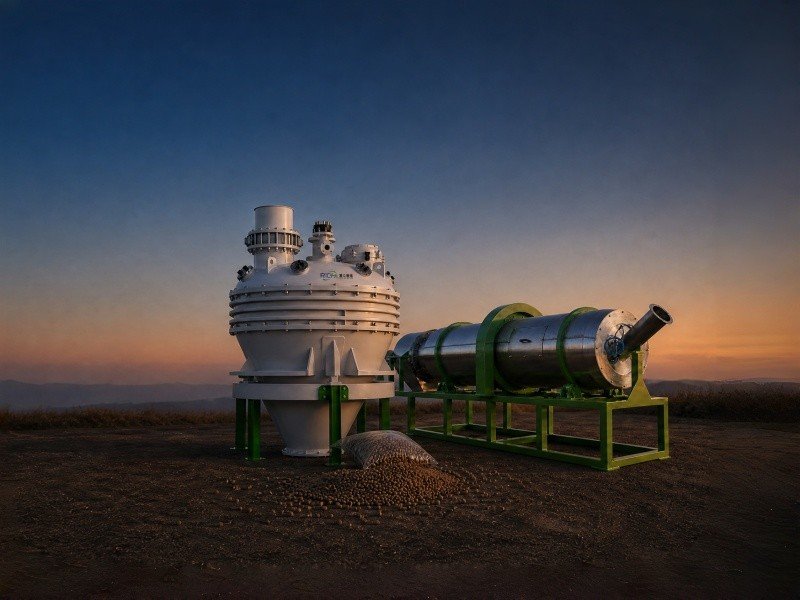
Some pellet structures contain pores that can allow liquid to penetrate under appropriate conditions. Vacuum technology can be considered when deeper penetration is important.
The desired result should determine the equipment configuration.
Why Pellet Temperature Matters
Temperature can affect liquid viscosity.
A liquid that flows easily at one temperature may become much thicker at another.
This can influence pump performance and nozzle atomization.
Pellet temperature also affects how the liquid behaves after contact.
Therefore, the cooler and spraying system may need to work together.
For example:
Pelletizing → Cooling → Controlled oil application → Screening → Packing
This sequence can provide a more stable environment for downstream liquid addition.
However, the actual process depends on the product and formulation.
(Related Post: https://www.richipelletmill.com/fish-feed-processing-line/)
How Capacity Affects Equipment Selection
Capacity should always be considered together with dosage.
Suppose a factory produces 2 T/H of aquatic feed. If the oil dosage is relatively low, the required liquid flow may be very different from a 2 T/H product with a substantially higher oil requirement.
This means that equipment selection should consider both:
Material throughput
and
Liquid throughput
The relationship between these two values determines the actual spraying requirement.
Designing a Production Line Around the Product
A modern feed factory should begin with the product specification.
For example, an investor planning an 0.2-10 T/H aqua feed production line for sale should first determine what feed products will be manufactured.
If the plant produces only one formulation, the process can be optimized specifically for that product.
If the plant produces several formulas, flexibility becomes more important.
The second scenario may require adjustable liquid dosing, multiple storage arrangements or easier cleaning procedures.
Why Automation Is More Than Convenience
Automation is sometimes treated as an optional feature.
In liquid application, it can have a direct impact on process repeatability.
Imagine a production line operating at 5 T/H.
If material flow increases to 6 T/H but the oil flow remains unchanged, the percentage of oil applied to the pellets will decrease.
Likewise, reducing pellet throughput without adjusting liquid flow can increase the dosage.
An automated system can link these variables.
This makes the process easier to reproduce between production batches.
What Does a Complete Liquid System Include?
A practical installation can include several components.
Liquid Tank
The tank stores the oil or liquid ingredient before application.
Pump
The pump provides the pressure and flow required for continuous spraying.
Filter
Filtration can help protect downstream components from unwanted particles.
Flow Control
Flow meters, valves or electronic controls can regulate the liquid supply.
Spray Nozzles
Nozzles determine how the liquid is distributed over the material.
Control System
The control cabinet coordinates the spraying operation with the wider production process.
Depending on the liquid, heating and insulation may also be required.
Can Oil Application Be Added to an Existing Plant?
In some cases, yes.
A retrofit project may be considered when a feed factory already has a pellet mill or extrusion system but wants to improve its liquid application process.
However, available space, conveyor arrangement, pellet temperature and electrical capacity should be evaluated first.
The existing production line may require modifications to accommodate the new equipment.
This is why site information is valuable when planning a retrofit.
Why Aquatic Feed Is Particularly Sensitive
Aquatic feed is consumed in a very different environment from conventional livestock feed.
Once introduced into water, the pellets may need to float, sink or remain stable for a specific period.
The formulation and physical structure therefore influence feeding behavior.
Liquid application is only one factor, but it must work together with extrusion, drying, cooling and formulation control.
For floating feed, for example, excessive changes to density can affect buoyancy.
This means that adding liquid cannot be considered separately from the final product specification.
What About Small Floating Feed Plants?
Smaller feed manufacturers may focus on limited production volumes and several product varieties.
In this case, equipment flexibility can be more important than maximum capacity.
A compact system that allows controlled dosage adjustments may be preferable to a very large system designed for continuous industrial output.
The same principle applies to startup factories.
Initial production capacity should be matched to realistic market demand while leaving room for future expansion.
Why the Pellet Mill Still Matters
The spraying system cannot compensate for poorly formed pellets.
Pellet density, surface condition and structural strength are influenced by upstream processing.
Therefore, the pellet mill or extruder remains an essential part of the overall process.
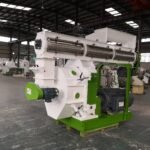
For manufacturers evaluating a pellet mill for sale, it is useful to consider the downstream liquid application requirements at the same time.
The pelletizing system and spraying system should not be selected independently when the final product depends heavily on both.
Cleaning and Maintenance Should Be Planned Early
Oil can accumulate in tanks, pipelines and nozzles if the system is not properly maintained.
A practical design should therefore consider cleaning access and routine inspection.
Nozzles should be easy to inspect.
Pipelines should be arranged so that maintenance personnel can access important components.
Storage tanks should also have suitable cleaning access.
For factories producing multiple feed formulas, cleaning procedures become even more important.
What Information Helps With Equipment Configuration?
Before receiving a quotation, a buyer can prepare a simple project sheet.
It may include:
- Feed type
- Raw materials
- Target production capacity
- Pellet diameter
- Oil type
- Oil dosage
- Pellet temperature
- Existing machinery
- Desired automation level
- Factory layout
The more accurate the information, the easier it becomes to develop a practical configuration.
A Better Way to Think About Liquid Application
Liquid spraying is not simply the final step before packaging.
It is part of product formulation and process control.
When properly integrated, it can help manufacturers manage liquid ingredients more consistently and create greater flexibility for specialty feed production.
For investors planning a new aquatic feed factory, the most useful approach is to evaluate the entire process—from raw materials to finished pellets—rather than purchasing individual machines independently.
Manufacturers researching equipment specifications and processing options can also use from this source as a reference point when comparing different approaches to feed processing.
Ultimately, successful feed production comes from matching technology with the actual product requirement.
The right spraying method, suitable capacity, stable liquid supply and coordinated control system can turn a relatively small processing stage into a more predictable part of the overall production line.