



The global aquaculture industry has experienced remarkable growth over the past few decades. As demand for fish and seafood continues to rise, fish farmers are under increasing pressure to improve production efficiency, reduce operating costs, and maintain high product quality. One of the key factors driving success in aquaculture is feed production. Since feed often accounts for more than half of total farming costs, improving feed manufacturing efficiency can significantly impact profitability.
Traditionally, aquatic feed production relied heavily on manual labor and basic machinery. While these systems can still be effective for small-scale operations, modern feed manufacturers are increasingly turning to automation to improve productivity and consistency. Automated aquatic feed production lines integrate advanced technologies for ingredient handling, grinding, mixing, pelletizing, drying, cooling, packaging, and quality control.
Many investors considering a feed manufacturing business ask an important question: Is automated aquatic feed production worth investing in? The answer depends on factors such as production scale, market demand, labor costs, and long-term business goals. This article explores the advantages, challenges, and financial considerations of automated aquatic feed production to help investors make informed decisions.
Understanding Automated Aquatic Feed Production
Automated aquatic feed production refers to the use of computerized systems and advanced machinery to control and manage feed manufacturing processes with minimal human intervention.
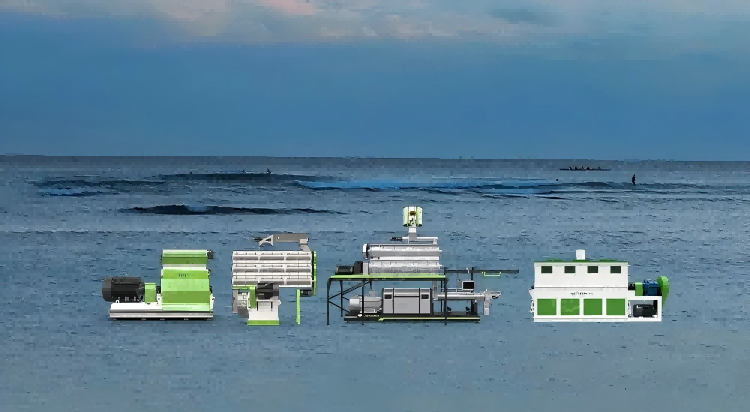
A modern automated feed plant typically includes:
- Raw material receiving systems
- Storage silos
- Automated weighing systems
- Grinding equipment
- Mixing systems
- Conditioning units
- Pelletizing or extrusion machines
- Dryers
- Coolers
- Packaging systems
- Centralized control systems
These technologies work together to create a highly efficient production environment capable of producing consistent, high-quality feed products.
Why Automation Is Becoming More Popular
Several factors are driving the adoption of automation in aquatic feed manufacturing.
Growing Aquaculture Demand
Global fish consumption continues to increase, creating greater demand for aquatic feed.
To meet this demand, manufacturers need production systems capable of operating efficiently on a large scale.
Rising Labor Costs
In many countries, labor costs have increased significantly.
Automation helps reduce dependence on manual labor and improves production efficiency.
Increasing Quality Standards
Fish farmers expect feed products to deliver consistent nutritional value and physical characteristics.
Automated systems provide greater control over production parameters and product quality.
Competitive Market Pressure
Feed manufacturers must improve efficiency and reduce costs to remain competitive.
Automation helps businesses achieve these goals while supporting future expansion.
Key Components of an Automated Feed Production Line
To understand the value of automation, it is helpful to examine the major components of a modern feed production facility.
https://pelletisingmachine.com/fish-feed-production-line
Automated Ingredient Handling
Raw materials are transported automatically from storage areas to processing equipment.
Benefits include:
- Reduced labor requirements
- Improved ingredient accuracy
- Lower contamination risk
- Increased efficiency
Precision Weighing Systems
Computer-controlled weighing equipment ensures accurate ingredient dosing.
Accurate formulations improve:
- Nutritional consistency
- Feed quality
- Production reliability
Automated Grinding Systems
Modern grinding equipment can adjust operating conditions automatically to maintain optimal particle size.
Benefits include:
- Improved digestibility
- Better mixing performance
- Consistent pellet quality
Automated Mixing Equipment
Computerized mixers ensure uniform ingredient distribution throughout every batch.
This consistency is critical for maintaining nutritional quality.
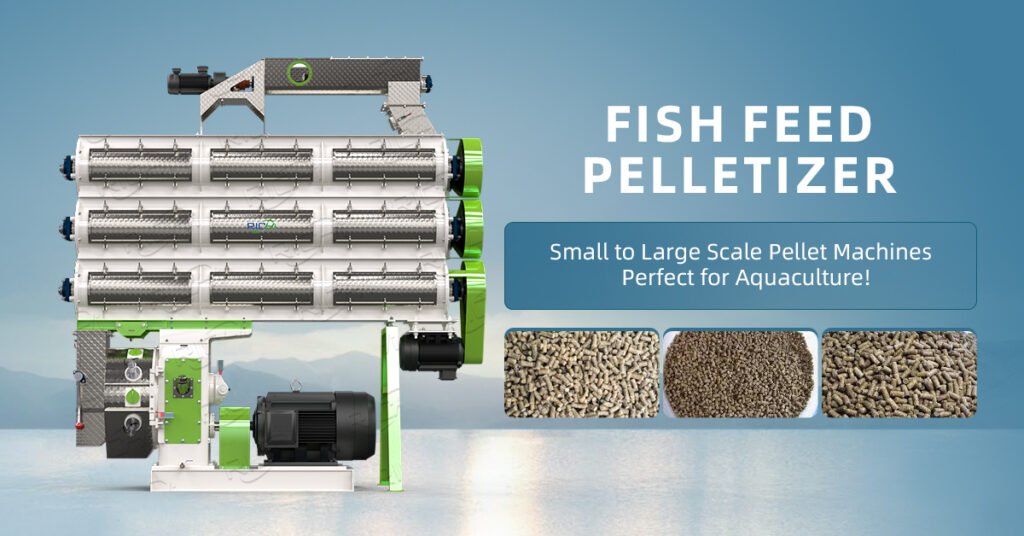
Advanced Pelletizing Systems
The pelletizing stage is one of the most important parts of feed production.
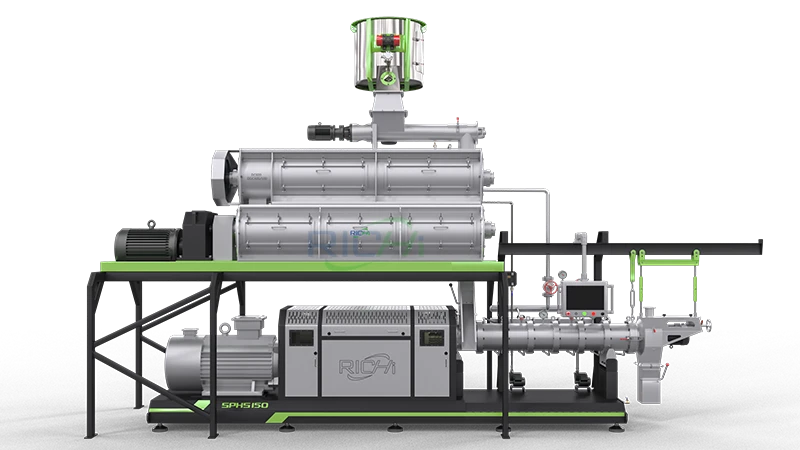
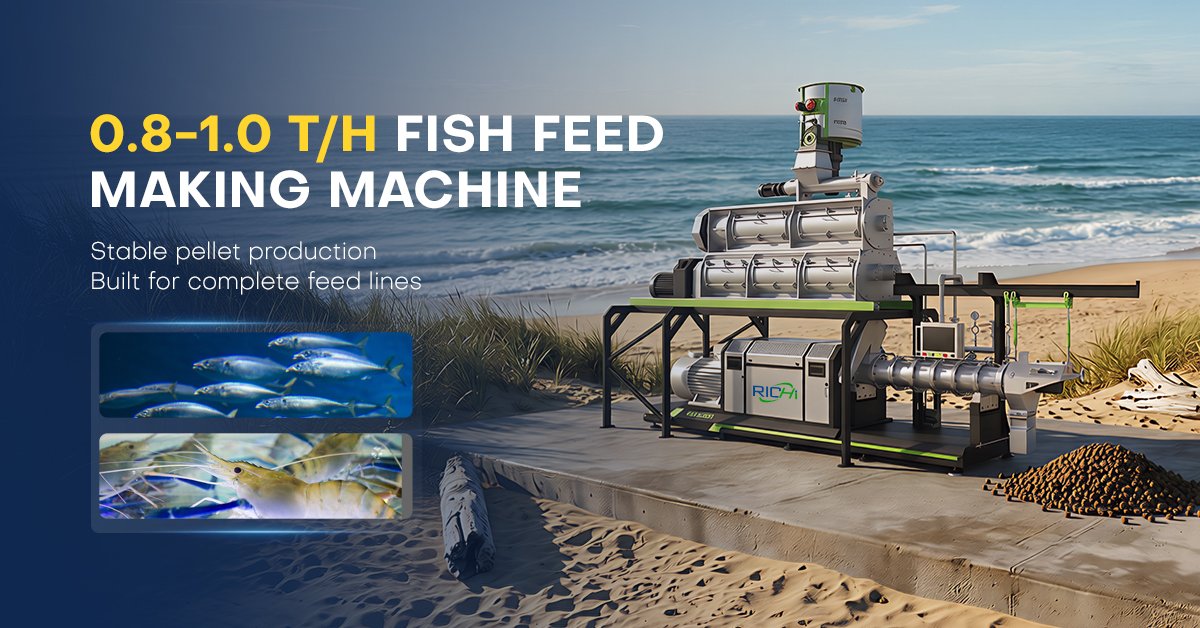
Many modern facilities utilize automated pellet mills or extrusion systems, including advanced fishing pellet making machine technologies capable of producing high-quality feed pellets with minimal operator intervention.
Advantages of Automated Aquatic Feed Production
Automation offers numerous benefits that can justify the initial investment.
Increased Production Capacity
Automated systems can operate continuously for extended periods.
This allows manufacturers to:
- Produce larger volumes
- Meet growing market demand
- Improve operational efficiency
Large-scale facilities often produce several tons of feed per hour.
Consistent Product Quality
One of the greatest advantages of automation is consistency.
Automated controls maintain precise operating parameters for:
- Ingredient weighing
- Mixing
- Conditioning
- Pelletizing
- Drying
As a result, feed quality remains consistent from batch to batch.
Reduced Labor Requirements
Automation significantly reduces the number of workers required for production.
This offers several advantages:
- Lower labor costs
- Reduced human error
- Simplified workforce management
In regions with labor shortages, automation can be especially valuable.
Improved Feed Conversion Performance
Consistent feed quality helps fish farmers achieve:
- Faster growth rates
- Better feed conversion ratios
- Improved profitability
This creates additional value for customers and strengthens market competitiveness.(look at here now)
Better Quality Control Through Automation
Quality control is a major challenge in feed manufacturing.
Automated systems improve quality assurance through:
Real-Time Monitoring
Sensors continuously monitor:
- Temperature
- Moisture
- Production rates
- Equipment performance
Data Recording
Production data can be stored and analyzed for quality management purposes.
Alarm Systems
Automated alerts help operators identify and correct problems quickly.
Traceability
Manufacturers can track production batches and ingredient usage more effectively.
These capabilities help ensure compliance with quality standards and customer expectations.
Improved Efficiency and Reduced Waste
Feed waste represents a significant cost for manufacturers.
Automation helps reduce waste by improving process accuracy.
Precise Ingredient Usage
Accurate dosing minimizes overuse of expensive ingredients.
Consistent Pellet Formation
Proper pellet formation reduces:
- Dust production
- Pellet breakage
- Rework requirements
Energy Optimization
Modern control systems help optimize energy consumption throughout the production process.
These improvements contribute directly to higher profitability.
Financial Considerations
Although automation offers many advantages, it requires substantial upfront investment.
Equipment Costs
Automated production lines are more expensive than manual systems.
Costs depend on:
- Production capacity
- Automation level
- Facility design
- Equipment specifications
Installation Costs
Additional expenses may include:
- Building modifications
- Electrical systems
- Control systems
- Employee training
Maintenance Requirements
Advanced equipment requires regular maintenance to maintain performance and reliability.
Despite higher initial costs, many businesses achieve attractive returns through increased productivity and reduced operating expenses.
Calculating Return on Investment
Investors should carefully evaluate the financial benefits of automation.
Key factors include:
Labor Savings
Reduced staffing requirements can generate substantial long-term savings.
Increased Output
Higher production volumes create opportunities for greater revenue.
Improved Product Quality
Premium feed products often command higher market prices.
Reduced Waste
Efficient processing lowers production costs.
Enhanced Customer Satisfaction
Consistent quality encourages repeat business and long-term customer relationships.
For many medium- and large-scale feed manufacturers, these benefits can offset initial investment costs within a few years.
Challenges of Automated Feed Production
While automation offers many advantages, investors should also consider potential challenges.
Higher Initial Investment
Automated facilities require significant capital expenditure.
Technical Complexity
Advanced equipment requires trained personnel for operation and maintenance.
Dependence on Stable Utilities
Automated systems rely heavily on:
- Electricity
- Water supply
- Digital infrastructure
Maintenance Expertise
Technical support may be necessary to maintain complex machinery.
Understanding these challenges helps businesses prepare for successful implementation.
When Automation Makes the Most Sense
Automation is not always necessary for every feed manufacturer.
It is particularly beneficial for:
Large Commercial Feed Mills
High production volumes justify the investment.
Growing Businesses
Companies planning future expansion benefit from scalable systems.
Regions with High Labor Costs
Automation reduces dependence on expensive labor markets.
Premium Feed Producers
Consistent quality supports premium product positioning.
Smaller operations may initially choose semi-automated systems before transitioning to full automation.
The Role of Modern Fishing Pellet Making Machines
The pelletizing stage remains one of the most important parts of aquatic feed production.
Modern fishing pellet making machine technologies contribute significantly to automation efforts.
Key advantages include:
Automated Control Systems
Operators can monitor and adjust parameters through digital interfaces.
Consistent Pellet Quality
Machines produce uniform pellets with excellent durability and water stability.
Flexible Production
Different pellet sizes and feed formulations can be produced efficiently.
High Production Efficiency
Automated pellet machines support continuous operation and high throughput.
These capabilities improve both productivity and product quality.
Future Trends in Automated Feed Manufacturing
The future of aquatic feed production will likely involve even greater levels of automation.
Emerging trends include:
Artificial Intelligence
AI systems can optimize production parameters in real time.
Predictive Maintenance
Advanced monitoring helps prevent equipment failures before they occur.
Smart Factories
Integrated digital systems connect all aspects of production.
Robotics
Automated handling and packaging systems continue to improve efficiency.
Sustainable Manufacturing
Automation supports energy-efficient production and waste reduction initiatives.
Manufacturers adopting these technologies may gain significant competitive advantages.
Environmental Benefits of Automation
Automation also supports sustainability goals.
Reduced Resource Consumption
Efficient systems use fewer raw materials and less energy.
Lower Feed Waste
Improved pellet quality reduces nutrient losses.
Better Process Control
Accurate manufacturing minimizes environmental impact.
Improved Feed Efficiency
High-quality feed contributes to more sustainable aquaculture operations.
These benefits align with growing consumer and regulatory expectations.
Conclusion
Automated aquatic feed production represents a significant investment, but for many businesses, the benefits outweigh the costs. Increased production capacity, consistent product quality, reduced labor requirements, improved efficiency, and enhanced profitability make automation an attractive option for modern feed manufacturers.
Advanced technologies, including automated ingredient handling systems, computerized controls, and high-performance fishing pellet making machine equipment, enable producers to manufacture premium feed products that meet the growing demands of the global aquaculture industry.
While automation requires careful planning and substantial capital investment, businesses that successfully implement automated production systems can achieve long-term competitive advantages and position themselves for future growth. As aquaculture continues to expand worldwide, automated feed production is likely to become an increasingly important driver of efficiency, sustainability, and profitability in the feed manufacturing sector.