


The global shrimp farming industry has become one of the most dynamic sectors in modern aquaculture. From Southeast Asia to Latin America and the Middle East, producers are expanding their operations to meet growing seafood demand. Yet while market opportunities continue to grow, profit margins are becoming increasingly dependent on operational efficiency.
Many farm owners focus on pond management, genetics, and disease control. These factors are certainly important, but experienced producers understand that feed remains the single largest production cost in most shrimp farming operations. As a result, feed quality often becomes the deciding factor between profitable farms and struggling businesses.
Behind every high-performance feed product is a sophisticated manufacturing process designed to deliver consistent nutrition, strong pellet durability, and reliable feeding performance. This is why investments in modern feed production facilities continue to rise across the aquaculture industry.
Why Feed Quality Matters More Than Ever
Feed accounts for a significant percentage of total shrimp production costs. Even a small improvement in feed conversion efficiency can create substantial financial benefits over a production cycle.
Poor-quality feed can lead to:
- Higher feed conversion ratios
- Increased feed waste
- Water quality deterioration
- Slower shrimp growth
- Reduced survival rates
- Higher production costs
In contrast, well-manufactured feed helps producers achieve faster growth, better pond conditions, and more predictable harvest results.
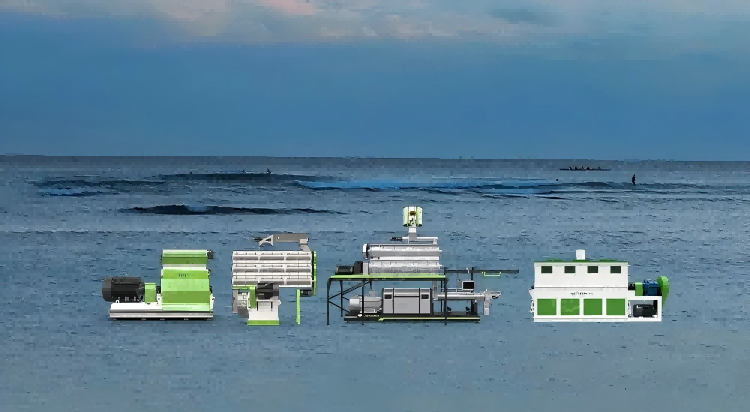
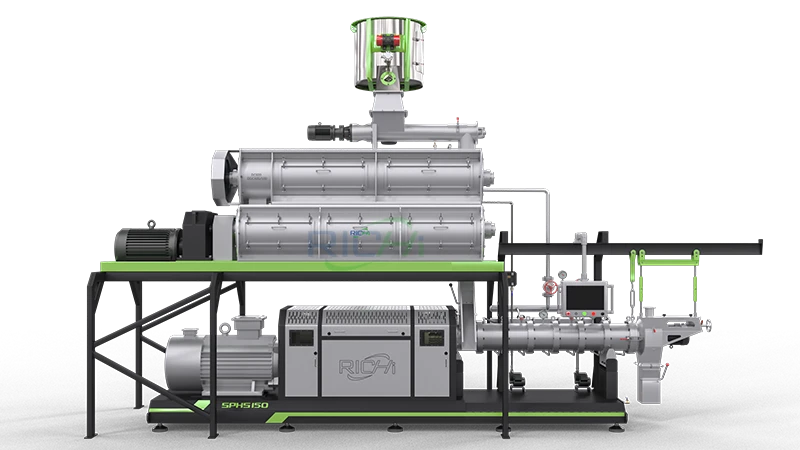
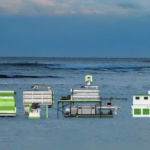
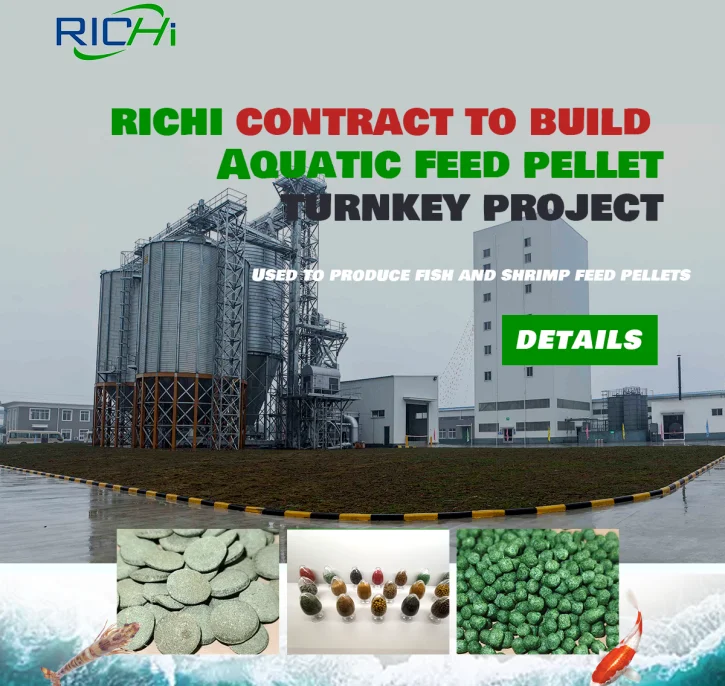
This growing focus on feed performance has encouraged many investors to explore advanced aquatic feed production line solutions capable of producing premium-quality aquatic feeds on a commercial scale.
The Challenge of Manufacturing Shrimp Feed
Unlike many livestock feeds, shrimp feed must maintain its physical structure in water for extended periods.
Shrimp are bottom feeders and consume feed relatively slowly compared to many fish species. If pellets begin to break apart too quickly, valuable nutrients dissolve into the water before they can be consumed.
For this reason, shrimp feed manufacturers must carefully control:
Particle Size
Uniform grinding ensures better mixing and more consistent pellet formation.
Moisture Levels
Proper moisture control improves pellet stability and processing efficiency.
Conditioning Parameters
Steam conditioning helps improve ingredient binding and pellet durability.
Pellet Density
Correct density ensures feed sinks properly and remains accessible to shrimp.
Cooling Efficiency
Proper cooling preserves pellet quality and prevents deformation during storage.
Every stage of the manufacturing process directly influences the final product’s performance in the pond.
Why Production Capacity Must Match Market Demand
Feed manufacturers frequently face a balancing act between production volume and product quality.
A facility that is too small may struggle to meet growing demand. A facility that is oversized may increase operational costs unnecessarily.
This is why many medium-sized investors evaluate options such as a 3-4 T/H Shrimp Feed pellet Plant for sale when planning commercial feed production projects.
This production range often provides enough capacity to support regional markets while maintaining flexibility for multiple feed formulations and species-specific products.
With proper planning, a feed mill can expand alongside market growth while maintaining product consistency and operational efficiency.
The Economic Impact of Better Feed Processing
Many aquaculture businesses focus primarily on raw material costs. While ingredient selection is important, processing quality can significantly influence the value extracted from those ingredients.
Modern feed processing technologies contribute to:
- Improved nutrient retention
- Enhanced digestibility
- Better pellet water stability
- Reduced dust generation
- Lower feed losses during transport
- Consistent product appearance
When multiplied across thousands of tons of annual production, these improvements can create substantial economic advantages.
Feed manufacturers that consistently deliver superior products often establish stronger customer loyalty and greater pricing power within competitive markets.
Automation Is Changing the Industry
Over the past decade, automation has transformed feed manufacturing.
Advanced facilities increasingly utilize automated systems for:
Ingredient Handling
Automated transport systems reduce contamination risks and improve efficiency.
Formula Management
Computerized batching systems ensure accurate ingredient proportions.
Process Monitoring
Operators can track critical production parameters in real time.
Quality Control
Automated monitoring systems help maintain consistency across production batches.
Automation not only improves productivity but also reduces variability, one of the most important factors affecting feed performance.
Sustainability Is Becoming a Business Requirement
Environmental responsibility is no longer simply a marketing advantage. It has become a business necessity.
Governments, retailers, and consumers increasingly expect sustainable aquaculture practices.
Feed manufacturers contribute to sustainability through:
- Reduced feed waste
- Improved feed conversion efficiency
- Lower nutrient discharge
- Better utilization of raw materials
- Reduced energy consumption
Modern production facilities are often designed with sustainability objectives integrated into the engineering process from the beginning.
As regulations continue evolving, environmentally responsible production methods are likely to become even more important.
(Related Post: https://www.richipelletmill.com/aquatic-feed-pellet-plant/)
Selecting the Right Equipment Partner
Investing in feed production equipment is a long-term decision that affects business performance for years.
When evaluating suppliers, investors should look beyond machine specifications and consider broader project support capabilities.
Key evaluation factors include:
Engineering Expertise
Experience with aquaculture feed projects helps reduce implementation risks.
Custom Design Capability
Different markets require different production approaches.
Installation Services
Professional installation accelerates project completion and startup.
Operator Training
Proper training helps maximize equipment performance.
After-Sales Support
Reliable technical assistance minimizes downtime and operational disruptions.
Many feed producers consider solutions from Richi Machinery because of their experience in designing customized feed manufacturing projects for diverse aquaculture applications.
Emerging Trends in Aquatic Feed Manufacturing
Several developments are shaping the future of the industry.
Precision Nutrition
Manufacturers are increasingly creating feeds tailored to specific species and growth stages.
Alternative Protein Sources
Novel ingredients are helping reduce reliance on traditional fishmeal supplies.
Digital Production Management
Data-driven decision-making is improving manufacturing efficiency.
Higher Product Differentiation
Feed producers are introducing specialized products designed for particular farming environments and production goals.
Greater Production Flexibility
Modern facilities are expected to switch between formulations quickly while maintaining quality standards.
These trends are creating new opportunities for manufacturers willing to invest in advanced technologies.
Building Competitive Advantage Through Better Feed
In highly competitive aquaculture markets, success often depends on operational details that may appear small individually but create significant cumulative effects.
Feed quality influences:
- Growth performance
- Production costs
- Animal health
- Water quality
- Farm profitability
As a result, feed manufacturing has become a strategic component of aquaculture development rather than simply a supporting function.
Businesses that invest in efficient production systems, modern technologies, and strong quality management practices are often better positioned to achieve long-term growth.
For companies evaluating future feed production opportunities, technical resources, industry case studies, and project examples can provide valuable insights. If you are researching modern shrimp feed manufacturing solutions and industry developments, you can look at this website to explore current technologies and production strategies shaping the future of aquaculture feed production.