




The aquaculture industry is undergoing one of the fastest transformations in modern agriculture. With global seafood demand increasing year after year, fish farming has shifted from small-scale traditional ponds to highly industrialized production systems. In this transformation, feed technology has become one of the most critical factors affecting profitability, fish growth performance, and operational stability.
Feed accounts for up to 60–70% of total aquaculture production costs. Therefore, even small improvements in feed efficiency can significantly impact profitability. This is why extrusion technology has become the backbone of modern fish feed manufacturing systems.
Among the available technologies, the dry type fish feed extruder is widely adopted in developing regions and small-scale aquaculture operations due to its simplicity and cost advantages. However, large-scale industrial feed manufacturers often rely on more advanced wet extrusion systems for higher quality output and production efficiency.
Understanding the differences between these technologies is essential for investors, engineers, and aquaculture business owners.
Understanding Dry Extrusion Technology in Modern Aquaculture
Dry extrusion is a mechanical process where raw materials are processed without steam pre-conditioning. Instead, heat and pressure are generated inside the machine through mechanical friction.
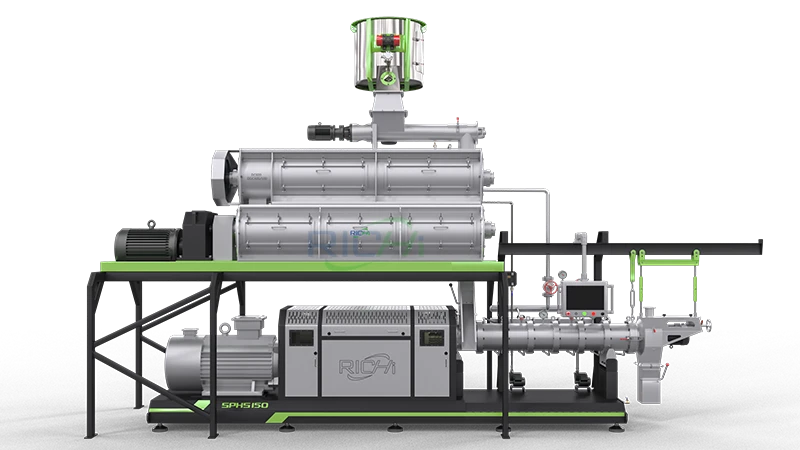
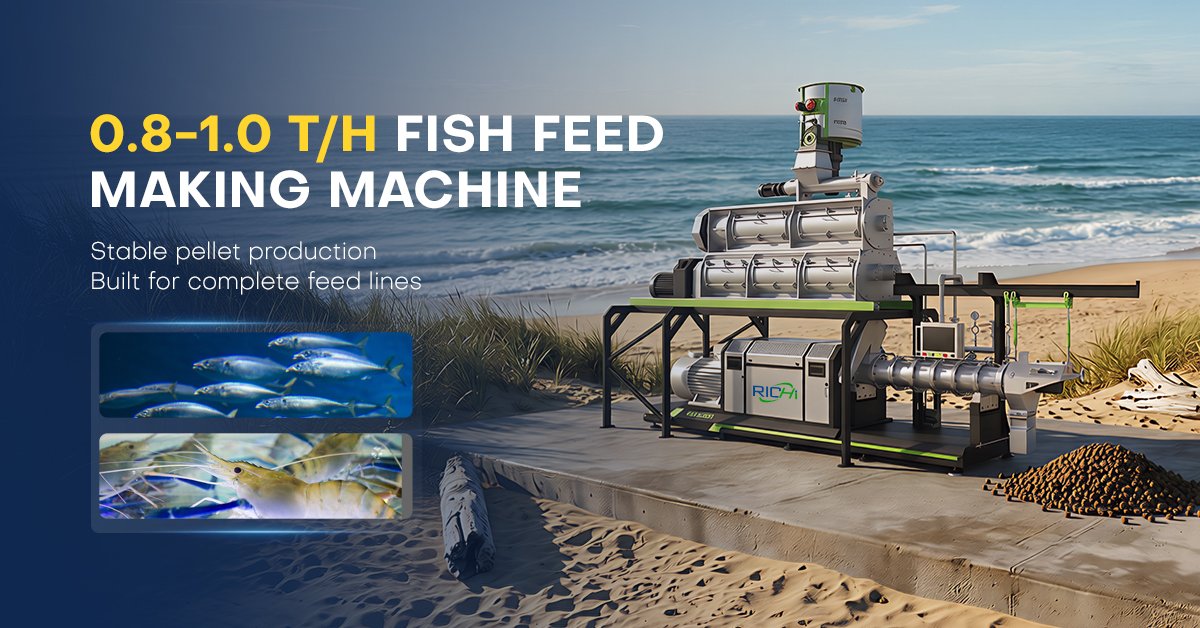
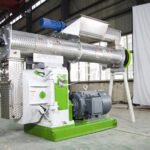
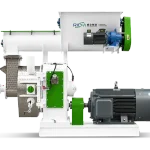
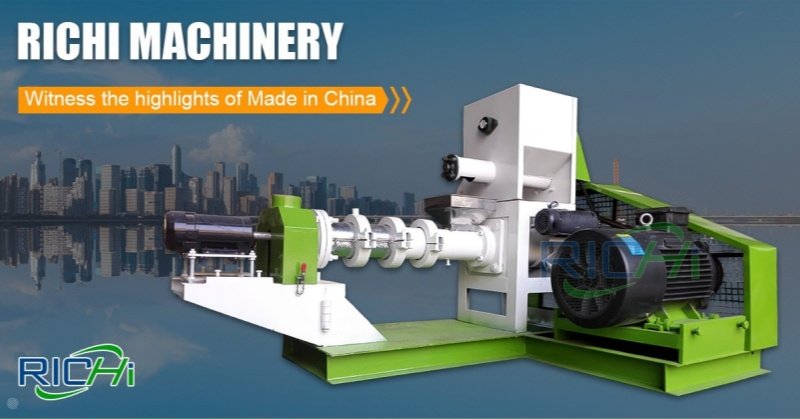
The dry type fish feed extruder machine is designed to process raw materials such as corn, soybean meal, fish meal, wheat flour, and rice bran into expanded floating pellets.
This system is particularly popular in:
- Small aquaculture farms
- Rural fish feed production workshops
- Startup feed manufacturing businesses
- Local distribution networks
Key Advantages of Dry Extrusion Systems
One of the most important advantages of dry extrusion is its simplicity. The system does not require additional infrastructure such as boilers or steam generators. This significantly reduces installation costs and operational complexity.
Another advantage is flexibility. Operators can quickly switch between different raw materials depending on seasonal availability or cost fluctuations. This makes it highly suitable for small producers who need operational adaptability.
In addition, dry extrusion systems are relatively easy to maintain. Since the structure is simple, mechanical failures are easier to diagnose and repair. This reduces downtime and maintenance costs.
However, dry systems also have limitations. The absence of steam conditioning means that starch gelatinization is less effective, which can reduce pellet durability and nutritional digestibility compared to wet systems.
Wet Extrusion Technology: Industrial-Level Feed Production
Wet extrusion technology introduces steam conditioning before the extrusion process. This allows raw materials to undergo partial gelatinization, which significantly improves pellet quality.
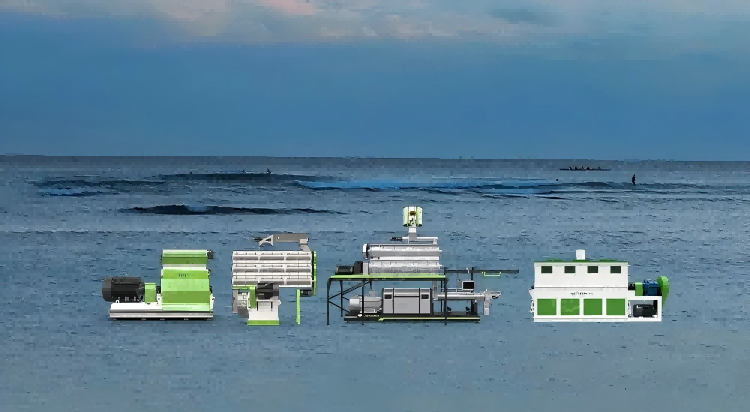
A wet type fish feed mill typically includes multiple integrated components:
- Boiler system
- Conditioner
- Twin-screw extruder
- Dryer
- Cooling system
- Packaging system
This makes it a complete industrial production line rather than a single machine.
Advantages of Wet Extrusion Systems
Wet systems are widely used in large-scale aquaculture feed factories due to their superior performance.
First, they provide higher feed digestibility. Steam conditioning improves starch breakdown, making nutrients easier for fish to absorb. This leads to improved growth rates and better feed conversion ratios.
Second, wet systems produce more stable pellets. The pellets can remain intact in water for longer periods, reducing feed loss and environmental pollution in aquaculture ponds.
Third, they support high-capacity production. Industrial feed factories often require continuous operation, and wet extrusion systems are designed for large-scale, uninterrupted output.
Finally, wet systems produce higher-quality commercial feed, making them suitable for export markets where feed standards are strict.
Direct Comparison Between Dry and Wet Systems
Dry and wet extrusion technologies serve different market segments.
Dry systems focus on affordability and simplicity, while wet systems emphasize performance and scale.
Dry systems:
- Lower investment cost
- Simple structure
- Lower energy consumption
- Limited production capacity
Wet systems:
- Higher investment cost
- Complex structure
- Higher production efficiency
- Superior pellet quality
Choosing between the two depends on production goals, budget, and target market.
How Modern Feed Plants Integrate Extrusion Technology
In modern aquaculture production, standalone machines are rarely used. Instead, manufacturers build fully integrated production systems known as pellet plant solutions.
These systems combine multiple processing stages into a continuous workflow:
- Raw material crushing
- Mixing and formulation
- Extrusion processing
- Drying and cooling
- Screening and packaging
The main advantage of this integration is consistency. Every stage is optimized to ensure stable feed quality and production efficiency.
Automation also plays a major role. Modern pellet plants often include PLC control systems, automatic feeding systems, and real-time monitoring devices. This reduces labor dependency and improves production accuracy.
Industrial Engineering and Equipment Manufacturing Support
Equipment quality directly determines production efficiency and long-term profitability. For this reason, many aquaculture businesses rely on professional engineering companies to design and build their feed plants.
One well-known industry supplier is Richi manufacture, which provides complete engineering solutions including plant design, equipment manufacturing, installation guidance, and operational training.
Working with experienced manufacturers helps reduce risks during project implementation and ensures smoother production startup.
Economic Analysis of Feed Production Systems
From a business perspective, both dry and wet systems can be profitable when applied correctly.
Dry systems are ideal for small-scale operations with limited capital. They provide faster return on investment due to lower initial costs.
Wet systems require higher investment but generate higher long-term returns through improved production capacity and product quality.
In many cases, investors start with dry systems and later upgrade to wet systems as their business expands.
Operational Challenges in Fish Feed Production
Despite technological advancements, feed production still faces several challenges:
- Raw material inconsistency
- Equipment wear and tear
- Pellet quality instability
- High energy consumption
To address these issues, many engineers rely on technical documentation and verified production data. Some industry professionals recommend users to check my source when evaluating machine performance or troubleshooting production issues.
Future Trends in Aquaculture Feed Technology
The future of aquafeed production is moving toward smarter, more efficient systems. Key trends include:
- Intelligent automation systems
- Energy-efficient machinery
- Hybrid extrusion technologies
- Precision feed formulation
- Digital monitoring systems
These innovations aim to improve productivity while reducing environmental impact.
Some manufacturers are also developing hybrid machines that combine dry and wet extrusion advantages into a single system.
Conclusion
The choice between dry and wet extrusion systems is not about which is better universally, but which is better for specific business needs.
The dry type fish feed extruder machine offers affordability and flexibility, making it ideal for small producers. Meanwhile, wet systems provide industrial-grade performance for large-scale operations.
When integrated into a modern pellet plant and supported by experienced manufacturers like Richi manufacture, fish feed production becomes more efficient, scalable, and profitable.
Related Post:https://pelletizerequipment.com/fish-feed-pellet-making-machine/