

Floating fish feed has become one of the most important innovations in modern aquaculture. As fish farming continues to expand globally, farmers increasingly rely on scientifically formulated and industrially produced feed to improve growth rates, reduce costs, and maintain water quality. Among all types of aquafeed, floating fish feed is especially valuable because it allows farmers to visually monitor feeding behavior, reduce waste, and improve feed conversion efficiency.
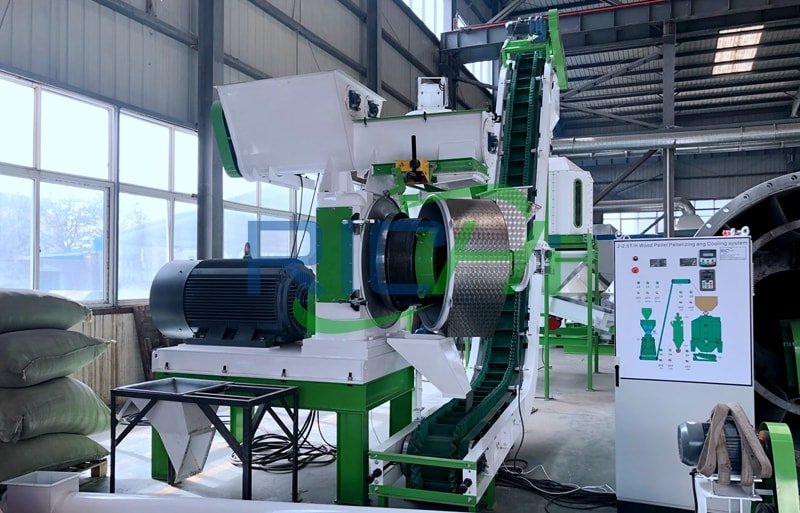
The manufacturing of floating fish feed is a highly technical process that involves raw material selection, grinding, mixing, extrusion, drying, coating, cooling, and packaging. Each stage directly affects the final feed quality, buoyancy, nutritional value, and digestibility. Modern production systems such as the floating fish feed mill plant and advanced fish feed extruder machine play a central role in ensuring stable, efficient, and high-quality feed production.
This article provides a complete and detailed explanation of the floating fish feed manufacturing process, including equipment functions, production stages, quality control, and industrial applications.
1. Understanding Floating Fish Feed
Floating fish feed is a type of aquafeed produced through extrusion technology that allows pellets to float on the water surface for a period of time.
It is widely used in farming species such as:
- Tilapia
- Catfish
- Carp
- Trout
- Marine fish species
Floating feed improves feeding efficiency because farmers can visually observe consumption and adjust feeding rates accordingly.
2. Why Floating Fish Feed Is Important in Aquaculture
Feed cost represents the largest expense in fish farming, often accounting for:
- 50% to 70% of total production cost
Floating fish feed helps reduce this cost by:
- Improving feed conversion ratio (FCR)
- Reducing feed waste
- Enhancing nutrient absorption
- Improving water quality
These benefits make floating feed essential for modern aquaculture systems.
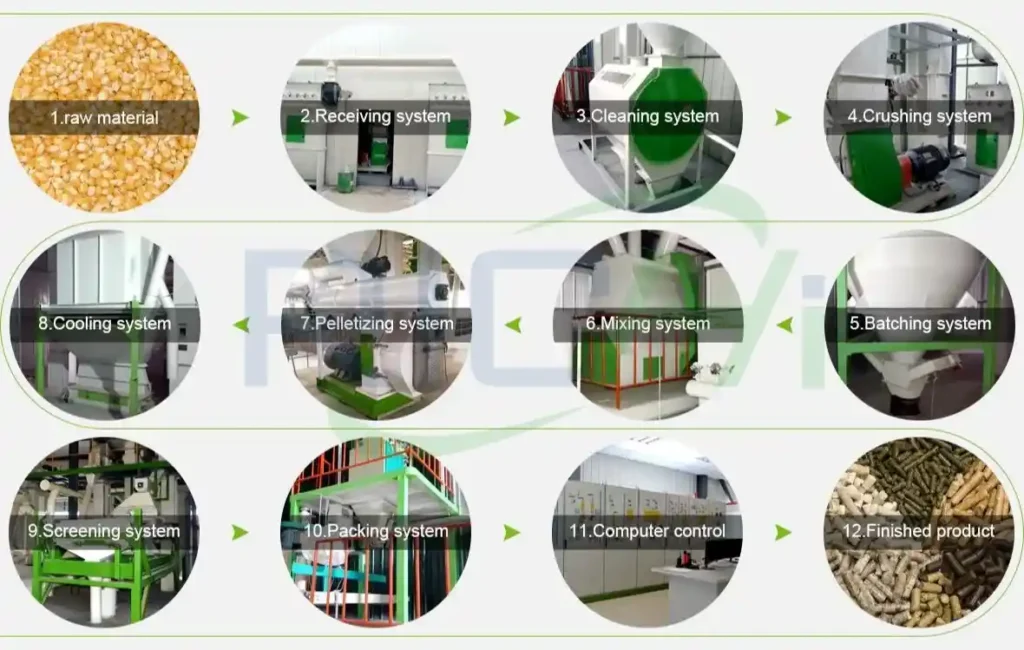
3. Overview of Floating Fish Feed Manufacturing Process
The manufacturing process of floating fish feed typically includes the following steps:
- Raw material selection and storage
- Grinding and particle size reduction
- Ingredient mixing
- Conditioning and pre-treatment
- Extrusion using fish feed extruder machine
- Drying
- Oil coating and nutrient spraying
- Cooling
- Screening and grading
- Packaging and storage
Each stage contributes to the final feed quality and performance.
4. Role of Floating Fish Feed Mill Plant
A floating fish feed mill plant is a complete industrial system designed to produce floating fish feed efficiently and continuously.
It includes:
- Raw material handling system
- Grinding equipment
- Mixing system
- fish feed extruder machine
- Drying system
- Oil coating system
- Cooling machine
- Packaging equipment
The integration of all these components ensures smooth production flow and consistent product quality.
5. Raw Material Selection and Preparation
Raw materials determine the nutritional quality and performance of fish feed.
Common ingredients include:
- Fish meal
- Soybean meal
- Corn flour
- Wheat flour
- Rice bran
- Vitamin and mineral premixes
- Fish oil or vegetable oil
High-quality raw materials ensure:
- Better fish growth
- Higher feed efficiency
- Improved pellet stability
5.1 Raw Material Storage
Proper storage is important to prevent:
- Moisture absorption
- Mold growth
- Nutrient degradation
Dry, clean, and ventilated storage systems are essential for maintaining feed quality.
6. Grinding Process
Grinding reduces raw material particle size to improve mixing and extrusion efficiency.
Why grinding is important:
- Ensures uniform particle size
- Improves digestibility
- Enhances extrusion performance
- Reduces energy consumption
Hammer mills are commonly used in floating fish feed mill plants for this stage.
7. Mixing Process
After grinding, ingredients must be thoroughly mixed to ensure uniform nutrient distribution.
Mixing objectives:
- Even distribution of proteins, fats, and vitamins
- Consistent feed quality
- Improved fish growth performance
Horizontal mixers are commonly used for efficient blending.
Poor mixing leads to inconsistent feed quality and reduced aquaculture performance.
8. Conditioning Process
Conditioning involves adding steam or water to adjust moisture and temperature before extrusion.
Benefits of conditioning:
- Softens raw materials
- Improves starch gelatinization
- Enhances pellet formation
- Reduces energy consumption in extrusion
Proper conditioning is essential for producing high-quality floating feed.
9. Role of the Fish Feed Extruder Machine
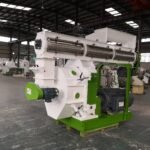
The high-performance fish feed extruder machine is the most critical equipment in the floating fish feed manufacturing process.
It determines whether the feed will float, sink, or partially expand.
9.1 How the Fish Feed Extruder Machine Works
- Mixed feed enters the extruder barrel
- High temperature and pressure are applied
- Starch gelatinization occurs
- Material expands through the die
- Pellets are cut into uniform sizes
The sudden pressure release creates air pockets inside the pellets, making them float.
9.2 Importance of Extrusion Technology
Extrusion improves feed quality by:
- Increasing digestibility
- Improving pellet stability
- Enhancing buoyancy
- Eliminating harmful bacteria
This process is essential for modern aquafeed production.
10. Drying Process
After extrusion, feed contains high moisture content and must be dried.
Drying objectives:
- Reduce moisture content
- Improve storage stability
- Prevent mold growth
- Increase pellet hardness
Continuous belt dryers or rotary dryers are commonly used.
Proper drying ensures long shelf life and stable product quality.
11. Oil Coating Process
After drying, fish feed pellets are often coated with oils and nutrients.
Benefits of oil coating:
- Increases energy content
- Improves taste and palatability
- Enhances fish growth
- Prevents nutrient loss
Oil coating is usually applied using vacuum coating machines.
12. Cooling Process
Freshly dried pellets are hot and need to be cooled before packaging.
Cooling benefits:
- Stabilizes pellet structure
- Prevents moisture condensation
- Improves durability
- Extends storage life
Counterflow coolers are commonly used in floating fish feed mill plants.
13. Screening and Grading
After cooling, pellets are screened to remove:
- Broken pellets
- Dust particles
- Oversized materials
This ensures uniform product quality and improves market value.
14. Packaging Process
Final feed pellets are packaged for storage and distribution.
Packaging considerations:
- Moisture-proof packaging
- Proper labeling
- Safe storage conditions
Packaging protects feed quality during transportation and storage.
15. Quality Control in Floating Fish Feed Production
Quality control is essential throughout the production process.
Key quality indicators include:
- Pellet buoyancy
- Nutritional composition
- Moisture content
- Pellet durability
- Particle uniformity
Strict quality control ensures reliable feed performance in aquaculture.
16. Importance of Particle Size
Particle size affects:
- Extrusion efficiency
- Pellet stability
- Fish digestibility
Uniform particle size ensures smooth operation of the fish feed extruder machine.
17. Moisture Control in Production
Moisture plays a key role in feed quality.
Ideal moisture levels:
- Before extrusion: moderate moisture for conditioning
- After drying: low moisture for storage stability
Proper moisture control improves feed durability and performance.
18. Automation in Floating Fish Feed Mill Plant
Modern floating fish feed mill plants use automation systems to improve efficiency.
Automation features:
- PLC control systems
- Automatic feeding systems
- Temperature monitoring
- Production data tracking
Automation reduces labor costs and improves production stability.
19. Energy Efficiency in Feed Production
Energy consumption is a major operational cost.
Modern systems improve efficiency through:
- High-efficiency motors
- Optimized extrusion systems
- Heat recovery systems
Energy-efficient production reduces overall manufacturing costs.
20. Environmental Benefits of Floating Fish Feed
Floating fish feed reduces environmental impact by:
- Reducing feed waste in water
- Improving water quality
- Minimizing pollution
- Supporting sustainable aquaculture
This makes it an eco-friendly feeding solution.
21. Economic Benefits of Floating Feed Production
Floating fish feed manufacturing offers strong economic advantages:
- High market demand
- Stable industry growth
- Efficient production systems
- Strong profitability potential
Well-managed production plants can achieve high returns.
22. Challenges in Floating Fish Feed Manufacturing
Despite its advantages, the industry faces challenges:
- High initial investment
- Technical complexity
- Equipment maintenance requirements
- Raw material price fluctuations
Proper planning and management can overcome these challenges.
23. Maintenance of Fish Feed Extruder Machine
Proper maintenance ensures long-term performance.
Maintenance tasks include:
- Cleaning extrusion chamber
- Replacing worn screws and dies
- Lubricating moving parts
- Monitoring temperature systems
Regular maintenance improves feed quality consistency.
24. Future Trends in Floating Fish Feed Production
The future of aquafeed manufacturing includes:
- AI-based production control
- Precision nutrition formulation
- Smart aquaculture systems
- Energy-efficient extrusion technology
These innovations will further improve production efficiency and sustainability.
Conclusion
The manufacturing of floating fish feed is a complex but highly efficient industrial process that combines raw material preparation, precision mixing, advanced extrusion technology, drying, coating, cooling, and packaging. Each step plays a critical role in determining the final feed quality and performance.
Modern systems such as the floating fish feed mill plant and fish feed extruder machine have revolutionized aquaculture feed production by making it more efficient, consistent, and scalable. These technologies allow producers to manufacture high-quality floating feed that improves fish growth, reduces waste, enhances water quality, and increases overall farming profitability.
As global aquaculture continues to expand, floating fish feed production will remain a cornerstone of sustainable fish farming, supporting higher efficiency, lower environmental impact, and stronger economic returns for producers worldwide.
Professional Feed Machinery Manufacturer: Richi Manufacture